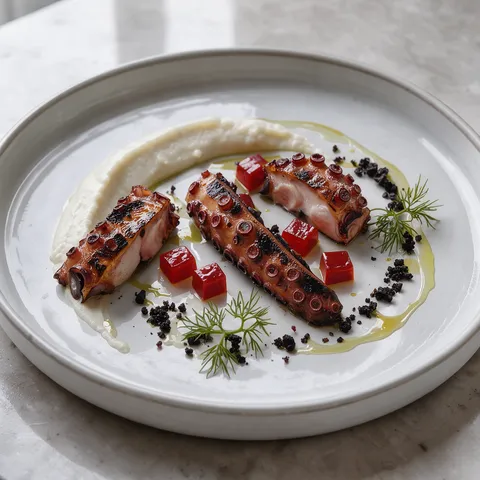
Aegean Octopus Casserole 2.0 Ahtapot Guvec
A Turkish main course. Takes 1 hr 4 min, Serves 4. Difficulty: challenging.
At a glance
- Total time
- 1 hr 4 min
- Serves
- Serves 4
- Difficulty
- Challenging
- Cuisine
- Turkish cuisine
- Dish type
- Main course
- Diet
- Gluten-free
- Allergens
- Molluscs, Sulphites
Ingredients
Octopus
- 1 kg cleaned octopus (eyes and beak removed)
- 1 lemon slice
- 2 bay leaves
- 5 black peppercorns
- 2 tbsp olive oil (for searing)
- flaky salt
Charred tomato jelly
- 600 g ripe tomatoes
- 1 garlic clove
- 2 tbsp olive oil
- 1 tsp caster sugar
- 1/2 tsp salt
- 1 tbsp red wine vinegar
- 1 1/2 g agar agar (about 1/2 tsp)
Garlic fava
- 150 g yellow split peas (dried and split)
- 1 onion (roughly chopped)
- 4 garlic cloves
- 600 ml water
- 4 tbsp olive oil
- 1 lemon (juice)
- 1/2 tsp salt
Olive crumb
- 12 pitted black olives
Finish
- 1/2 bunch dill (finely chopped)
- 2 tbsp extra virgin olive oil
Equipment
- Pressure cooker
- Cast-iron frying pan
- Saucepan
- Blender
- Fine sieve / chinois
- Muslin
- Oven
- Baking tray
- Baking paper
- Chef's knife
- Chopping board
Method
- Put the octopus in the pressure cooker: Wash the octopus in cold water and cut the thick tentacles into 2-3 pieces if they are very long. Put it in the pressure cooker with the lemon slice, bay leaves and peppercorns, without adding water. Close the lid and turn on the heat. The octopus releases its own liquid, so extra liquid is unnecessary (~5 min)
- Tenderise the octopus: Once the cooker reaches pressure, cook over low heat for 25 min, then turn off the heat and let the steam release naturally for 5 min. A knife tip should slide into the thickest tentacle without effort. Do the three tasks below at the same time during this period (~30 min)
- Cook the fava (at the same time): Rinse the split peas and put them in a large pan with the onion, garlic and water. Skim off the foam and cook over low heat, uncovered, for 30 min, until the peas have completely broken down. Stir now and then, or they stick to the bottom. Add the salt at the end, as salt delays the peas softening (~30 min)
- Char the tomatoes (at the same time): Turn the tomatoes in a dry cast-iron pan over high heat for 2-3 min on each side, until the skin blackens and splits, 10 min in total. The caramelised skin gives the tomato a smoky taste, so there is no need to peel it (~10 min)
- Roast the olives (at the same time): Preheat the oven to 160°C. Roughly chop the olives and roast on a tray lined with baking paper for 12 min, until the edges are dry and hard. Once cooled, crush between sheets of kitchen paper to make a crumb. Roasting removes the salty moisture of the olives and leaves a crisp powder (~12 min)
- Make the tomato jelly: Blend the charred tomatoes with the garlic, olive oil, sugar, salt and vinegar for 1 min and strain through a fine sieve lined with a cloth, as about 250 ml of clear liquid is needed. Boil the strained juice with the agar in a small pan for 1 min and pour into a shallow dish. Set in the fridge for 10 min and cut into 1 cm cubes. Agar sets even at room temperature, so the jelly does not melt next to the warm octopus (~10 min)
- Purée the fava: Blend the cooked fava with the olive oil, lemon juice and salt for 1 min, until completely smooth. It should be a cream that holds without running and shapes with a spoon, and if it is too thick add 2 tbsp hot water (~5 min)
- Sear the octopus: Take the octopus out of the pot and pat thoroughly dry with kitchen paper. Heat the cast-iron pan until very hot and add the olive oil. Sear the octopus for 1 min on each side, until deep brown and crisp, 3 min in total. Then cut into 3 cm pieces. Discard the cooking liquid or use it in a soup (~8 min)
- Plate: Spread 2 spoonfuls of fava purée in the middle of a hot plate and make a well with the back of the spoon. Set the octopus pieces on top. Scatter the tomato jelly cubes in a loose but balanced way. Sprinkle the olive crumb over the octopus, then drizzle with the dill and extra virgin olive oil. Sprinkle with flaky salt and serve straight away (~6 min)
Chef's note
The elements of the classic casserole are split into different textures. The octopus is tenderised in the pressure cooker and seared crisp in a pan, a charred tomato jelly replaces the tomato sauce, garlic fava replaces the bread, and the olive becomes a roasted powder. Simultaneous steps reduce the time to 1 hr 4 min. If you cannot find agar, you can try 3 g gelatine leaf, but the jelly may soften at serving temperature.
Frequently asked questions
- Why is the salt added to the fava last?
- Salt delays the softening of the split peas. So the salt goes in after the fava is cooked, while it is being puréed.
- Does the tomato jelly melt next to the octopus?
- The jelly is made with agar, which sets even at room temperature. So the jelly doesn't melt next to warm octopus.
- Why is the octopus seared again after cooking?
- After softening in the pressure cooker, dry the octopus and sear each side for about 1 minute. This makes it dark brown and crisp.
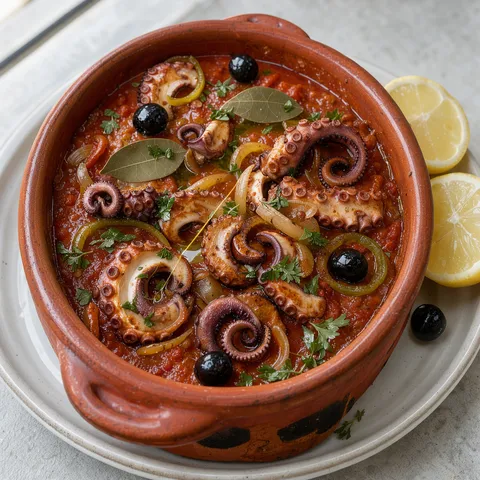 Aegean Octopus Casserole1 hr 30 min · Main course
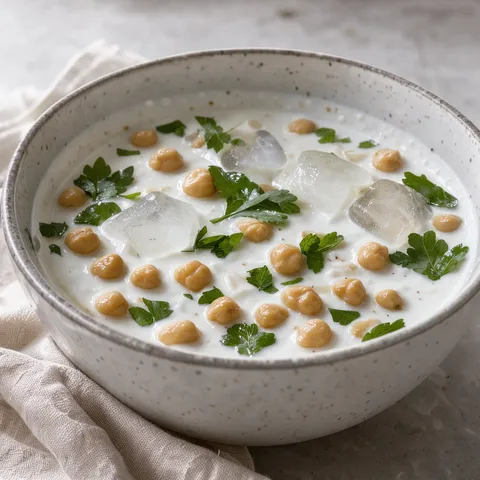 Chilled Wheat Yoghurt Soup1 hr · Soup
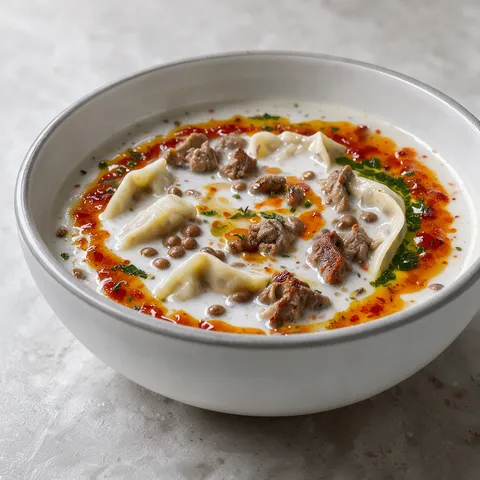 Noodle and Yoghurt Soup1 hr 10 min · Soup
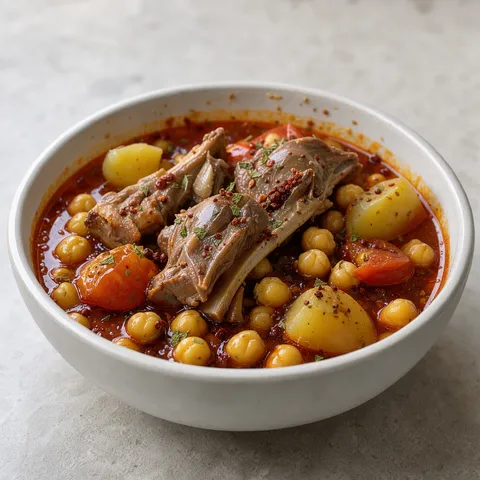 Lamb, Chickpea and Potato Stew1 hr 15 min · Soup
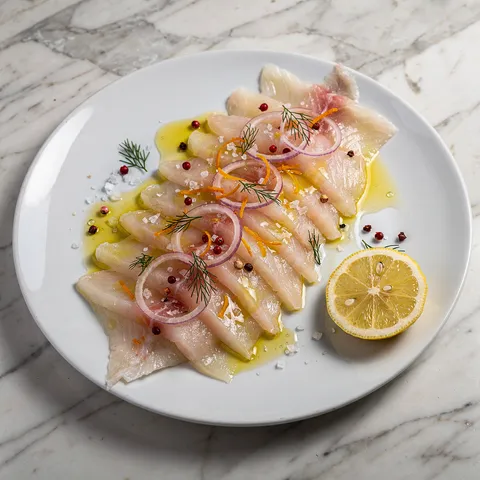 Marinated Sea Bass30 min · Meze
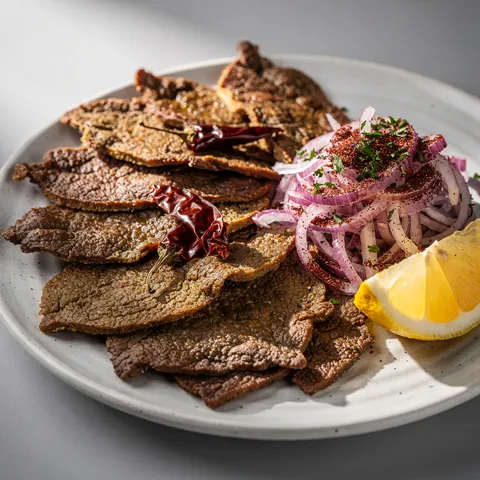 Crispy Fried Liver Slices25 min · Meze
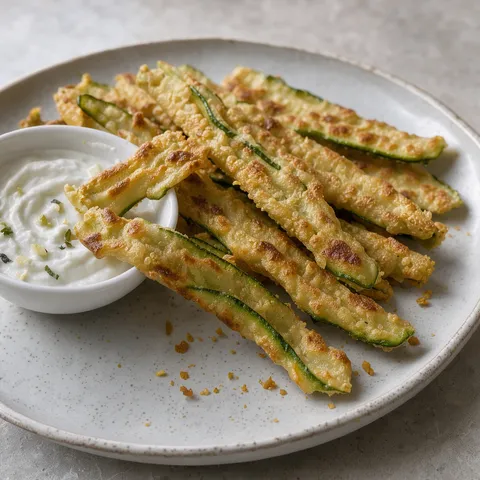 Courgette Crisps30 min · Meze