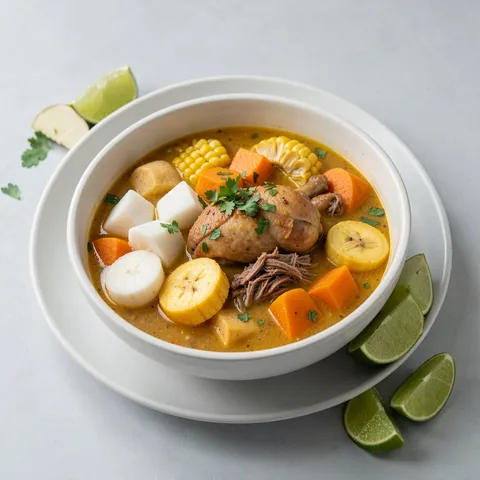
Cuban Root Vegetable Stew Ajiaco Criollo
A Cuban main course. Takes 2 hr 15 min (pressure cooker: 1 hr 30 min), Serves 4. Difficulty: medium.
At a glance
- Total time
- 2 hr 15 min (pressure cooker: 1 hr 30 min)
- Serves
- Serves 4
- Difficulty
- Medium
- Cuisine
- Cuban cuisine
- Dish type
- Main course
- Diet
- Gluten-free
- Allergens
- Contains none of the 14 listed allergens
Ingredients
Meats
- 350 g beef brisket or flank (falda, 4 pieces)
- 4 small bone-in chicken thighs (about 600 g)
- 80 g cured beef (fenugreek coating removed, roughly chopped, optional) in place of tasajo (salted dried beef)
- 2 litres water
- 1 bay leaf
- 1 tsp salt
Roots and vegetables
- 150 g yuca (cassava)
- 150 g malanga (if unavailable, taro)
- 150 g boniato (white sweet potato; if unavailable, orange-fleshed sweet potato)
- 150 g ñame (yam) or potato
- 1/2 green (unripe) plantain
- 1/2 ripe plantain (skin blackened)
- 200 g pumpkin (large cubes)
- 1 ear of sweetcorn (cut into 4 pieces)
Sofrito
- 3 tbsp olive oil
- 1 onion (small dice)
- 1 green pepper (small dice)
- 4 garlic cloves
- 2 ripe tomatoes (grated)
- 1 tsp cumin
- 1/2 tsp dried oregano
To serve
- 2 limes (cut into wedges)
- 1 tbsp chopped flat-leaf parsley
Equipment
- Heavy-based saucepan
- Ladle
- Sauté pan
- Chef's knife
- Pressure cooker (optional)
- Probe thermometer (optional)
Method
- Simmer the meats: Put the beef and cured beef in 2 litres of cold water and bring to the boil, skimming the scum. Add the bay leaf and salt and cook on low heat with the lid ajar for 45 min. Add the chicken thighs and cook for another 25 min. In a pressure cooker the beef takes 20 min, then another 8 min with the chicken
- Prepare the roots: While the meats cook, peel the yuca, malanga, boniato and ñame (wearing gloves prevents itching). Cut them all into large 4-5 cm pieces and keep in cold water, as they darken in the air. Remove the tough fibre from the centre of the yuca. Cut the plantains into 4 cm rounds with their skins on, and peel the green one with a sturdy knife
- Add the hard roots: Add the yuca, malanga, ñame and green plantain to the pan and cook for 20 min. Adding them from hardest to softest makes every root cook at the same time. In a pressure cooker this stage takes 6 min
- Add the soft vegetables: Add the boniato, pumpkin, ripe plantain and sweetcorn and cook for 15-20 min, until the pumpkin starts to fall apart and a knife pierces the yuca without resistance. The pumpkin and malanga break down and thicken the ajiaco by themselves. In a pressure cooker this stage takes 5 min
- Prepare the sofrito: Meanwhile, heat the olive oil in a frying pan over medium heat and sauté the onion and pepper for 7-8 min, until soft. Add the garlic and stir for 1 min. Add the tomatoes, cumin and oregano and cook for 5 min, until the tomato liquid has evaporated and the oil separates
- Combine: Add the sofrito to the pot and cook together for 10 min. Mash a few pieces of root against the side of the pot with a spoon and stir in. The ajiaco should be as thick as a hearty stew. Adjust the salt. The internal temperature of the chicken should reach 74°C
- Prepare the meat: Lift out the pieces of beef, shred into large strands and return to the pot. The chicken thighs can stay whole
- Plate: In a wide, deep bowl, put one piece of each root and vegetable, a chicken thigh, shredded beef and a piece of sweetcorn, and ladle over plenty of the thick soup. Sprinkle with parsley and put lime wedges alongside, as Cubans squeeze the lime into each bowl at the table
Chef's note
Ajiaco criollo is Cuba's national stew, whose roots go back to the Taíno people and to Spanish and African cooking, and Fernando Ortiz compared Cuban culture to this pot. The original recipe uses pork together with tasajo (salted dried beef); here it is made without pork, with cured beef in place of the tasajo. Tropical roots are sold in Asian and African grocers, and what you cannot find can be made up with potato and sweet potato. The leftovers are thicker and tastier the next day. Do not confuse it with Colombia's Ajiaco Santafereño (three potatoes, guascas herb, capers and cream) or the Dominican sancocho: the Cuban ajiaco is distinguished by boniato, malanga, two kinds of plantain, a sofrito cooked separately and added, and lime squeezed at the table.
Frequently asked questions
- Why are the roots added in order in ajiaco?
- Add them from hardest to softest so everything finishes cooking together. The yuca, malanga, ñame and green plantain go in first, then the boniato, pumpkin, ripe plantain and corn.
- How does ajiaco thicken?
- The pumpkin and malanga break down and thicken the ajiaco by themselves. You can also mash a few pieces of root against the side of the pot and stir them in. The consistency should be like a thick stew.
- What can I use in ajiaco in place of malanga and boniato?
- Use taro in place of malanga and orange sweet potato in place of boniato, which is a white sweet potato. Potato also works in place of ñame.
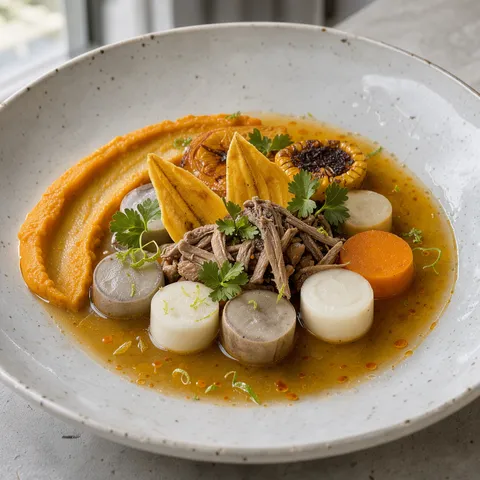 Ajiaco Criollo 2.01 hr 30 min · Soup
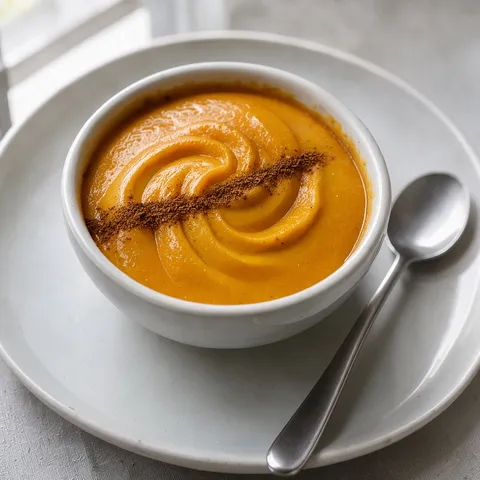 Cuban Sweet Potato Pudding1 hr · Dessert
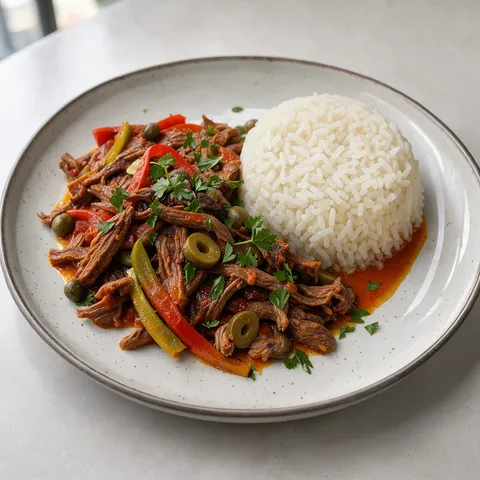 Cuban Shredded Beef Stew2 hr 50 min · Main course
 Cuban Black Beans and Rice1 hr 45 min · Side dish
 Ropa Vieja 2.01 hr 30 min · Main course
 Cuban Beef Mince with Olives55 min · Main course
 Cassava with Garlic Citrus Sauce55 min · Side dish