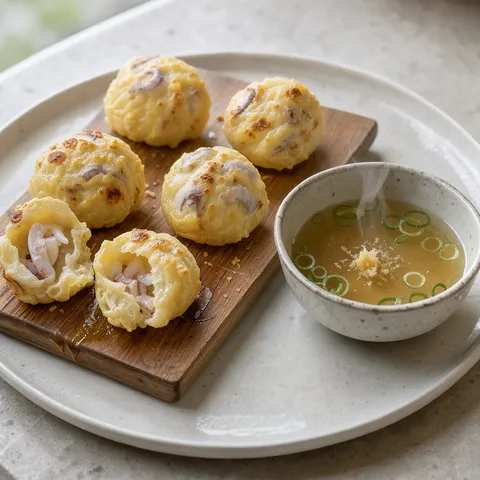
Akashiyaki Octopus Balls in Hot Dashi
A Japanese starter. Takes 38 min, Serves 4. Difficulty: easy.
At a glance
- Total time
- 38 min
- Serves
- Serves 4
- Difficulty
- Easy
- Cuisine
- Japanese cuisine
- Dish type
- Starter
- Allergens
- Gluten, Eggs, Fish, Molluscs, Soya
Ingredients
Batter
- 120 g plain flour
- 4 eggs
- 400 ml chilled dashi (Basics)
- 1/2 tsp salt
Filling
- 200 g pre-boiled octopus (tentacles)
- 3 tbsp oil for frying
Dipping sauce
- 400 ml dashi (Basics)
- 1 tbsp light soy sauce
- 1 tbsp mirin
- 1/2 tsp salt
To serve
- 2 spring onions
- 1 tsp finely grated fresh ginger
Equipment
- Frying pan
- Saucepan
- Mixing bowls
- Chopping board
- Chef's knife
- Balloon whisk
- Pastry brush
Method
- Prepare the octopus: Cut the boiled octopus tentacles into 1.5 cm cubes on a chopping board with a chef's knife. Pat thoroughly dry with kitchen paper, as wet octopus thins the batter and the balls stick in the moulds. Put the cubes in a bowl. (~4 min)
- Make the dipping sauce: Heat the dashi in a small saucepan and add the soy sauce, mirin and salt. Take it off the heat before it reaches the boil, as boiling dashi loses its aroma. Divide between four small bowls and keep warm. Slice the spring onions into thin rings and set them aside on a separate plate with the ginger. (~4 min)
- Make the batter: In a large bowl, whisk the eggs without making them foamy. Add the cold dashi and the salt. Sift in the flour a little at a time and stir until no lumps remain. The batter should be the consistency of milk, much runnier than pancake batter, because the inside of an akashiyaki turns into a creamy, light ball. (~5 min)
- Heat the pan: Brush every hollow of the takoyaki pan (a pan with half-sphere moulds) with oil. Heat over medium-high heat until a drop of batter sizzles on contact. If the pan is not hot enough the batter sticks, and if it is too hot the outer crust colours quickly while the inside stays raw. (~3 min)
- Fill: Pour the batter to the brim of the hollows and spread the overflow over the pan. Drop 2 octopus cubes into the middle of each hollow. As the pan has 16-20 hollows, cook the balls in two batches, keep the first batch warm in a lidded container and set aside half of the batter for the second batch. (~2 min)
- Turn: When the edges set and the underside is lightly golden, turn each ball a quarter turn with a thin skewer or a cocktail stick. Push the overflowing batter into the hollow. This movement rounds the balls, keeps the crust thin and leaves the inside the consistency of fresh custard. When you prod a ball with the skewer, the batter should not stick to it or run. (~6 min)
- Cook: Keep turning the balls so that every side cooks evenly. They are ready when the outside is light golden and feels slightly springy to the touch. The inside should be soft but fully set, with no runny batter left, because the batter contains raw egg. (~5 min)
- Cook the second batch: Oil the pan again and repeat the same filling, turning and cooking with the remaining batter. Keep the first batch warm in the lidded container. (~8 min)
- Serve: Arrange the balls on a wooden plate, 6 per person. Put a bowl of hot dashi sauce alongside and sprinkle the spring onions and ginger over the top. Each person dips every ball in the dashi before eating it. (~1 min)
Chef's note
In Akashi, people call this dish tamagoyaki, and the name Akashiyaki was given around 1988 to promote the city. It differs from takoyaki in that the batter is eggy and thin and the balls are eaten with dashi, not with sauce. If you have no takoyaki pan, a small-holed muffin tin gives similar balls with flat bases. You can buy the octopus ready-boiled from the fishmonger, which is a shortcut. For the dashi, use the Basics recipe.
Frequently asked questions
- What is the difference between akashiyaki and takoyaki?
- Akashiyaki batter is egg-rich and thin, so it gives a thin-crusted, creamy ball that you dip in dashi. Takoyaki is a firmer ball served with a dark sauce and mayonnaise.
- What can I use if I don't have a takoyaki pan?
- A mini muffin tin works. The balls won't be perfectly round, but the batter consistency and dashi stay the same.
- What can I use instead of octopus?
- Squid rings or small prawn pieces can be used in the same way. All of them need to be boiled and dried first.
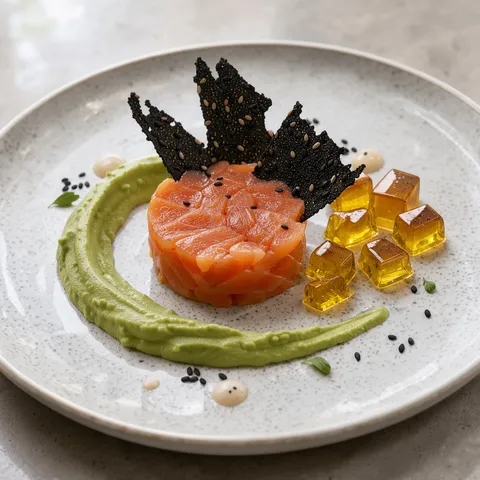 Salmon Tartare, Black Sesame Crisp, Wasabi Avocado45 min · Starter
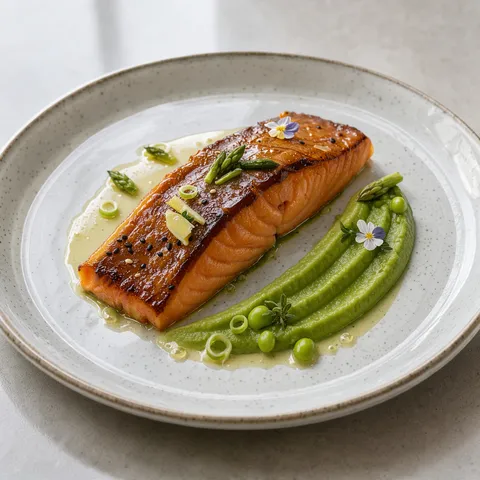 Salmon, Miso Glaze, Dashi Beurre Blanc, Edamame Purée50 min · Main course
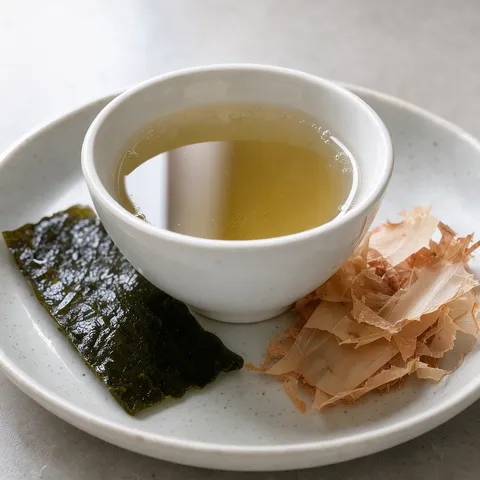 Ichiban Dashi1 hr 45 min · Basic recipe
 Miso Soup15 min · Soup
 Sushi Rice1 hr 15 min · Basic recipe
 Nigiri45 min · Main course