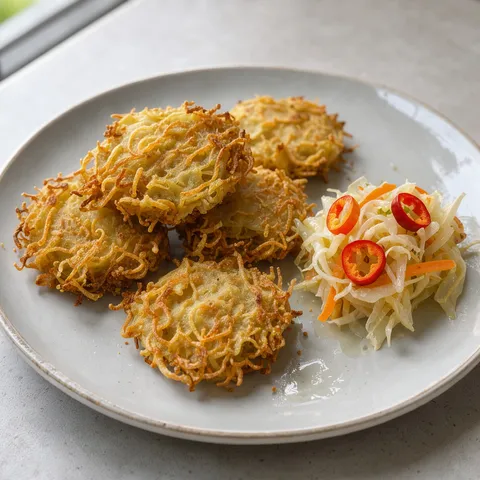
Haitian Taro Fritters with Pikliz Akra
A Haitian meze. Takes 1 hr 5 min, Serves 4. Difficulty: medium.
At a glance
- Total time
- 1 hr 5 min
- Serves
- Serves 4
- Difficulty
- Medium
- Cuisine
- Haitian cuisine
- Dish type
- Meze
- Diet
- Vegetarian, Gluten-free
- Allergens
- Eggs
Ingredients
Akra (Makes 24)
- 600 g taro (unpeeled, in place of malanga)
- 1 egg
- 1/2 habanero (if unavailable, 1 hot long chilli + 1/4 tsp chilli flakes; finely chopped)
- 1 tsp salt
- 1/2 tsp black pepper
Epis
- 1/4 bunch flat-leaf parsley
- 1/4 bunch coriander
- 2 spring onions
- 4 garlic cloves
- 1/4 red pepper
- 2 fresh thyme sprigs
- 1 tbsp sunflower oil
- 1 tbsp lemon juice
Quick pikliz
- 300 g white cabbage (very finely chopped)
- 1 carrot (cut into matchsticks)
- 1/2 onion (thinly sliced)
- 1/2 red pepper (thin strips)
- 1 habanero (thin rings; if unavailable, 2 hot long chillies)
- 3 garlic cloves (sliced)
- 6 black peppercorns
- 3 cloves
- 1 tsp salt
- 300 ml cider vinegar
- 2 tbsp lemon juice (in place of sour orange)
Frying
- 1.5 litres sunflower oil
Equipment
- Mixing bowls
- Blender
- Box grater
- Heavy-based saucepan
- Probe thermometer
- Chef's knife
- Chopping board
- Vegetable peeler (optional)
Method
- Make the pikliz (0-15 min): Mix the cabbage, carrot, onion, pepper and chilli with the salt in a large bowl and massage with your hands for 1 min. Pack into a clean jar with the garlic, peppercorns and cloves. Mix the vinegar and lemon juice and pour over so it completely covers the vegetables. Leave for at least 30 min. In Haiti pikliz is infused for days and gets fiercer and fiercer. The quick version is fresher and crunchier. Wear gloves when chopping the chilli
- Blend the epis (15-20 min): Blend the epis ingredients in a blender into a dark green paste. This makes about 4 tbsp of epis
- Peel and grate the taro (20-35 min): Wear gloves: the calcium oxalate crystals in raw taro make the hands itch, and this effect disappears completely once cooked. Peel the taro, rinse, pat dry and grate on the fine side of the grater. In Haiti akra is made with malanga. Taro (golevez), which grows on the Mediterranean coast of Türkiye, is a sticky, starchy root from the same family and the closest substitute
- Mix the batter (35-40 min): Mix the grated taro with the epis, egg, chopped chilli, salt and pepper. The mixture should be sticky, fall slowly off a spoon and hold its shape. If it is too wet, add 1 tbsp flour
- Heat the oil (30-40 min): In a heavy-based pot at least 12 cm deep and 24 cm across, bring the oil (no more than half the pot, about 3.5 cm deep) to 175°C with a thermometer
- Fry (40-60 min): Using two teaspoons, scoop about 25 g of mixture at a time and drop into the oil in small irregular clusters, six at once. Fry for 4-5 min, turning now and then, until the fine strands on the surface are dark golden and crisp. The taro must not stay raw: cut one from the first batch in half. The inside should be completely soft and opaque, with no sticky raw batter. Drain on kitchen paper and sprinkle with a pinch of salt at once. Wait for the oil to return to 175°C before each batch
- Plate (60-65 min): Put six akra in an irregular pile on a wide plate and place a handful of drained pikliz beside it, so the white of the cabbage, the orange of the carrot and the red of the pepper contrast with the dark golden akra. Serve hot, with a spoonful of vinegar from the pikliz jar alongside
Chef's note
Akra is the indispensable fried snack of Haitian street vendors and festive tables, usually eaten with pikliz beside fried meats such as griot and tassot. In some places there is also a version made with black-eyed peas, closer to West African akara. In Türkiye taro is found in autumn and winter at some neighbourhood markets; if it is unavailable, the same recipe can be made with half potato and half sweet potato, but the texture is softer.
Frequently asked questions
- Why does raw taro make your hands itch?
- Calcium oxalate crystals in raw taro make hands itch. So wear gloves when peeling. The effect disappears completely once cooked.
- What can I use in place of malanga?
- In Haiti akra is made with malanga. Taro is a sticky, starchy root from the same family and is the closest substitute.
- How do I check the akra is cooked inside?
- Cut one akra in half from the first batch. The inside should be completely soft and opaque, with no sticky raw batter.
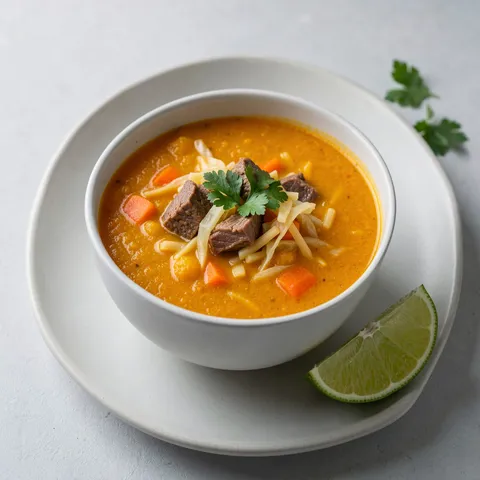 Haitian Independence Pumpkin Soup1 hr 45 min · Soup
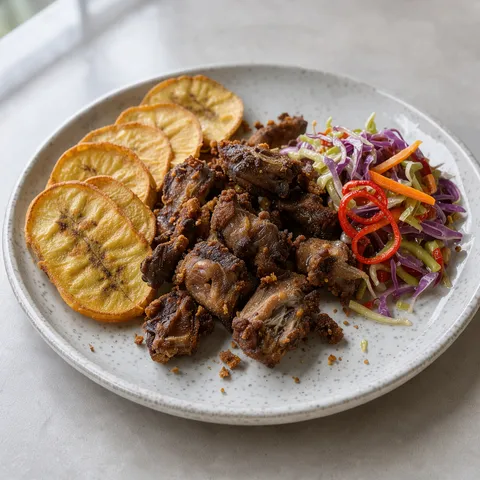 Fried Marinated Goat with Pikliz1 hr 30 min · Main course
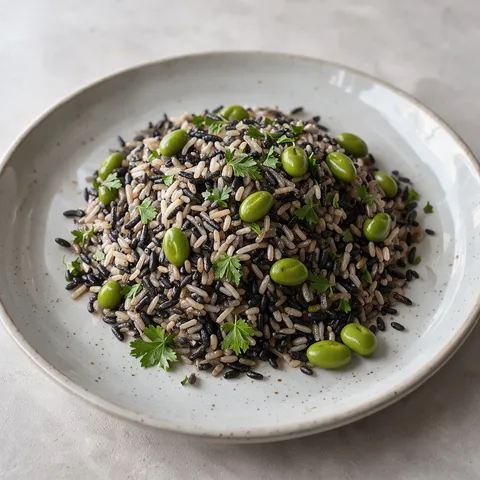 Haitian Black Mushroom Pilaf55 min · Side dish
 Haitian Sweet Potato-Banana Pudding1 hr 40 min · Dessert
 Soup Joumou 2.01 hr 25 min · Main course
 Haitian Chicken in Epis Sauce1 hr 40 min · Main course