First Nations Quick Bread Bannock
A Canadian bread & pastry. Takes 40 min, Makes 8. Difficulty: easy.
At a glance
- Total time
- 40 min
- Serves
- Makes 8
- Difficulty
- Easy
- Cuisine
- Canadian cuisine
- Dish type
- Bread & pastry
- Allergens
- Gluten, Milk
Ingredients
Dough
- 500 g plain flour
- 1 tbsp baking powder (15 g)
- 1 tsp salt
- 1 tbsp caster sugar (optional)
- 60 g cold butter (cubed) or 60 g beef suet
- 300-330 ml cold water (half can be milk)
Frying
- 200 ml sunflower oil or 3 tbsp butter (for pan cooking)
To serve
- butter
- blueberry jam or maple syrup
- optionally with a game stew on the side
Equipment
- Balloon whisk
- Mixing bowls
- Cast-iron frying pan
- Probe thermometer (optional)
- Oven (optional)
Method
- Mix the dry ingredients: Whisk the flour, baking powder, salt and sugar in a large bowl with a whisk. If the baking powder is not evenly distributed in the flour, the bannock gets bitter spots and rises unevenly
- Rub in the fat: Add the cold butter to the flour and rub it in with your fingertips for 2-3 min, until the mixture looks like coarse sand with small pea-sized pieces. The fat must stay cold, as melted fat makes the dough heavy
- Add the water: Make a well in the middle and pour in 300 ml of the water. Mix from the centre outwards with a fork for 30 sec, until the dough has just come together. If dry flour remains, add a few more spoonfuls of water. The dough should be soft and slightly sticky
- Knead lightly: Turn the dough onto a floured worktop and bring it together by folding and pressing only 5-6 times. Overkneaded bannock turns tough and rubbery, and light kneading is the rule for breads raised with baking powder. Rest for 5 min
- Shape: Divide the dough into 8 equal pieces and flatten each in your palm into rounds 1.5 cm thick and 10 cm across. Press a dent in the middle of each with your finger, which stops the centre puffing up like a balloon as it fries
- Fry: In a cast-iron or deep frying pan, heat the oil to 175°C, with the oil about 1.5 cm deep. Without crowding, fry the bannocks for 2-3 min, until the underside is golden brown, turn and fry for another 2-3 min. Push a skewer into the middle, and if it comes out clean they are cooked. Hot oil seals the outside of the dough at once, while in cold oil the bannock soaks up oil
- Alternative, pan or oven: For a lower-fat version, cook in a cast-iron pan with 2 tbsp butter over low-medium heat, covered, for 7-8 min on each side, or spread the dough in one piece 2.5 cm thick in a greased cast-iron pan and bake at 200°C for 20-25 min, until the top is golden
- Drain: Transfer the bannocks to kitchen paper and drain for 2 min. They are softest hot
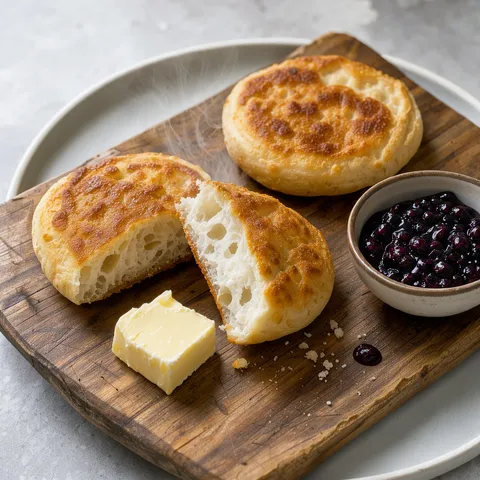
- Plate: On a wooden board, put two bannocks with one half open to show the steaming crumb. Put a block of butter beside them, and blueberry jam or maple syrup in a small bowl, and serve hot
Chef's note
Bannock is a plain bread baked for centuries in the First Nations, Métis and Inuit communities of Canada. Its Scottish-origin name dates from the fur trade era, but the version cooked on a fire, wrapped around a stick or in a pan is identified with Indigenous peoples. The traditional fat is mostly animal fat, and here the recipe uses butter or beef suet. Blueberries, dried cranberries or saskatoon berries can also be added to the dough.
Frequently asked questions
- Why does bannock turn out tough and rubbery?
- The dough turns tough if it is overworked. The rule for doughs raised with baking powder is to fold and press it together on the worktop only 5-6 times.
- Is bannock cooked in a pan or in the oven?
- Either works. The classic method is frying in 175°C oil. For a lighter option, cook it in a covered cast-iron pan over a low-medium heat or bake it in one piece at 200°C.
- Why does the middle of the bannock puff up when frying and how do I stop it?
- Press a dimple into the middle of each flat round with your finger so the centre does not balloon. The oil must also be hot enough, as bannock soaks up oil in cold oil.
 Québec Yellow Split Pea Soup1 hr 50 min · Soup
 Cedar Plank Salmon50 min · Main course
 Québec Maple Syrup Cake Pudding1 hr 5 min · Dessert
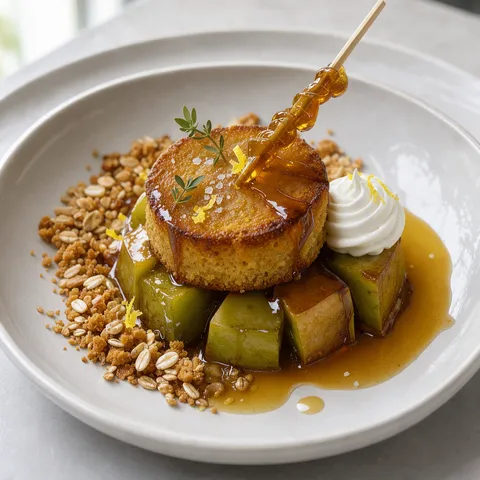 Pouding Chômeur 2.01 hr 20 min · Dessert
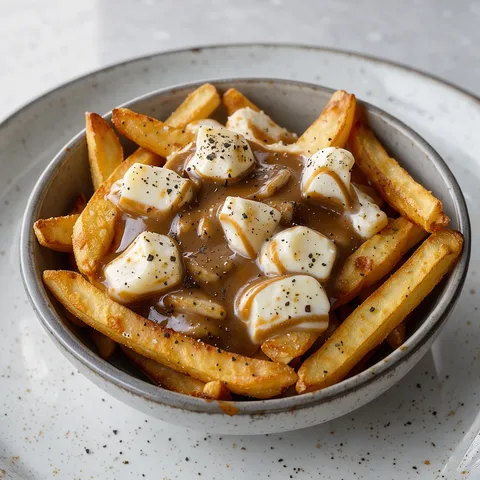 Chips with Cheese and Gravy1 hr 40 min · Main course
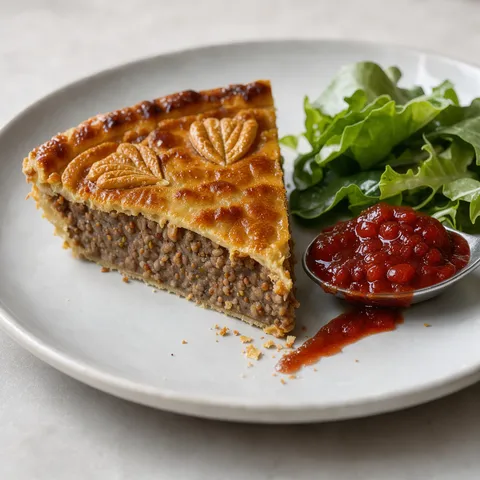 Québec Spiced Meat Pie2 hr 20 min · Bread & pastry