
Steamed Buns with Beef and Chinese Leaf Baozi
A Chinese bread & pastry. Takes 2 hr 50 min, 16 pieces (4 servings). Difficulty: challenging.
At a glance
- Total time
- 2 hr 50 min
- Serves
- 16 pieces (4 servings)
- Difficulty
- Challenging
- Cuisine
- Chinese cuisine
- Dish type
- Bread & pastry
- Allergens
- Gluten, Sesame, Soya, Celery
Ingredients
Dough
- 500 g plain flour
- 7 g fast-action dried yeast
- 30 g caster sugar
- 1/2 tsp salt
- 1 tsp baking powder
- 260 ml lukewarm water (about 35°C)
- 1 tbsp sunflower oil
Filling
- 250 g Chinese leaf (finely chopped)
- 1/2 tsp salt (for the cabbage)
- 400 g beef mince (about 20% fat)
- 2 tbsp light soy sauce
- 1 tsp dark soy sauce
- 1 tbsp sesame oil
- 1 tsp sugar
- 1/2 tsp ground white pepper
- 1/2 tsp salt
- 2 cm ginger (grated)
- 3 spring onions (finely chopped)
- 80 ml cold water
Steaming
- 16 squares of baking paper (8×8 cm)
Dipping sauce
- 3 tbsp Chinkiang black rice vinegar
- 1 cm ginger (chopped hair-thin)
Equipment
- Mixing bowls
- Dough scraper
- Cling film
- Box grater
- Wooden spoon / spatula
- Rolling pin / oklava
- Baking paper
- Steamer basket
- Stand mixer (optional)
Method
- Knead the dough: Mix the flour, sugar, salt, baking powder and yeast in a bowl. Add the lukewarm water and oil, bring together first with a dough scraper, then knead on the worktop for 10 min. The dough should be smooth, soft as an earlobe and slightly tacky. In a stand mixer with the dough hook, 6 min on medium speed is enough. Transfer to an oiled bowl, cover with cling film and leave to prove in a warm place for 1 hr, until doubled in size
- Salt the cabbage: While the dough proves, mix the chopped cabbage with 1/2 tsp salt in a bowl and leave for 15 min. Then squeeze it firmly in your hands to remove the liquid: about 150 g squeezed cabbage remains. If the liquid is not removed, the filling turns wet and soaks the dough from the inside
- Beat the filling: Stir the mince with the soy sauces, sesame oil, sugar, white pepper, salt and ginger in a large bowl with a wooden spoon in one direction for 2 min. Add the cold water in batches of 2 tbsp, beating in one direction after each addition until it is fully absorbed. The mince becomes sticky, stringy and glossy. This technique leaves juicy stock inside once cooked. Add the cabbage and spring onions, mix and firm up in the fridge for 20 min
- Divide the dough: Turn the risen dough onto the worktop and knead for 2 min to knock out the air. Roll into a log and divide into 16 equal pieces (about 50 g each). Roll the pieces into balls and cover with cling film so they do not dry out and form a skin
- Roll out and fill: Roll each piece with a rolling pin into a 10 cm disc, thinner at the edges than in the centre, so the dough does not bunch up at the top when sealed. Put about 40 g filling in the centre. Holding the edge with one hand and pressing the filling down with the other thumb, make 16-18 small pleats, gather them at the top and twist to seal
- Second prove: Set each bun on a square of baking paper. Arrange 4 in each tier of a 28 cm two-tier bamboo steamer (first batch: 8), 3 cm apart, and leave the remaining 8 buns on their papers on a tray, covered. Put the lid on and prove for 20 min. The buns rise by about half again and, when pressed with a finger, the dent slowly springs back
- Steam: Put 5 cm water in the pan under the steamer, bring to the boil from cold over medium-high heat and cook for 15 min once boiling. Turn off the heat and wait 3 min without lifting the lid. A sudden change in temperature wrinkles the surface and makes the buns collapse. Lift the lid off sideways so the dripping water does not fall on the buns. Steam the remaining 8 buns the same way in a second batch, checking the water in the pan and topping up with boiling water if needed (an extra 18 min)
- Serve: Mix the black vinegar with the fine ginger in small bowls. Serve the baozi hot in the steamer, and watch out for the hot juices inside before you bite
Chef's note
Baozi are a breakfast and street food in almost every region of China, and the filling varies from region to region. The original recipe most often uses pork mince; here it is made with beef mince. Lean mince gives a dry, tough filling: use mince with at least 15-20% fat. Cooked baozi can be frozen and reheated from frozen in the steamer for 12 min. If Chinkiang vinegar is unavailable, use a mix of cider vinegar and a little balsamic.
Frequently asked questions
- Why does the baozi filling stay juicy?
- Whisk the mince in one direction with cold water, 2 tablespoons at a time, until the water is completely absorbed. This technique leaves a juicy broth inside once cooked.
- Why is the Chinese leaf salted and squeezed first?
- Leave the cabbage with salt for 15 minutes and squeeze out the liquid with your hands. If the liquid isn't removed, the filling turns watery and wets the dough from inside.
- Why do steamed baozi collapse?
- A sudden change in temperature shrivels the surface. So after cooking, turn off the heat and wait 3 minutes without opening the lid, and tilt the lid so that dripping water doesn't fall on the buns.
 Mapo Tofu35 min · Main course
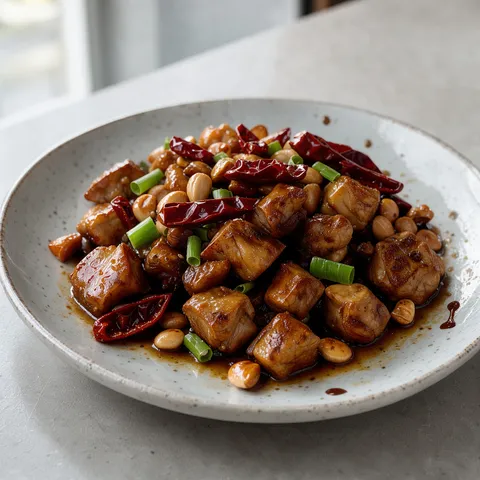 Kung Pao Chicken30 min · Main course
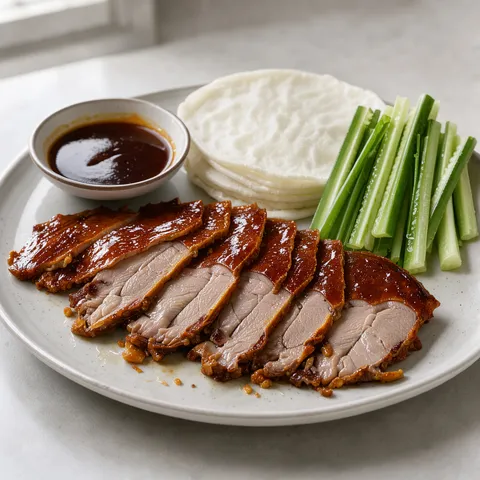 Peking Duck2 hr · Main course
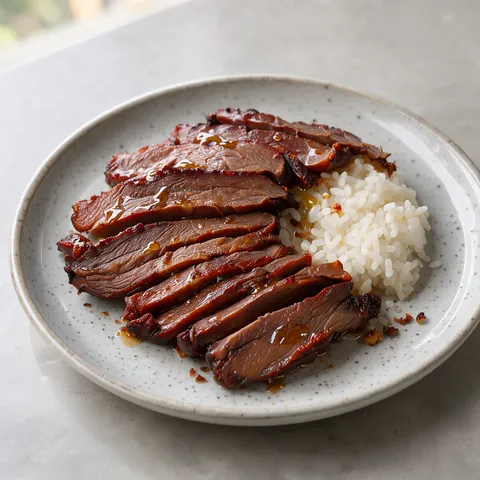 Char Siu1 hr · Main course
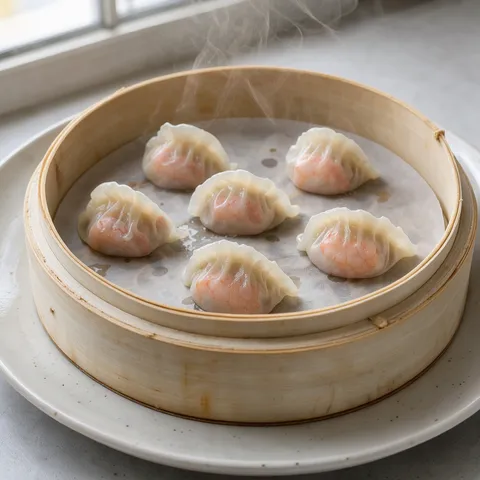 Crystal Prawn Dumplings1 hr 30 min · Starter
 Open-Topped Dumplings50 min · Starter