Moroccan Pan-Cooked Bread Batbout
A Moroccan bread & pastry. Takes 2 hr 25 min (including 1 hr 25 min rising), Makes 12. Difficulty: challenging.
At a glance
- Total time
- 2 hr 25 min (including 1 hr 25 min rising)
- Serves
- Makes 12
- Difficulty
- Challenging
- Cuisine
- Moroccan cuisine
- Dish type
- Bread & pastry
- Allergens
- Gluten
Ingredients
Dough (12 pieces)
- 250 g plain flour
- 250 g fine semolina (plus 3 tbsp for sprinkling)
- 7 g fast-action dried yeast
- 1 tsp sugar
- 9 g salt
- about 350 ml lukewarm water (35-38°C)
- 1 tbsp olive oil
Equipment
- Mixing bowls
- Rolling pin / oklava
- Baking tray
- Cast-iron frying pan
- Chef's knife
- Precision scales (optional)
Method
- Activate the yeast: Mix the yeast and sugar with 100 ml lukewarm water and leave for 5-10 min, until foamy. If the water goes above 40°C the yeast dies, and the right temperature is one where you can comfortably hold your finger
- Knead: Mix the flour, semolina and salt in a large bowl. Add the yeast water, olive oil and most of the remaining water, and once the dough comes together knead it on the work surface for 10 min. The dough should be soft, slightly sticky and elastic, and if needed add the remaining water a spoonful at a time. Semolina takes up water slowly, so a dough that looks firm in the first minutes softens as you knead
- Prove: Put the dough in a lightly oiled bowl, cover and leave in a warm place for about 1 hr, until doubled in size. It is ready when the dent from pressing with a finger fills back slowly
- Divide and shape: Gently press the gas out of the dough and divide into 12 equal pieces (about 70 g). Roll each piece in your palm on the work surface into a tight ball and rest, covered, for 5 min. Rested gluten does not spring back when rolled
- Roll out and second prove: Sprinkle semolina on the work surface and roll each ball into a round 10 cm across and 7-8 mm thick. Arrange them spaced apart on a tray sprinkled with semolina, cover with a cloth and prove for 20 min. The batbout should be slightly puffed and pillowy soft to the touch
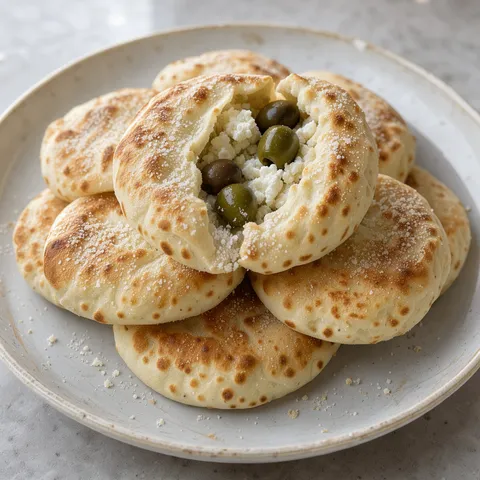
- Cook in a frying pan: Heat a cast-iron frying pan over medium-low heat for 3-4 min, without oil. Add 3-4 breads and cook for 2-3 min, until the underside is speckled light brown, then turn and cook the other side for 2-3 min. The breads puff up as they cook, leaving a hollow pocket in the middle. If the heat is too high the outside burns and the inside stays raw, so adjust the heat with the first bread. All the breads take about 25 min in 3-4 batches
- Soften: Wrap the cooked breads in a clean tea towel straight away. Their steam stays inside, the crust softens and the batbout takes on its characteristic springy texture. Leave in the cloth for 10 min
- Serve: Open each bread halfway through from the side with a sharp knife to make a pocket. Fill with honey and butter, goat's cheese and olives or kefta. Serve stacked on a plate with one pocket open and filled
Chef's note
Batbout is a pan bread eaten in Morocco at breakfast, in Ramadan and on the street as a filled sandwich, and in some regions it is called mkhamar. It needs no oven, and as a pan bread it is the easiest Moroccan bread to make at home. Cooked breads keep for 1 month in the freezer, and heated in a dry pan they return to their first-day softness.
Frequently asked questions
- Why does water temperature matter for batbout dough?
- Yeast dies if the water goes above 40°C, so water you can comfortably hold a finger in is right. Leave the yeast in 100 ml lukewarm water for 5-10 min until foamy.
- Why is batbout cooked without oil, and why does it puff?
- Heat a cast-iron pan over medium-low heat and don't grease it. The breads puff as they cook and form a hollow pocket. If the heat is too high the outside burns and the inside stays raw, so adjust the heat on the first bread.
- Why wrap cooked batbout in a cloth, and what do you fill it with?
- The trapped steam softens the crust and gives batbout its characteristic flexible texture, so leave it in the cloth for 10 min. Split it halfway open and fill with honey and butter, goat's cheese and olives, or kefta.
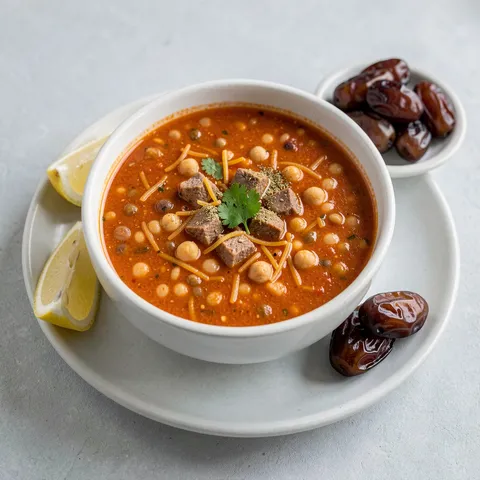 Harira2 hr · Soup
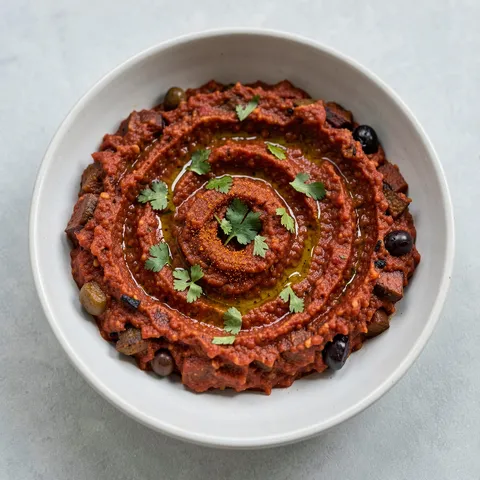 Moroccan Aubergine and Tomato Salad1 hr 30 min · Meze
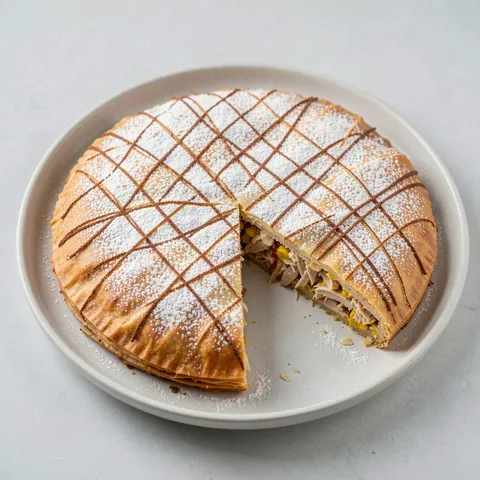 Chicken Bastilla3 hr 15 min · Main course
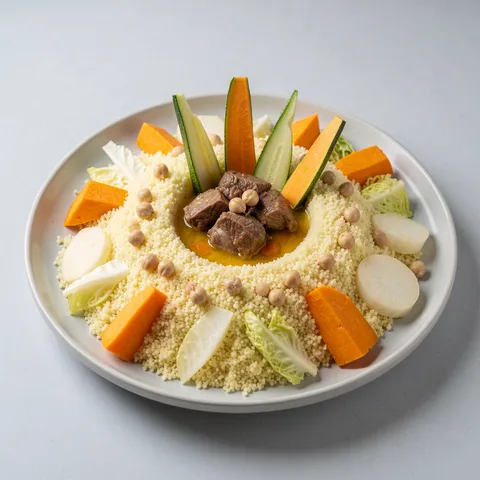 Couscous Bidaoui3 hr · Main course
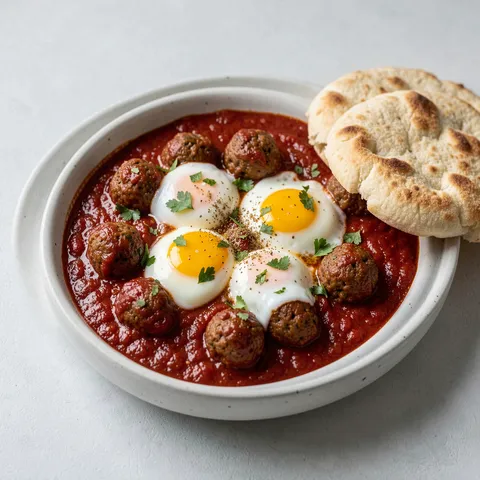 Meatball Tagine in Tomato Sauce with Eggs1 hr · Main course
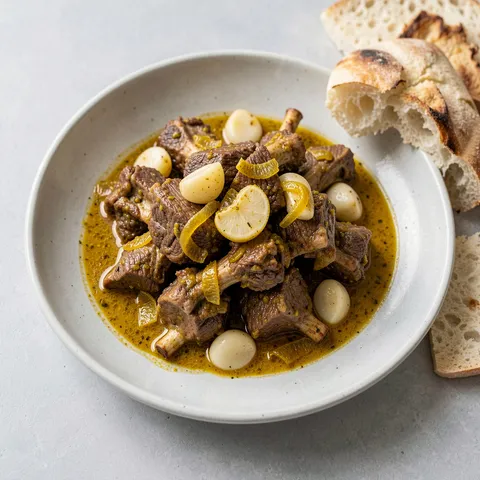 Marrakech Clay Jar Kebab5 hr 30 min · Main course