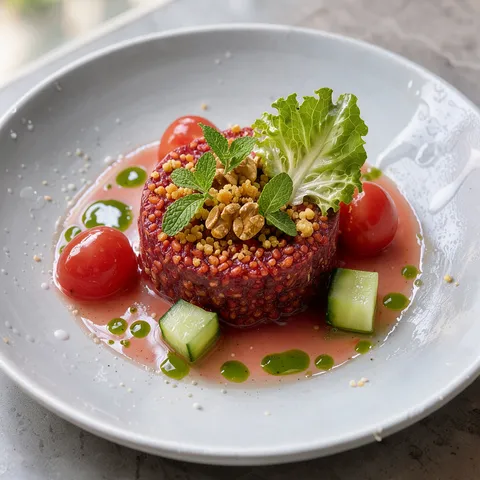
Bulgur Tomato Walnut Salad 2.0 Batirik
A Turkish starter. Takes 1 hr 20 min, Serves 4. Difficulty: professional.
At a glance
- Total time
- 1 hr 20 min
- Serves
- Serves 4
- Difficulty
- Professional
- Cuisine
- Turkish cuisine
- Dish type
- Starter
- Allergens
- Gluten, Tree nuts, Sesame
Ingredients
Batirik water
- 1 kg very ripe tomatoes
- 1 romano pepper
- 1 tbsp Turkish red pepper paste
- 1 tsp Urfa chilli flakes
- 1/2 tsp cumin
- 1 tbsp pomegranate molasses
- 1 tsp salt
- 1 tsp caster sugar
Bulgur tartare
- 120 g fine bulgur
- 120 g tomato pulp left from straining
- 1 tsp pepper paste
- 40 g walnuts (finely chopped)
- 2 spring onions
- 1/4 bunch flat-leaf parsley
- 1/4 bunch fresh mint
- 1 tbsp olive oil
- 1 tsp pomegranate molasses
- 1/2 tsp Aleppo pepper
- salt
Bulgur crunch
- 40 g coarse bulgur
- 400 ml water
- 1/2 tsp salt
- 400 ml sunflower oil for frying
Walnut and Urfa chilli flakes crumble
- 40 g walnuts
- 1 tbsp sesame seeds
- 1/2 tsp Urfa chilli flakes
- 1/4 tsp cumin
- a pinch of flaky salt
Green oil
- 1/2 bunch flat-leaf parsley
- 1/4 bunch fresh mint
- 100 ml olive oil
Tomatoes and cucumber
- 12 cherry tomatoes
- 1 tbsp olive oil
- 1 tsp pomegranate molasses
- 1 cucumber
- juice of 1/2 lemon
- a pinch of salt
To finish
- mint sprigs
- 4 small lettuce heart leaves
Equipment
- Blender
- Fine sieve / chinois
- Muslin
- Mixing bowls
- Saucepan
- Colander
- Oven
- Baking tray
- Baking paper
- Frying pan
- Chef's knife
- Chopping board
- Cake ring / food ring
- Probe thermometer
Method
- Blend the tomatoes: Roughly chop the tomatoes and put them in a blender with the romano pepper. Add the pepper paste, Urfa chilli flakes, cumin, pomegranate molasses, salt and sugar and blend for 30 sec, to a coarse purée. Don't blend for too long: a purée with air beaten into it turns foamy and is harder to strain
- Strain: Line a fine sieve with 2 layers of damp muslin and set it over a deep bowl. Pour in the purée and leave it to drip under its own weight for 40 min, without pressing. If you squeeze it, pulp passes through and the liquid turns cloudy, but if you wait, you get a pale red, clear and intensely aromatic liquid. Set the bowl in iced water so the liquid drips through cold. This "batirik water" is the heart of the plate
- Boil the bulgur for the crunch: While it strains, boil the coarse bulgur in the salted water for 8 min and drain in a colander. Spread thinly on baking paper on a baking tray and dry in the oven at 130°C for 30 min, until the grains are completely dry and hard. When broken, a grain should go "click", and if it doesn't, dry for another 5 min. Dry grains pop and puff in the oil, while damp grains make the oil spit
- Make the green oil: Put the parsley and mint leaves in a blender with the olive oil and blend at the highest speed for 2 min: the friction warms the oil and the colour passes into it. Strain through muslin and cool immediately by setting the bowl in iced water. Quickly cooled oil stays bright green
- Prepare the tomatoes and cucumber: Score a cross in the base of the cherry tomatoes, dip them in boiling water for 10 sec, transfer to iced water and peel. Marinate in the olive oil and pomegranate molasses. Peel the cucumber, remove the seedy centre and cut into 5 mm dice. Mix with the lemon juice and salt and leave for 10 min: the cucumber pickles lightly and stays crunchy
- Walnut and Urfa chilli flakes crumble: Toast the walnuts and sesame seeds in a dry pan over medium heat for 3 min, until fragrant. Once slightly cooled, chop the walnuts with a knife to the size of lentils and mix with the Urfa chilli flakes, cumin and flaky salt
- Bulgur tartare: Take 120 g of the tomato pulp left in the muslin. Mix the fine bulgur with the pulp and pepper paste, cover and leave in the fridge for 20 min so the bulgur absorbs the liquid from the pulp. Then knead in the chopped walnuts, the very finely chopped spring onions, parsley and mint, the olive oil, pomegranate molasses, Aleppo pepper and salt. It should be like a moist tartare: holding its shape but not dry
- Fry the crunch: Heat the oil to 200°C in a narrow, deep saucepan no more than a third full. Keep a lid to hand and don't leave the hob. Test with 5-6 grains first: they should puff within 3 sec, and if they don't, keep the oil between 190-200°C. Then gently lower the dried bulgur into the oil in a fine sieve, without splashing, and fry for 15-20 sec, until the grains pop, puff up and turn pale golden. Transfer to kitchen paper and salt immediately. If the oil is below this temperature, the bulgur doesn't puff and stays hard
- Finish the liquid: Taste the strained batirik water and adjust the salt and pomegranate molasses. The sourness, sweetness and Urfa chilli flakes heat should be in balance. Keep it cold in iced water until serving, at 6-8°C
- Plate: Set a 7 cm pastry ring in the centre of a chilled, deep, wide bowl and press a quarter of the bulgur tartare into it. Smooth the surface and lift off the ring. Place three cherry tomatoes and a spoonful of diced cucumber around the tartare. Lean a lettuce heart leaf against the tartare so it stands like a dipping spoon
- Finish: Put a spoonful of walnut and Urfa chilli flakes crumble and a pinch of bulgur crunch on top of the tartare and finish with mint sprigs. Pour the batirik water into a small jug and, at the table, pour it around the tartare until it covers the bottom of the bowl by 1 cm. Drop 8-10 drops of green oil onto the surface of the red liquid. Guests scoop up the tartare with the lettuce leaf and dip it in the liquid as they eat
Chef's note
In classic batirik the bulgur soaks up the tomato liquid and everything is mixed in the same bowl. Here the two are separated: a clear, ice-cold batirik water and a bulgur tartare that holds its shape. The bulgur also returns as a crunch. The idea of eating by "dipping" bread or lettuce is completed at the table. Pour in the batirik water just before plating: the longer the tartare sits in it, the more its edges break down.
Frequently asked questions
- Why is the batirik water strained without pressing?
- Let the puree drip through muslin under its own weight for 40 minutes. If squeezed, pulp comes through and the water turns cloudy. If left alone, you get a pale red, clear water.
- Why does the bulgur crisp not puff up?
- The bulgur must be boiled and fully dried in the oven, because dry grains pop and puff in the oil. The oil should also be at about 200°C, and below that the bulgur does not puff and stays hard.
- Why is the green oil cooled in iced water?
- Oil blended in a blender warms from friction and takes on the green colour. Oil that is cooled quickly stays bright green.
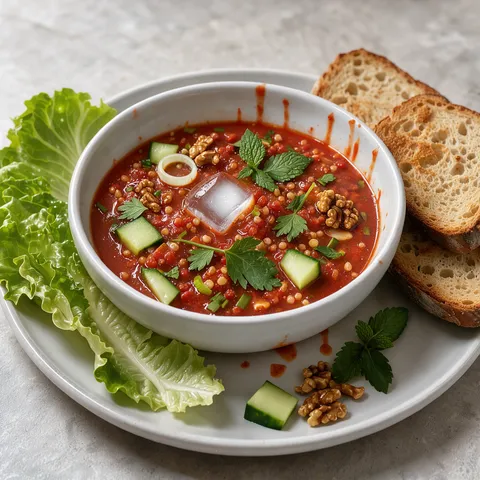 Bulgur Tomato Walnut Salad20 min · Meze
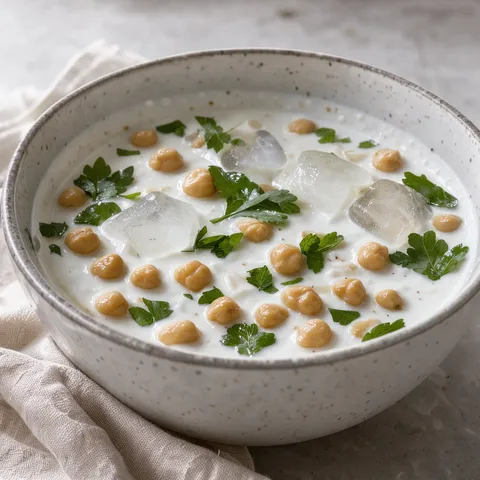 Chilled Wheat Yoghurt Soup1 hr · Soup
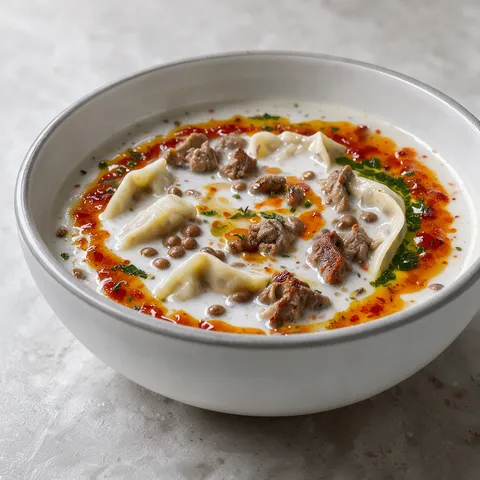 Noodle and Yoghurt Soup1 hr 10 min · Soup
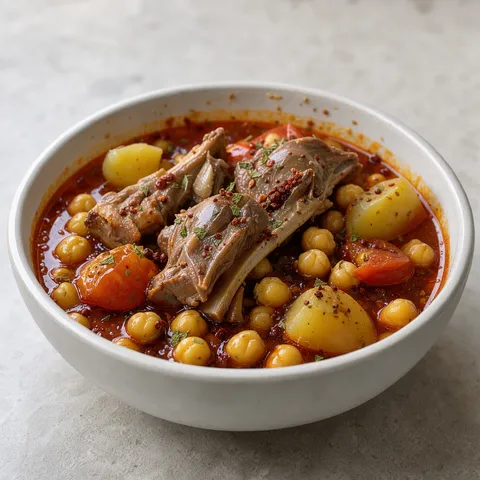 Lamb, Chickpea and Potato Stew1 hr 15 min · Soup
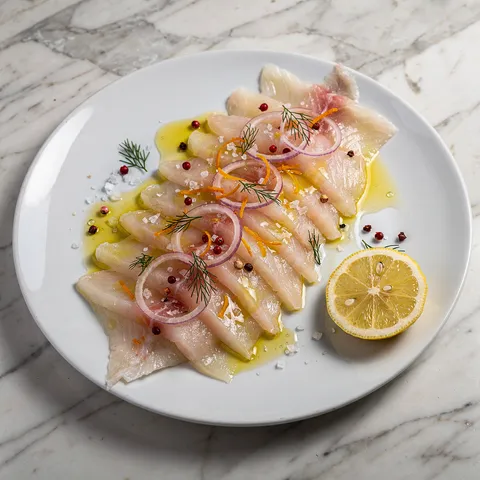 Marinated Sea Bass30 min · Meze
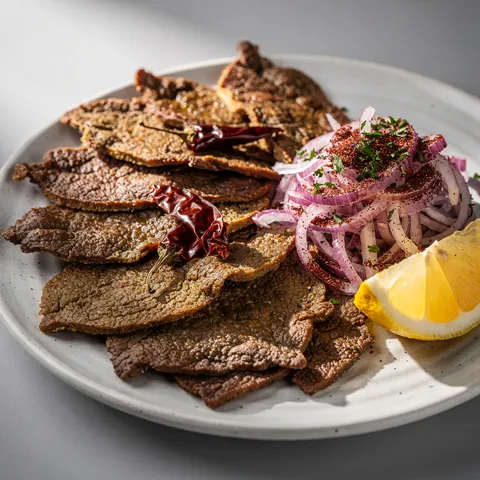 Crispy Fried Liver Slices25 min · Meze
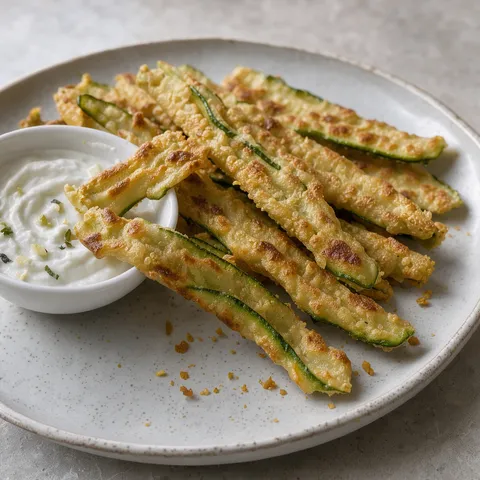 Courgette Crisps30 min · Meze