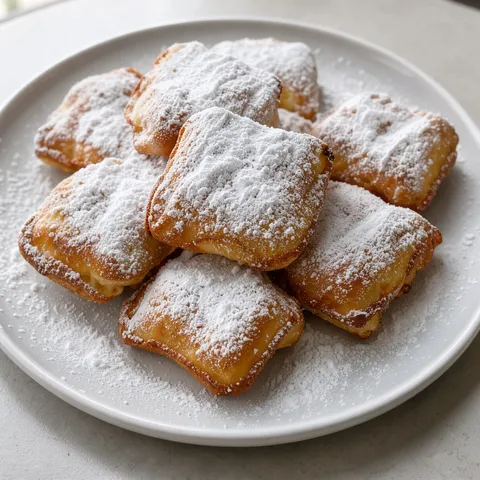
New Orleans Fried Dough Squares Beignets
An American dessert. Takes 1 hr 5 min · +1 hr 30 min rising, Serves 4. Difficulty: challenging.
At a glance
- Total time
- 1 hr 5 min · +1 hr 30 min rising
- Serves
- Serves 4
- Difficulty
- Challenging
- Cuisine
- American cuisine
- Dish type
- Dessert
- Allergens
- Gluten, Milk, Eggs
Ingredients
Dough
- 180 ml lukewarm water (about 38°C)
- 7 g fast-action dried yeast
- 50 g caster sugar
- 120 ml lukewarm milk
- 1 egg
- 1/2 tsp salt
- 450 g plain flour (+ 30 g for rolling)
- 30 g soft butter
- 1 tsp sunflower oil (for the bowl)
Frying
- 1.5 litres sunflower oil
To serve
- 100 g icing sugar
Equipment
- Stand mixer
- Mixing bowls
- Cling film
- Rolling pin / oklava
- Chef's knife
- Baking paper
- Baking tray
- Saucepan
- Probe thermometer
- Colander
- Fine sieve / chinois
Method
- Activate the yeast: In the mixer bowl, mix the lukewarm water, yeast and 1 tsp of the sugar and leave for 10 min. Foam should form on the surface. If it does not, the yeast is dead and the dough will not rise
- Knead: Add the lukewarm milk, remaining sugar, egg, salt and flour to the bowl. Knead with the dough hook of a stand mixer at medium speed for 4 min, then add the soft butter and knead for another 4 min. The dough should be soft, slightly sticky and glossy, and a stretched piece should form a thin membrane without tearing (8 min in total)
- Prove: Shape the dough into a ball, put it in a bowl oiled with sunflower oil, cover with cling film and prove in a warm place for 1 hr 30 min, until doubled in size
- Roll out and cut: Flour the worktop and, without knocking back the dough, roll it out with a rolling pin to a rectangle of 30×45 cm and 5 mm thick. Cut 24 squares of 7.5 cm with a chef's knife and arrange on a tray lined with baking paper, spaced apart (5 min). Cover with a dry tea towel and rest for 15 min. This second short prove makes the beignet hollow and light inside
- Heat the oil: While the squares rest, put the oil in a deep 24 cm pan (about 4-5 cm deep) and heat over medium heat to 180°C on a thermometer (about 10 min)
- Fry: Lower the squares into the oil in 6 batches, 4 at a time. They should rise to the surface within the first 30 sec and puff up like balloons. Fry for 1-1.5 min on each side, until light golden, turning with a slotted spoon. Transfer to a tray lined with kitchen paper. If the oil drops below 175°C the beignets soak it up, so wait for it to reheat between batches (about 24 min in total)
- Coat with icing sugar: While the beignets are hot, dust plenty of icing sugar over them through a fine sieve to make a white blanket (2 min). In New Orleans, the sugar on a beignet is generous enough to fall onto the plate and clothes
- Serve: Serve immediately, hot, 6 beignets each for 4 people (1 min). A beignet that cools deflates and turns doughy
Chef's note
Beignets are said to have come to Louisiana in the 18th century with French and Acadian immigrants. Eating them in the morning with coffee and milk in the French Quarter of New Orleans has become a symbol of the city. Since 1986 they have been Louisiana's official state doughnut. The dough can prove slowly in the fridge overnight, and in the morning it is left for 30 min at room temperature before rolling out.
Frequently asked questions
- Why do beignets turn greasy?
- If the oil drops below 175°C, the beignets soak it up. Heat the oil to 180°C and let it come back up to temperature between batches.
- Why does the beignet dough not rise?
- If no foam forms on the surface, the yeast is dead and the dough will not rise. Leave the yeast in lukewarm water for 10 minutes and check that it froths.
- Why should beignets be eaten hot?
- Beignets deflate and turn doughy as they cool. Dust them generously with icing sugar while hot and serve at once.
 New England Clam Chowder1 hr 15 min · Soup
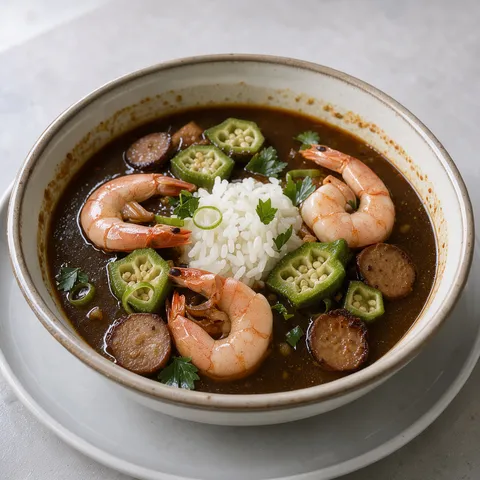 Louisiana Prawn and Okra Gumbo2 hr 15 min · Soup
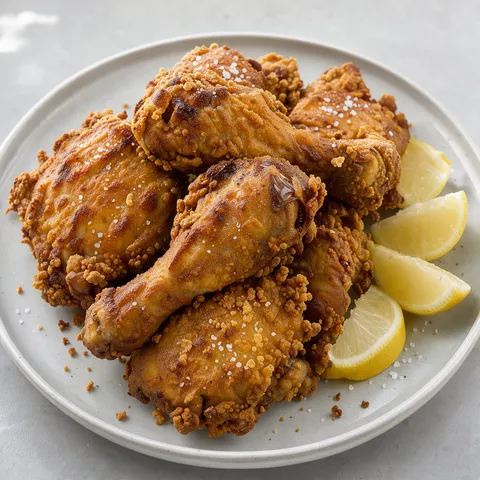 Southern Fried Chicken1 hr 35 min · Main course
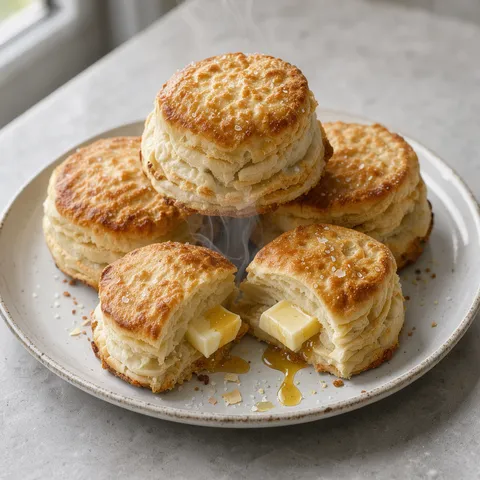 Flaky Southern Scones50 min · Bread & pastry
 Bean-Free Chili con Carne3 hr · Main course
 Baked Cheddar Macaroni55 min · Main course