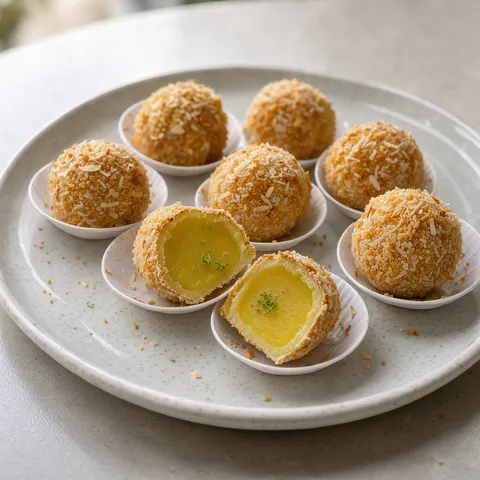
Brazilian Coconut Condensed Milk Balls Beijinho
A Brazilian meze. Takes 1 hr 19 min, Makes 24. Difficulty: medium.
At a glance
- Total time
- 1 hr 19 min
- Serves
- Makes 24
- Difficulty
- Medium
- Cuisine
- Brazilian cuisine
- Dish type
- Meze
- Diet
- Gluten-free
- Allergens
- Milk, Eggs, Tree nuts
Ingredients
- Lemon cream centre (24 × 3 g, about 90 g, 72 g used): 2 egg yolks (36 g)
- 30 g caster sugar
- 30 ml lemon juice
- 1 tsp finely grated lemon zest
- 20 g cold butter (cubed). Beijinho dough (24 pieces, about 10 g dough and 3 g centre each, 13 g in total, 2.8 cm): 175 g Condensed Milk (Basics)
- 12 g butter
- 70 g desiccated coconut
- a pinch of salt
Coating
- 40 g desiccated coconut (to be toasted in a dry pan)
Tray
- 1 tbsp butter (for greasing hands and tray)
- baking paper
Decoration
- 1/2 tsp finely grated lemon zest (24 pinches)
- 24 small paper cases
Equipment
- Heavy-based saucepan
- Wooden spoon / spatula
- Sugar thermometer
- Probe thermometer
- Fine grater
- Balloon whisk
- Fine sieve / chinois
- Frying pan
- Baking tray
- Baking paper
- Precision scales
Method
- Cook the lemon cream: Finely grate the lemon zest with a microplane. Whisk the yolks, sugar, lemon juice and zest cold in a small heavy-based pan. Heat over low heat, whisking constantly, for about 5 min, until the thermometer reads 82°C and the cream coats the back of the spoon. Yolks thicken at 82°C, and if heated more they split and taste of egg. Take off the heat, whisk in the butter cube by cube, pass through a fine sieve into a bowl and cover with cling film touching the surface (~8 min)
- Freeze the centres: Drop 24 drops of 3 g of cream with a teaspoon onto a tray lined with baking paper, put the tray in the freezer and leave for at least 20 min, until hard. A frozen centre stays in place inside the ball without melting and does not leak out during shaping. The dough cooks while the freezer does its work (~4 min)
- Cook the dough: Heat the condensed milk, butter and salt in a heavy-based pan over low heat and add the 70 g coconut. Stir constantly with a wooden spoon until it reaches 108°C on a sugar thermometer, which takes about 10 min. The sign that it is done: when drawn across the bottom of the pan with the spoon, the base stays open for 2 sec, the mixture comes away from the sides and fat droplets appear on the surface. Underdone mixture stays soft and will not ball, and above 112°C it hardens and turns sandy (~10 min)
- Cool and toast the coating: Spread the hot mixture about 2 cm thick on a tray lined with baking paper. Cool for 15 min at room temperature and 15 min in the fridge. The hot mixture burns the palm and turns greasy, and as it cools it takes shape without sticking to the hand. While it cools, toast the 40 g coconut for the coating in a dry pan over medium heat for 3 min, until the edges turn light golden, and put on a plate (~30 min)
- Shape and fill: Grease your hands with butter. Pinch off 10 g pieces (the mixture is about 245 g in total), flatten in your palm, put a centre taken from the freezer in the middle, close the edges and roll into a 2.8 cm ball. Weigh the first three. Each should be 13 g. Keep the tray in the freezer so that the centres do not melt and run, and take out 6 at a time (~20 min)
- Coat: Roll the balls in the toasted coconut and press lightly with your fingers. The toasted coating gives both colour and a slightly crisp texture, and it should be thin and even, as a thick coating gives the balls a dry texture (~4 min)
- Decorate: Put a pinch of lemon zest on top of each ball. The lemon zest balances the sweetness and echoes the lemon flavour of the centre (~1 min)
- Serve: Put the balls in tiny paper cases and arrange on a flat ceramic plate. Leaving them for 10 min at room temperature before serving softens the centre, and when you bite in the lemon cream runs out slightly (~2 min)
Chef's note
Serve at room temperature. Allow 3 per person, 80 people × 3 = 240 pieces; as the recipe makes 24, the multiplier is 240/24 = 10, or 10.5 with 5% allowed for waste (1.85 kg Condensed Milk, 125 g butter, 735 g coconut for the dough and 420 g for the coating; for the centres 21 yolks, 315 g sugar, 315 ml lemon juice, 210 g butter). Beijinho is the white sibling of brigadeiro in Brazil; it differs from Brigadeiro (Brazilian Chocolate Condensed Milk Balls) in its toasted coating, thermometer-checked consistency and lemon cream centre. Condensed Milk is prepared beforehand as the Basics recipe (about 1 hr) and that time is not included. The centres can be made 2 days ahead and kept in the freezer. Shaped balls keep for 3 days in the fridge, covered, and 1 month in the freezer, and are taken out 15 min before serving; as the cream contains egg, they are not left at room temperature for more than 2 hr.
Frequently asked questions
- What temperature should the beijinho mixture reach?
- Cook it to 108°C. Undercooked mixture stays soft and won't roll, and above 112°C it turns firm and sandy.
- Why shouldn't the lemon cream go above 82°C?
- The yolks thicken at 82°C. Any hotter and the cream curdles and tastes eggy.
- Why freeze the lemon cream centres?
- A frozen centre stays put inside the ball and won't leak out as you shape it.
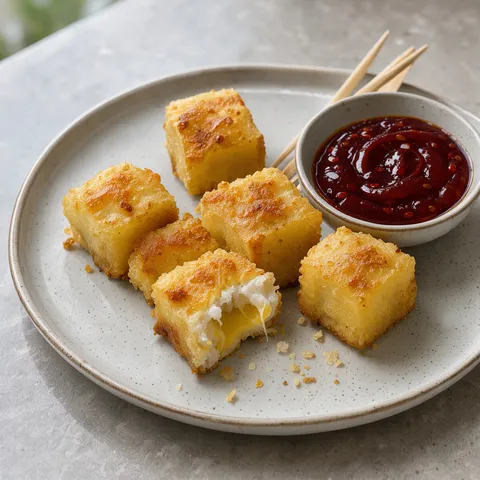 Brazilian Fried Tapioca Cheese Cubes1 hr 5 min · Meze
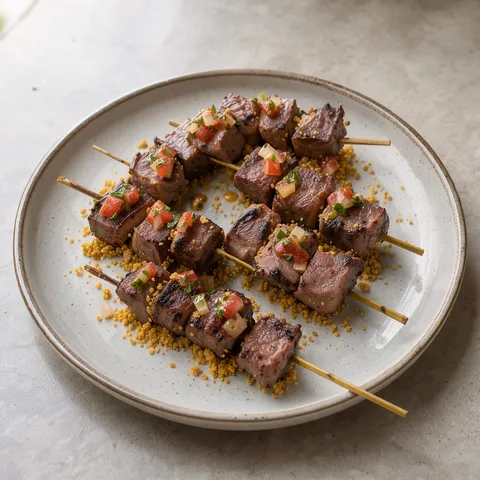 Brazilian Street Picanha Skewers1 hr 2 min · Meze
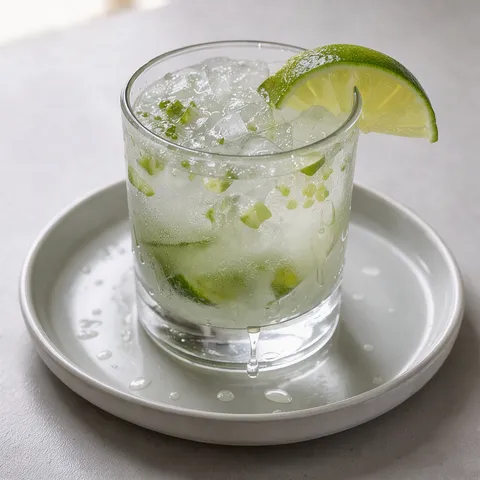 Brazilian Cachaça and Lime Cocktail12 min · Drink
 Bolo de Laranja1 hr 10 min · Patisserie
 Tutu de Feijão1 hr 5 min · Main course
 Kibe Assado1 hr 18 min · Main course