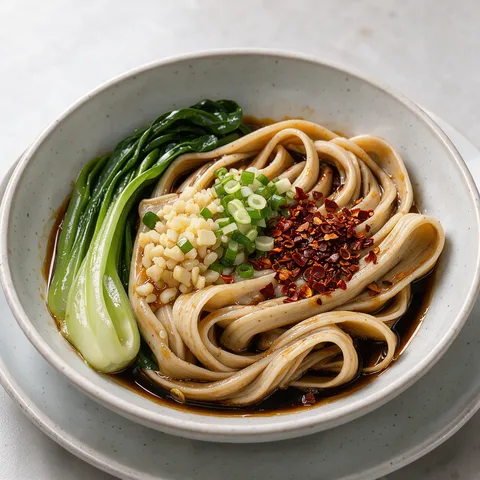
Xi'an Hand-Pulled Wide Noodles Biang Biang Mian
A Chinese main course. Takes 55 min · +1 hr resting, Serves 4. Difficulty: medium.
At a glance
- Total time
- 55 min · +1 hr resting
- Serves
- Serves 4
- Difficulty
- Medium
- Cuisine
- Chinese cuisine
- Dish type
- Main course
- Diet
- Vegetarian, Vegan
- Allergens
- Gluten, Soya
Ingredients
Dough
- 400 g flour (strong white bread flour, high-protein)
- 1/2 tsp salt
- 210 ml water
- 2 tbsp sunflower oil (for resting)
Boiling
- 4 litres water
- 1 tsp salt
- 200 g baby pak choi or spinach (roughly chopped)
Sauce
- 4 tbsp Chinkiang black rice vinegar
- 3 tbsp light soy sauce
- 1 tsp sugar
Topping
- 4 garlic cloves (finely chopped)
- 3 spring onions (finely sliced)
- 2 tbsp chilli flakes
- 1 tsp Sichuan pepper (ground in a mortar)
- 1/2 tsp salt
Sizzling oil
- 120 ml sunflower oil
Equipment
- Mixing bowls
- Dough scraper
- Rolling pin / oklava
- Baking tray
- Cling film
- Pestle and mortar
- Saucepan
- Colander
- Frying pan
- Probe thermometer (optional)
Method
- Knead the dough: Put the flour and salt in a bowl and bring together with a dough scraper, adding the water a little at a time. Knead on the worktop for 10 min. At first the dough looks stiff and rough: do not worry. Cover with an upturned bowl and rest for 10 min while the gluten relaxes, then knead for another 3-4 min. The dough should be a smooth, firm, glossy ball
- Divide into slabs: Divide the dough into 8 equal pieces (about 75 g each). Press each piece by hand into a flat 12×5 cm rectangle and roll to 1 cm thick with a rolling pin. Arrange on a tray, oil both sides and cover tightly with cling film
- Rest: Rest the slabs at room temperature for 1 hr. The oil stops the dough drying out and resting relaxes the gluten, so the dough stretches without breaking when pulled. When pressed with a finger, the dent should fill slowly
- Prepare the sauce and bowls: In the last 15 min of resting, put 4 litres of water on to boil with 1 tsp salt in a 28 cm wide pan. Mix the vinegar, soy sauce and sugar in a bowl and divide between 4 serving bowls. Set out the garlic, spring onions, chilli flakes, Sichuan pepper and salt in separate small dishes
- Pull the noodles: Take one slab and press a groove lengthways down the centre with a chopstick or the back of a knife: this is the line it will later tear along. Hold it by both ends and stretch gently as you open your arms, slapping the dough on the worktop like a rope to lengthen it. With rhythmic slaps, take it to 1-1.2 m long, 4-5 cm wide and 2 mm thick. The sound echoes "biang biang". Tear along the central groove to make one long loop. Two slabs make one portion
- Boil: Drop the 2 loops you have pulled straight into the boiling water and boil for 1.5-2 min, until the noodles rise to the surface and turn translucent. Add a handful of pak choi for the last 30 sec. Lift with a slotted spoon straight into a bowl, on top of the sauce. Pull and boil the remaining 6 slabs, making each portion separately: they stick if they wait
- Add the toppings: On top of the noodles in each bowl, place the garlic, spring onions, chilli flakes, Sichuan pepper and a pinch of salt side by side in small heaps. The oil will be poured over these heaps: do not stir
- Pour the sizzling oil: Heat the 120 ml oil in a small pan over high heat until the first wisp of smoke (about 200°C). Pour 30 ml over the spice heaps in each bowl. The garlic and chilli sizzle at once and release their aroma. At the table, mix by lifting the sauce up from under the noodles and eat at once
Chef's note
Biang biang mian is the wide noodle regarded as the symbol of Shaanxi province and its capital, Xi'an. The word "biang" in its name is said to be written with one of the most complex characters in Chinese script. This is the plainest, "sizzling oil" (you po) version: it is also topped with tomato and egg or a spiced beef sauce. The dough may break on the first attempt: boil the broken pieces in the same way. Chinkiang vinegar is available in Asian shops.
Frequently asked questions
- Why does biang biang dough tear when pulled?
- If it hasn't rested enough, the gluten won't relax. Oil the pieces, cover with cling film and rest at room temperature for 1 hour. When you press it with a finger, the dent should fill back slowly.
- How do you pour the hot oil over the noodles?
- Heat 120 ml oil until it just starts to smoke. Pour 30 ml over the piles of garlic, spring onion and chilli in each bowl. The garlic and chilli sizzle instantly and release their aroma.
- Why are the noodles boiled one portion at a time?
- Two pulled rings make one portion, and they go straight into boiling water. If left to wait they stick together, so cook each portion separately and lift it directly onto the sauce.
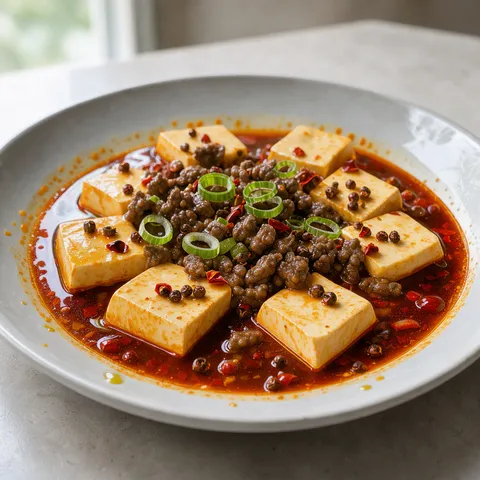 Mapo Tofu35 min · Main course
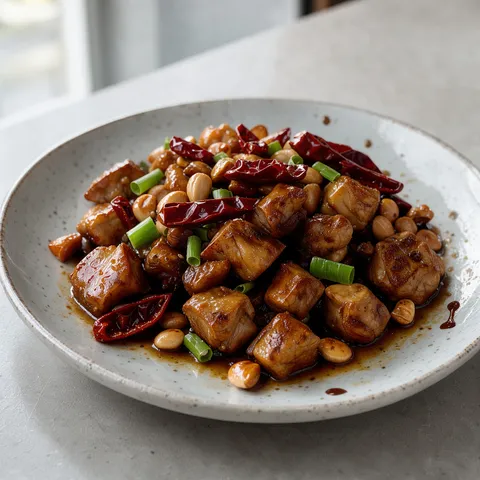 Kung Pao Chicken30 min · Main course
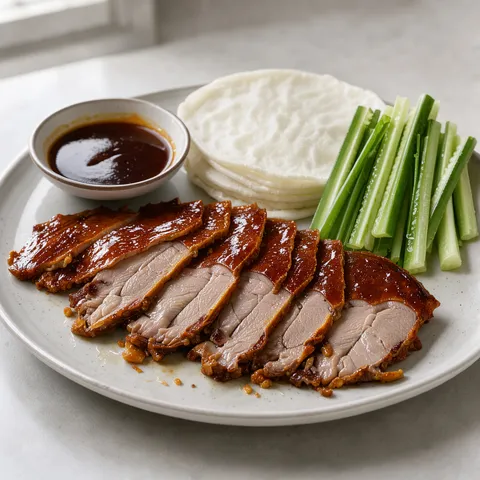 Peking Duck2 hr · Main course
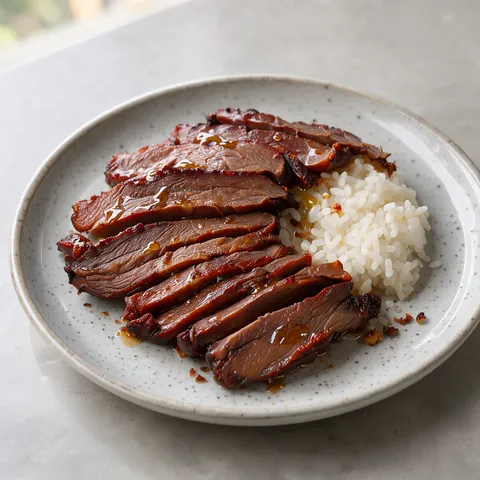 Char Siu1 hr · Main course
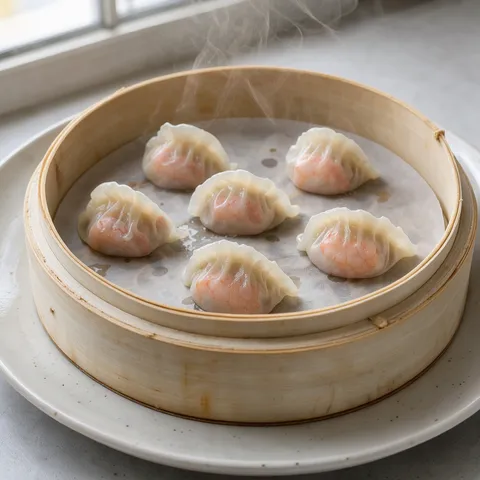 Crystal Prawn Dumplings1 hr 30 min · Starter
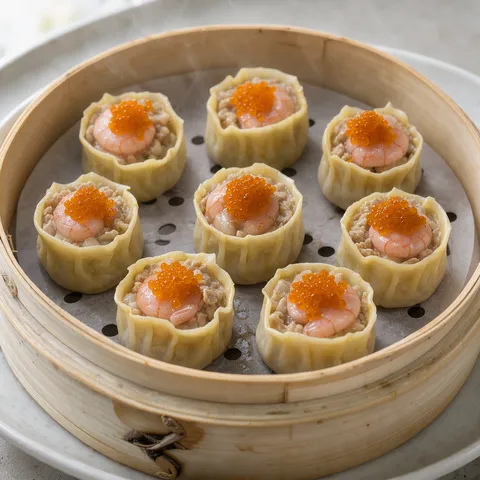 Open-Topped Dumplings50 min · Starter