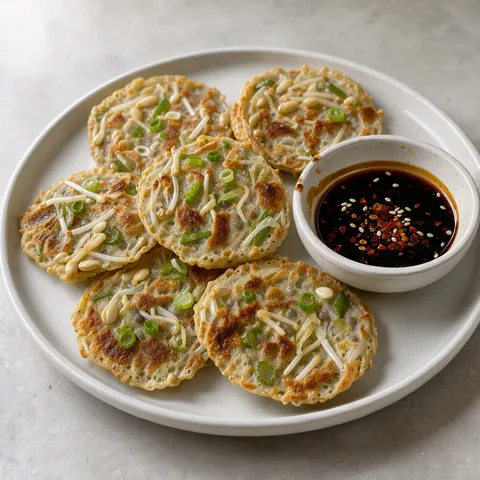
Korean Mung Bean Pancakes Bindaetteok
A Korean meze. Takes 49 min · +2 hr soaking, Makes 24. Difficulty: medium.
At a glance
- Total time
- 49 min · +2 hr soaking
- Serves
- Makes 24
- Difficulty
- Medium
- Cuisine
- Korean cuisine
- Dish type
- Meze
- Diet
- Vegetarian, Vegan, Gluten-free
- Allergens
- Sesame, Soya
Ingredients
- Batter (24 pancakes, 30 g per pancake, about 720 g in total): 200 g skinned yellow mung beans (dried)
- 100 ml water
- 2 garlic cloves
- 1/2 tsp salt
Vegetables
- 100 g mung bean sprouts
- 80 g white cabbage (3 mm strips)
- 40 g carrot (thin matchsticks)
- 3 spring onions (thin rings)
- 1 long red pepper (deseeded, 2 mm dice)
- 1 tbsp tamari
- 1 tsp sesame oil
Frying
- 9 tbsp neutral oil (3 batches × 3 tbsp). Sauce (24 × 4 g, about 95 g): 3 tbsp tamari
- 1 tbsp rice vinegar
- 1 tbsp water
- 1 tsp sesame oil
- 1 tsp gochugaru (Korean chilli flakes)
- 1 tsp toasted sesame seeds
- 1 spring onion
Equipment
- Blender
- Mixing bowls
- Colander
- Sauté pan
- Silicone spatula
- Chef's knife
- Chopping board
- Precision scales (optional)
Method
- Soak the mung beans: Wash the mung beans, put them in a bowl, cover with lukewarm water (about 40°C) to a depth of 3 fingers above the beans and soak for 2 hr, then drain. Soaked beans blend smooth. If left dry, the batter stays grainy and the middle of the pancake does not cook (the soaking time is not included in the total). (~3 min)
- Blend the batter: Blend the drained beans (about 400 g), 100 ml water, garlic and salt in a blender for 90 sec, to a slightly grainy but pourable, creamy consistency. Mung batter contains starch and acts as a binder when cooked, so no rice flour or egg is needed. This makes about 500 ml batter. (~6 min)
- Prepare the vegetables: Chop the cabbage, carrot, spring onions and pepper to the sizes given, with a knife on the board. Mix the chopped vegetables and the mung sprouts in a bowl with the tamari and sesame oil for 2 min and wait for them to release their liquid, then drain in a colander for 3 min. Excess liquid stops the pancake browning and loosens the structure. The vegetables weigh about 255 g. (~10 min)
- Combine: Add the vegetables to the mung batter and mix with a spoon for 1 min. The batter should fall from the spoon in a thick ribbon and weigh about 755 g in total. If it is too wet, add 1 tbsp rice flour. You will take 30 g portions with a spoon. (~3 min)
- Cook: Heat a 28 cm non-stick sauté pan over medium heat and add 3 tbsp oil. Take 30 g portions of the batter, drop them into the pan 2 cm apart and press with a spatula into circles 5 cm across and about 1.5 cm thick. Cook for 3.5 min on each side, until golden-brown and crisp at the edges. 8 pancakes fit in the pan (3 batches, about 7 min each). Add 3 tbsp oil to the pan for each new batch (9 tbsp in total), because the crisp edge of bindaetteok comes from shallow-frying, and too little oil dries out the pancake. If the heat is too high, the outside burns and the inside stays raw. (~24 min)
- Mix the sauce: Mix the tamari, vinegar, water, sesame oil, gochugaru, sesame seeds and finely chopped spring onion in a small bowl. Tamari is a wheat-free soy sauce. Gochujang (chilli paste) mostly contains wheat, which is why it is not used in this sauce. The sauce weighs about 95 g. The sauce is ready while the pancakes cook.
- Serve: Arrange the pancakes diagonally on a flat ceramic plate and give 4 g sauce in a small dish beside them, or spoon it over each pancake. Eat within the first 10 min while hot, as they soften when cold. (~3 min)
Chef's note
Serve hot. 3 pancakes per person, 80 people × 3 = 240 pieces. As the recipe makes 24, the multiplier is 240/24 = 10, or 10.5 with 5% allowed for waste (2.1 kg skinned yellow mung beans, 1.05 kg mung sprouts, 840 g white cabbage, 420 g carrot, 42 spring onions, 95 tbsp neutral oil (strained and replenished between batches in the same pan), 42 tbsp tamari). Entirely plant-based and gluten-free, made from mung beans, tamari, rice vinegar, gochugaru and vegetables. Soy sauce and gochujang may contain wheat, so choose one labelled gluten-free on the packaging. The original recipe uses pork and kimchi; here it is made entirely with vegetables. The 2 hr soaking is not included in the total time (written separately in the time field). 10.5 times makes 252 pancakes, 32 batches (8 pancakes fit in a 28 cm pan, about 7 min per batch). With a single pan it takes about 3 hr 45 min, and with 4 pans about 1 hr. The batter can be made 1 day ahead and kept in the fridge, but once the vegetables are added it must be fried within 1 hr. Cooked pancakes are refreshed in a 180°C oven for 6 min.
Frequently asked questions
- Why are the mung beans soaked beforehand?
- Soaked beans blend to a smooth batter. If left dry, the batter stays grainy and the middle of the pancake does not cook.
- Does bindaetteok batter need egg or flour?
- It does not, as mung beans contain starch that binds as they cook. If the batter is too runny, add only 1 tablespoon of rice flour.
- Why is tamari used in the sauce instead of gochujang?
- Tamari is a wheat-free soy sauce. Gochujang usually contains wheat, so it is not used in this sauce.
 Bibimbap1 hr 15 min · Main course
 Kimchi3 hr · Side dish
 Bulgogi30 min · Main course
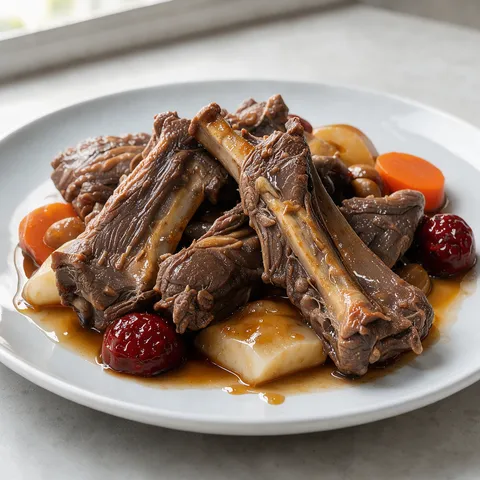 Korean Braised Short Ribs1 hr 30 min · Main course
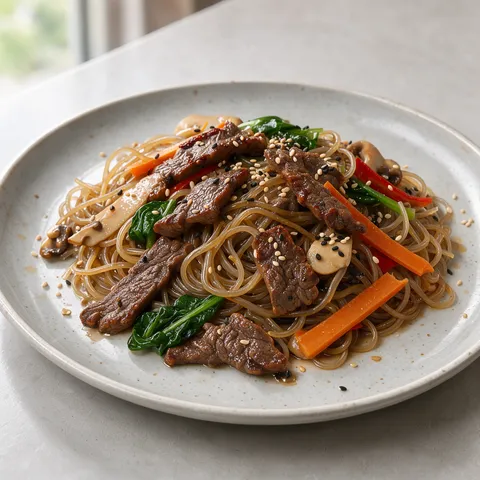 Korean Glass Noodles with Vegetables45 min · Main course
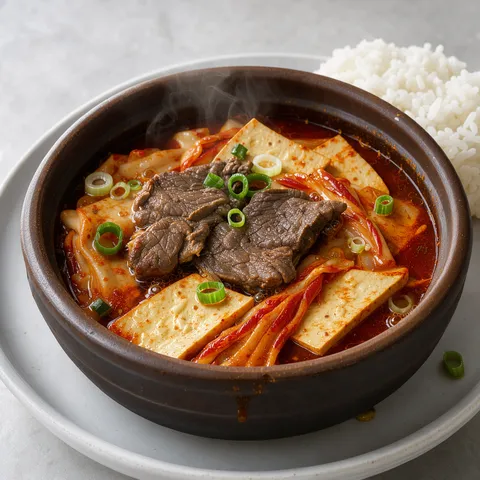 Kimchi Stew40 min · Soup