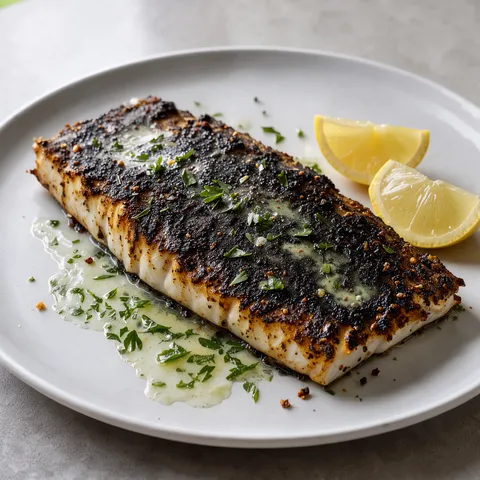
Cajun-Spiced Sea Bass Blackened Fish
An American main course. Takes 40 min, Serves 4. Difficulty: easy.
At a glance
- Total time
- 40 min
- Serves
- Serves 4
- Difficulty
- Easy
- Cuisine
- American cuisine
- Dish type
- Main course
- Diet
- Gluten-free
- Allergens
- Milk, Fish
Ingredients
Fish
- 4 thick sea bass or grouper fillets (skinless, about 170 g each, at least 1.5 cm thick)
Spices
- 2 tsp sweet paprika
- 1 tsp smoked sweet paprika
- 1 tsp garlic powder
- 1 tsp onion powder
- 1/2-1 tsp hot paprika
- 1 tsp dried thyme
- 1/2 tsp dried oregano
- 1/2 tsp black pepper
- 1/2 tsp white pepper
- 1.5 tsp salt
Butter
- 120 g butter (80 g melted, 40 g cold and cubed)
Lemon butter
- juice of 1 lemon
- 2 tbsp finely chopped parsley
- a pinch of salt
To serve
- 1 lemon (sliced)
Equipment
- Mixing bowls
- Baking tray
- Saucepan
- Cast-iron frying pan
- Silicone spatula
- Plating tweezers (optional)
- Probe thermometer (optional)
Method
- Prepare the fish: Take the fillets out of the fridge 15 min before cooking. Pat both sides thoroughly dry with kitchen paper, run a fingertip along the flesh to feel for any remaining bones and pull them out with tweezers. Cold, wet fish lowers the temperature of a hot pan and creates steam instead of a crust
- Mix the spices: Mix all the spices and the salt in a bowl, then spread evenly on a shallow tray. The mixture darkens in the hot pan into a dark crust that smells of toasted pepper and thyme, not a burnt one
- Melt the butter: Melt 80 g of the butter in a small saucepan over low heat and transfer to a shallow dish. Keep the remaining 40 g cold. Open the window and turn the extractor fan to its highest setting. This technique makes a lot of smoke, so if possible do it on the balcony, with the cast-iron pan on a barbecue
- Heat the pan: Heat the 28 cm cast-iron pan dry over the highest heat for 8-10 min. It is ready when a whitish-grey haze appears over the base of the pan and a drop of water vanishes instantly. The surface goes above 250°C. Do not add oil, as the butter coating the fish supplies the fat.
- Coat: Dip each fillet in the melted butter and let the excess drip off. Then press both sides into the tray of spices to coat in a thick, even layer. The butter makes the spices stick and becomes the fat that fries the crust in the pan
- Cook: Put two fillets in the pan and cook for 2 min without touching. When the edges turn opaque and the underside has a dark brown-black crust, drizzle 1 tsp of melted butter over each fillet, turn with a spatula and cook for another 1.5-2 min. The fish is cooked when the flesh is opaque in the middle and flakes apart in slices when pressed with a fork, at an internal temperature of 60-63°C. Transfer to a tray. Wipe the pan with kitchen paper, reheat for 1 min and cook the remaining two fillets
- Make the lemon butter: Turn off the heat. Add the 40 g of cold butter, lemon juice, parsley and a pinch of salt to the pan, which is still very hot, and swirl the pan for 20-30 sec until foaming. The butter dissolves the spice crumbs in the pan
- Serve: Place the fillets crust side up on plates, drizzle the lemon butter over them and arrange lemon slices beside them. Serve immediately, as the crust softens as it stands
Chef's note
The blackening technique was popularised in the 1980s by the New Orleans chef Paul Prudhomme, with redfish. The dish became so popular that limits are said to have been placed on catching this fish in the Gulf of Mexico. Fillets of sea bass, grouper, whiting or salmon give the same result, while thin fillets cook through and fall apart before a crust forms. A non-stick pan cannot take this heat, so always use cast iron. White rice or the Succotash recipe on this site go well with it.
Frequently asked questions
- Is blackened fish burnt, and how does the crust form?
- The spice mix darkening in a hot pan isn't burnt, it forms a dark crust that smells of toasted pepper and thyme. Dip the fillets in melted butter and press them into the spices, because the butter makes the spices stick.
- What if there is too much smoke?
- This technique makes a lot of smoke. Open a window, turn the extractor to its highest setting and, if possible, cook on a balcony with a cast-iron pan over a barbecue.
- Why is the fish dried and the pan heated dry?
- Cold, wet fish drops the temperature of a hot pan and steams instead of forming a crust. Heat the pan dry for 8-10 minutes without oil, as the butter goes on the fish.
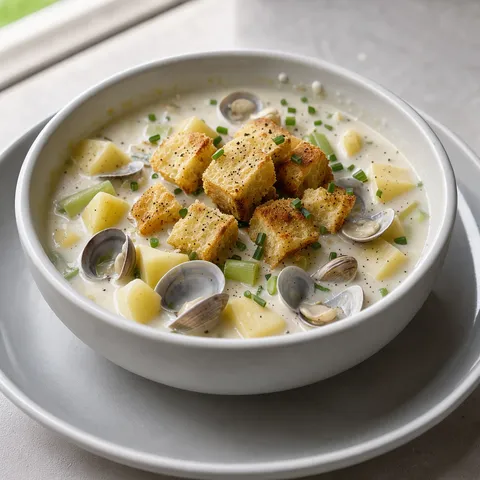 New England Clam Chowder1 hr 15 min · Soup
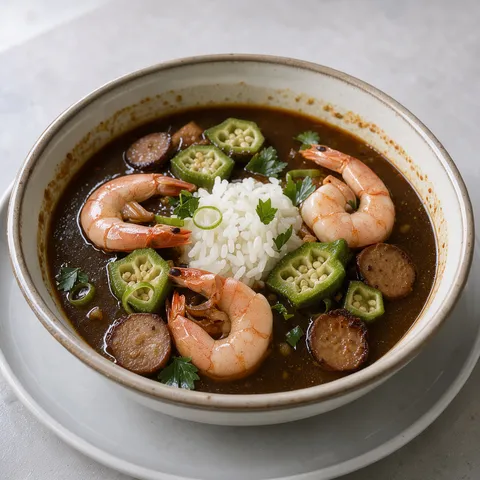 Louisiana Prawn and Okra Gumbo2 hr 15 min · Soup
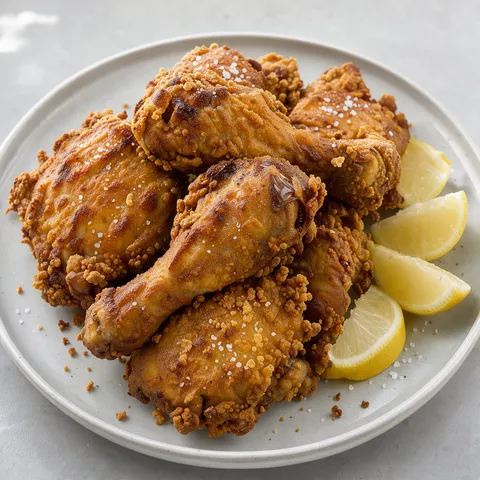 Southern Fried Chicken1 hr 35 min · Main course
 Flaky Southern Scones50 min · Bread & pastry
 Bean-Free Chili con Carne3 hr · Main course
 Baked Cheddar Macaroni55 min · Main course