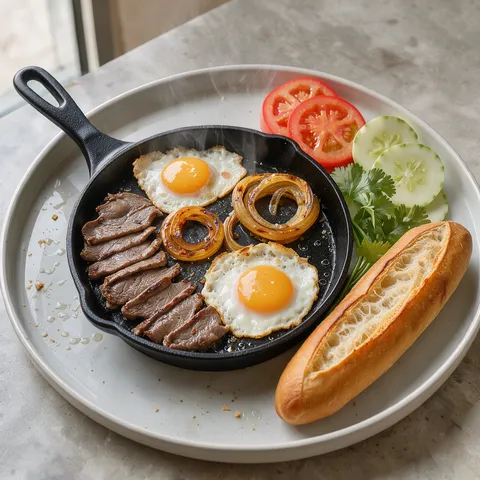
Saigon Sizzling Beef Fillet with Eggs, Onion and Baguette Bò Né
A Vietnamese main course. Takes 28 min, Serves 4. Difficulty: easy.
At a glance
- Total time
- 28 min
- Serves
- Serves 4
- Difficulty
- Easy
- Cuisine
- Vietnamese cuisine
- Dish type
- Main course
- Allergens
- Gluten, Milk, Eggs, Soya
Ingredients
Beef
- 500 g beef fillet
- 1 tbsp soy sauce
- 1 tsp sugar
- 2 garlic cloves (crushed)
- 1 tsp freshly ground black pepper
- 1 tbsp vegetable oil
Pan
- 4 eggs
- 30 g butter
- 1 small red onion (thin rings)
- 2 tbsp vegetable oil
Sauce and to serve
- 2 tbsp lemon juice
- 1 tsp salt
- 1/2 tsp freshly ground black pepper
- 1 tomato (sliced)
- 1 small cucumber (sliced)
- 1 baguette (warm)
- 1 handful coriander
Equipment
- Cast-iron frying pan
- Chef's knife
- Chopping board
- Mixing bowls
- Frying pan
- Oven (optional)
Method
- Slice and marinate the meat: Slice the beef fillet 1 cm thick against the grain with a chef's knife on a chopping board. Mix with the soy sauce, sugar, garlic, black pepper and oil in a bowl. The sugar caramelises in the pan and gives the meat a dark brown crust, while thin slices cook in seconds (~5 min)
- Prepare the garnish: Cut the onion into thin rings, slice the tomato and cucumber thinly and arrange on a large plate. Beside the hot meat and eggs from the pan, a cold, sour contrast is needed. Roughly chop the coriander (~4 min)
- Mix the dipping sauce: In a small bowl, whisk the lemon juice, salt and black pepper. The salt should dissolve completely, otherwise hard grains remain. The meat and eggs are dipped in this sauce as you eat (~2 min)
- Heat the pan: Heat the cast-iron pan empty over medium-high heat for 4 min. Cast iron holds heat and the temperature does not drop when the meat goes in. Before adding the oil, the surface should be lightly smoking (~4 min)
- Sear the meat: Pour the oil into the pan and add the meat spaced apart, as a crowded pan steams the meat. When the underside is dark brown, turn and cook the other side. Pull the slices aside when the edges are browned and the middle is still pink. Overcooked beef turns rubbery in thin slices (~4 min)
- Add the onion and eggs: Add the butter and onion rings to the fat left in the pan and toss for a few seconds, swirling the pan. Crack in the eggs and cook until the whites are completely set while the yolks stay runny. The butter makes the edges of the eggs golden and crisp (~3 min)
- Warm the baguette: Warm the baguette in the oven or in a dry frying pan until hot and crisp. The baguette is the inseparable companion of Bò Né, used for mopping up the egg yolk and the sauce (~3 min)
- Plate: Gather the meat and eggs on a hot serving plate or in the pan itself. Put the tomato, cucumber and onion garnish on the edge of the plate. Sprinkle with coriander. Put the baguette and the lemon-pepper sauce alongside. Serve at once while still sizzling (~3 min)
Chef's note
Bò né is the breakfast dish of Saigon and arrives sizzling in small pans, and né means to dodge, because you dodge the spitting fat. The original recipe uses pâté and pork sausages; here it is made with beef and egg only. Be careful of fat spitting in the pan. Rib-eye can also be used instead of beef fillet.
Frequently asked questions
- What is Bò Né?
- It is a Saigon breakfast of beef, eggs and baguette served on a sizzling hot pan. Né means to dodge, because you dodge the spitting oil.
- Which beef is used in Bò Né?
- Thinly sliced beef fillet or sirloin is usually used. Thin slices cook in seconds and stay tender.
- Why is Bò Né eaten with baguette?
- It is an influence of the French colonial period. The baguette is used to mop up the egg yolk and the sauce left in the pan.
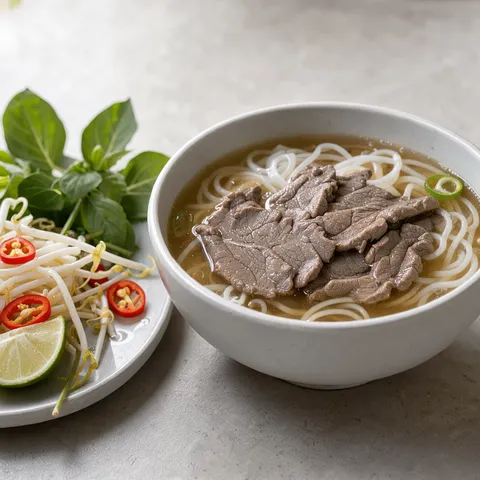 Vietnamese Beef Noodle Soup2 hr 15 min · Soup
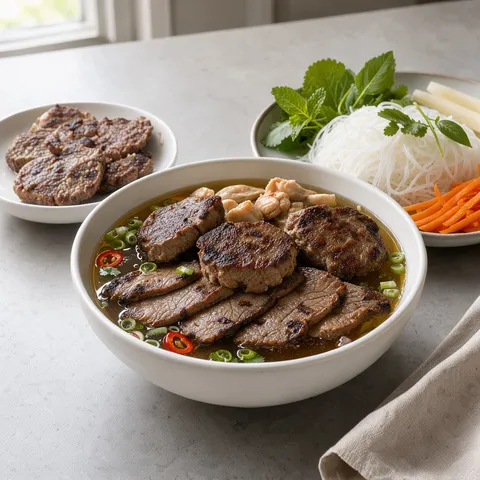 Hanoi Grilled Meat with Rice Noodles1 hr · Main course
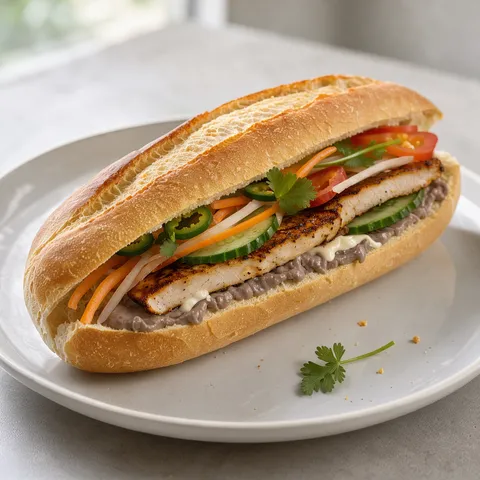 Vietnamese Baguette Sandwich1 hr · Main course
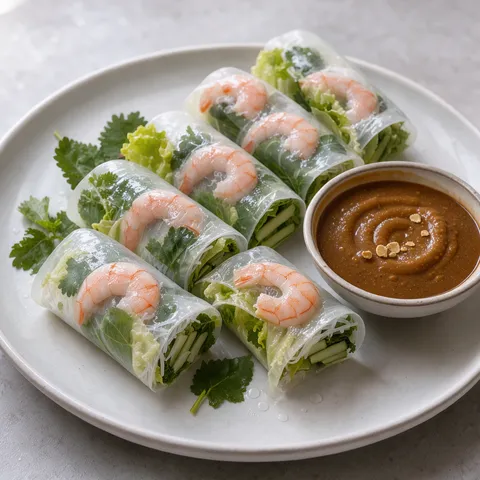 Summer Rolls40 min · Starter
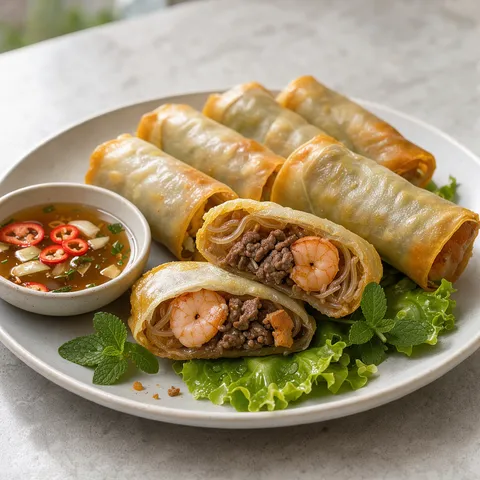 Vietnamese Fried Spring Rolls1 hr · Starter
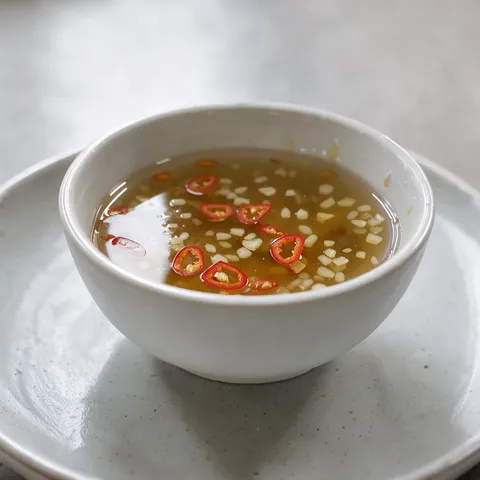 Vietnamese Dipping Sauce5 min · Sauce