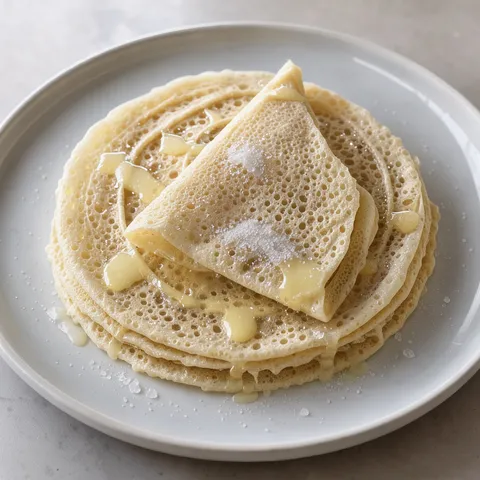
Somali Yeasted Pancake Bread Canjeero
A Somali bread & pastry. Takes 45 min · +2 hr rising, 10 pieces (4 servings). Difficulty: medium.
At a glance
- Total time
- 45 min · +2 hr rising
- Serves
- 10 pieces (4 servings)
- Difficulty
- Medium
- Cuisine
- Somali cuisine
- Dish type
- Bread & pastry
- Allergens
- Gluten, Milk, Eggs
Ingredients
Batter
- 250 g plain flour
- 50 g fine cornmeal
- 3 g (1 tsp) fast-action dried yeast
- 1 tsp sugar
- 1/2 tsp salt
- 460 ml lukewarm water (about 35°C)
- 1/4 tsp baking powder (before cooking)
Pan
- 1 tbsp sunflower oil (for wiping the pan)
To serve
- 40 g butter (melted)
- 2 tbsp sugar
Equipment
- Mixing bowls
- Blender
- Cling film
- Frying pan
- Ladle
- Silicone spatula
- Balloon whisk (optional)
Method
- Activate the yeast: Mix the yeast, sugar and 100 ml of the lukewarm water in a bowl and leave for 5 min. A thin foam should form on the surface, and if it does not, the yeast is dead and the batter will not rise. The water should not exceed 40°C, as yeast dies when it is too hot
- Mix the batter: Put the flour, cornmeal and salt in a blender, add the yeast water and the remaining 360 ml lukewarm water. Blend for 1-2 min, until no lumps remain and the batter is smooth, slightly thicker than crêpe batter and runs from the spoon in a ribbon. Without a blender, whisk for 3-4 min
- Prove: Pour the batter into a bowl twice the volume of the batter, cover with cling film and leave in a warm place (about 26-28°C) for 2 hr. The batter should increase by half in volume, the surface should be covered with small bubbles from edge to edge, and it should smell slightly sour. The sour taste and holey surface of canjeero come from this fermentation
- Adjust the consistency: Stir the batter slowly with a spoon, sprinkle in the baking powder, fold in and leave for 5 min. It should run slowly from a ladle, and if it is too thick, add 1-2 tbsp lukewarm water. Baking powder helps more holes open on the surface as it cooks
- Prepare the pan: Heat a 24 cm non-stick or well-seasoned cast-iron pan over medium heat for 3 min. Wipe the pan very thinly with kitchen paper dipped in oil. Flick a few drops of water onto the pan: if they sizzle and evaporate at once, the heat is right. Too much oil fries the surface of the canjeero and stops holes from opening
- Spread: Pour a small ladle of batter (about 65 ml) into the middle of the pan. With the base of the ladle, starting from the middle and drawing a spiral outwards, spread the batter to a thickness of 2-3 mm and a diameter of 20 cm. The spiral mark is the recognisable look of canjeero, where the ladle's path leaves thin rings in the batter
- Cook: Without covering, cook one side only for 1.5-2 min. Holes open on the surface, the top should be completely matt and dry and the underside light golden. Do not turn it: canjeero is a soft bread cooked on one side only. Lift with a spatula onto a clean tea towel and cover with the towel
- Stack: Cook 10 in total with the rest of the batter, stacking each on top of the previous one and keeping them covered with the towel. Wipe the pan again with an oiled towel after every few canjeero. The covered stack stays soft in its steam
- Serve: Fold the canjeero into quarters and put them on a plate, drizzle the melted butter over while hot and sprinkle with sugar. It is served at breakfast with tea and at lunch with main dishes
Chef's note
Canjeero (laxoox in the north) is a soft bread eaten at every meal of the day in Somalia, resembling Ethiopian injera but thinner and softer. In Somalia the batter is often left to sour by itself overnight, and here it is cut to 2 hr with dried yeast. You can also prove the batter overnight in the fridge, when the sour taste becomes more pronounced. It is eaten at breakfast with butter and sugar, at lunch with meat dishes such as suqaar, or with a soup alongside.
Frequently asked questions
- Why isn't canjeero flipped?
- Canjeero is a soft bread cooked on one side only. Once holes open on the surface and the top turns matt and dry, lift it with a spatula while the underside is light golden.
- How do holes form in canjeero?
- Fermentation and baking powder help holes form on the surface, whereas too much oil fries the surface and stops holes opening. So wipe the pan very thinly with oiled kitchen paper.
- What if the yeast doesn't work?
- If no fine foam forms in the yeasted water, the yeast is dead and the dough won't rise. The water shouldn't go above 40°C, as yeast dies if it is too hot.
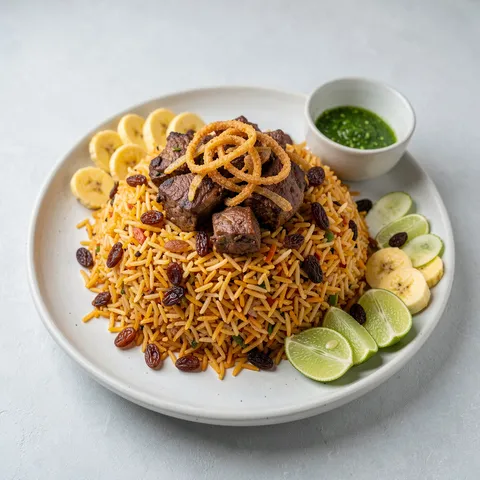 Somali Spiced Lamb Rice1 hr 45 min · Main course
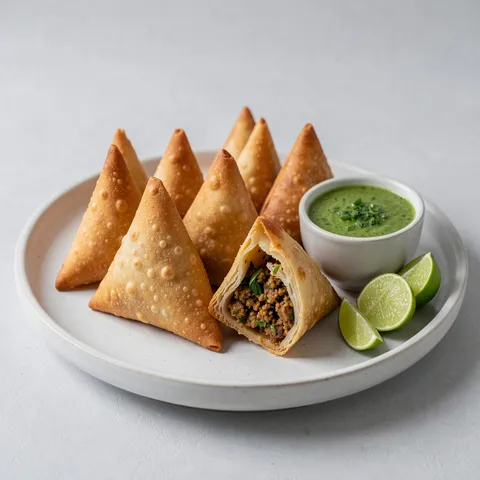 Somali Meat-Filled Triangle Pastries1 hr 30 min · Bread & pastry
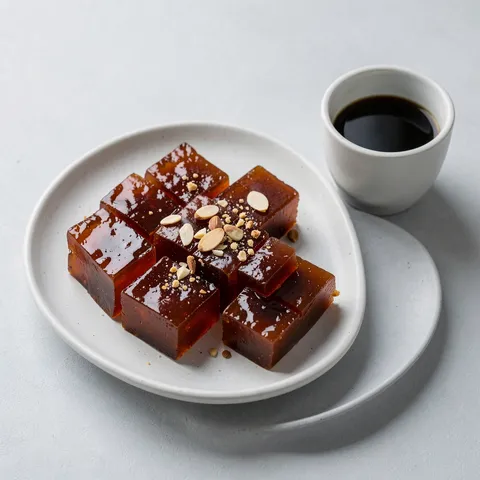 Somali Caramel and Cardamom Halwa1 hr 30 min · Dessert
 Bariis Iskukaris 2.01 hr 25 min · Main course
 Somali Spiced Sauteed Beef1 hr · Main course
 Suqaar 2.01 hr 10 min · Main course