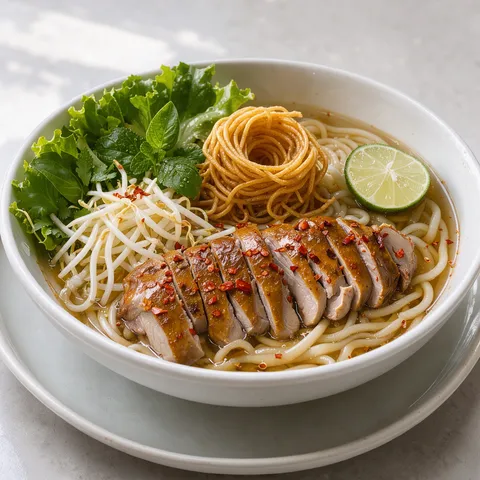
Hội An Thick Noodles with Soy Chicken, Fresh Herbs and Crispy Noodles Cao Lầu
A Vietnamese main course. Takes 36 min, Serves 4. Difficulty: easy.
At a glance
- Total time
- 36 min
- Serves
- Serves 4
- Difficulty
- Easy
- Cuisine
- Vietnamese cuisine
- Dish type
- Main course
- Allergens
- Gluten, Soya, Celery
Ingredients
Chicken
- 600 g boneless skin-on chicken thighs
- 2 tbsp soy sauce
- 1 tbsp honey
- 1 tsp Five-Spice (Basics)
- 2 garlic cloves (crushed)
- 1 shallot (finely chopped)
- 1 tbsp vegetable oil
Noodles
- 300 g dried thick rice noodles
- 1 tsp bicarbonate of soda
- 100 g dried thin rice noodles (for crisping)
- 300 ml vegetable oil (for frying)
Sauce
- 150 ml Chicken Stock (Basics)
- 1 tbsp soy sauce
- 1 tsp sugar
- 1 garlic clove
To serve
- 150 g soybean sprouts
- 1 handful basil
- 1 handful mint
- 1 handful coriander
- 4 lettuce leaves
- 1 lemon
- 1 tbsp chilli flakes
Equipment
- Chef's knife
- Chopping board
- Colander
- Mixing bowls
- Saucepan
- Frying pan
Method
- Marinate the chicken: Mix the chicken thighs with the soy sauce, honey, five-spice, garlic and shallot in a bowl and coat them by massaging with your hands. The honey gives the chicken a glossy, caramelised crust as it fries, and the five-spice brings the aroma of Hội An street food (~5 min)
- Soak the noodles: Soak the thick rice noodles in lukewarm water and leave for 15 min. They lose their hardness and become pliable, so that once cooked they are chewy and elastic, like fresh noodles. Meanwhile the chicken marinates (~15 min)
- Cook the chicken: Heat the oil in a large frying pan over medium-high heat and put in the chicken skin-side down. When the skin is golden and crisp, turn and cook over low heat until the internal temperature reaches 75°C. Once cooked, rest it covered on a chopping board (~14 min)
- Fry the crispy noodles: Fry the thin rice noodles in small bundles in the oil, dry, without soaking. While the oil is hot, the noodles puff up in seconds into a white crisp nest. Lift onto kitchen paper and season lightly with salt (~4 min)
- Boil the sauce: Bring the chicken stock, soy sauce, sugar and garlic to the boil in a small saucepan. Do not let it thicken, just let the flavours combine. A watery soup-like sauce is not wanted, only enough to moisten the noodles (~3 min)
- Boil the noodles: Bring water to the boil in a large saucepan and add the bicarbonate of soda. The soda gives the noodles the pale yellow colour and elastic texture that come from Hội An's famous ash water. Add the soaked noodles and boil for 4 min. Drain in a colander and rinse lightly with cold water (~4 min)
- Slice the chicken: Slice the rested chicken 1 cm thick with a chef's knife on a chopping board. Use a cutting motion with the knife so the skin stays crisp (~3 min)
- Plate: Put soybean sprouts and lettuce in the bottom of four deep bowls and pile the lukewarm noodles on top. Arrange the chicken slices at the side. Drizzle the sauce over the noodles. Sprinkle with herbs, crispy noodles and chilli flakes. Serve at once with a slice of lemon, and everyone mixes their own (~3 min)
Chef's note
Cao lầu is a dish specific to Hội An, and the traditional noodle is made with water drawn from the town's well and oak ash, so it cannot be replicated exactly. Here bicarbonate of soda replaces the ash water, and the texture lies between soba and udon. The original recipe uses sliced pork; here it is made with chicken thighs.
Frequently asked questions
- What is Cao Lầu?
- It is a brothless noodle dish unique to Hội An, made with thick noodles, slices of meat and fresh herbs. This recipe uses chicken thigh.
- Why are cao lầu noodles special?
- Traditionally, water from specific wells in Hội An and wood ash are used. At home, bicarbonate of soda gives a similar springy texture.
- Is Cao Lầu a soup?
- No, it is served with very little sauce and usually eaten as a dry noodle dish. That makes it similar to Mì Quảng but a different dish.
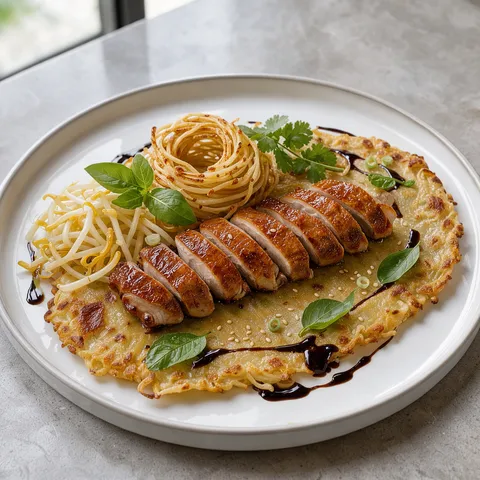 Cao Lầu 2.049 min · Main course
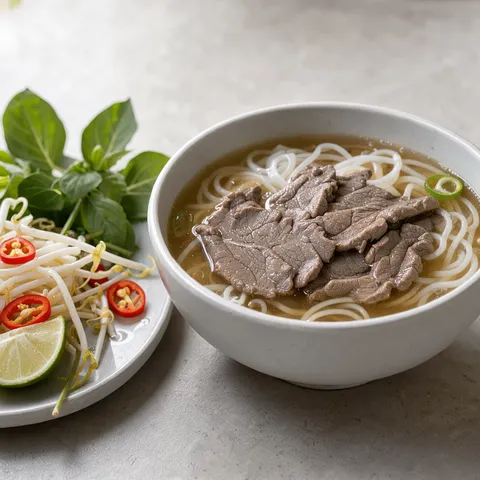 Vietnamese Beef Noodle Soup2 hr 15 min · Soup
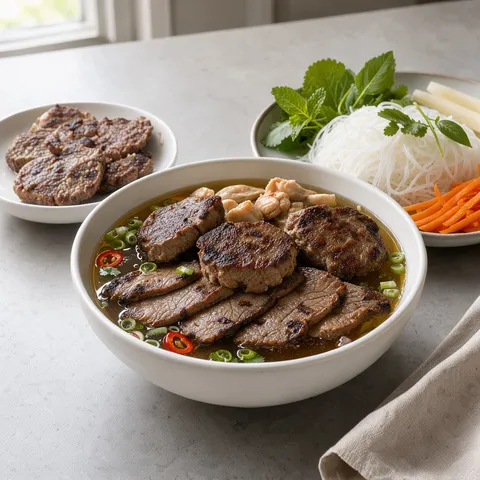 Hanoi Grilled Meat with Rice Noodles1 hr · Main course
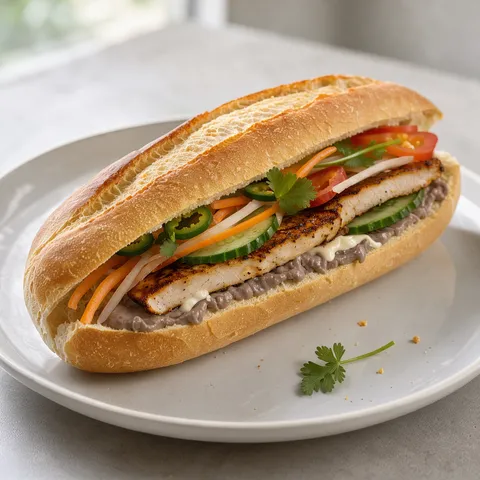 Vietnamese Baguette Sandwich1 hr · Main course
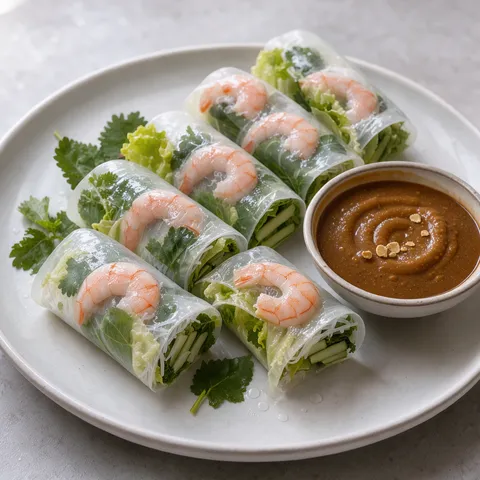 Summer Rolls40 min · Starter
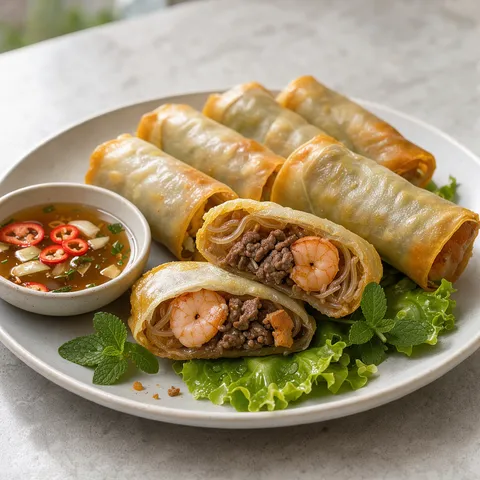 Vietnamese Fried Spring Rolls1 hr · Starter
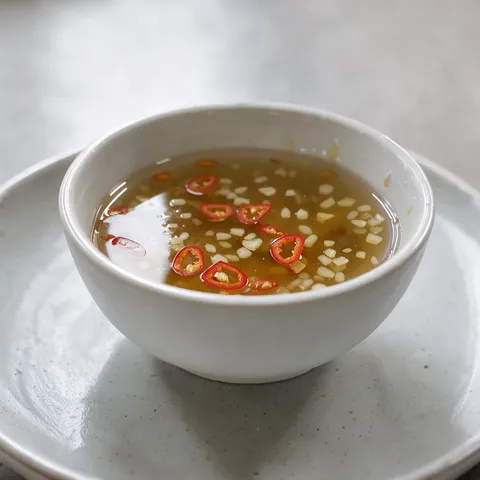 Vietnamese Dipping Sauce5 min · Sauce