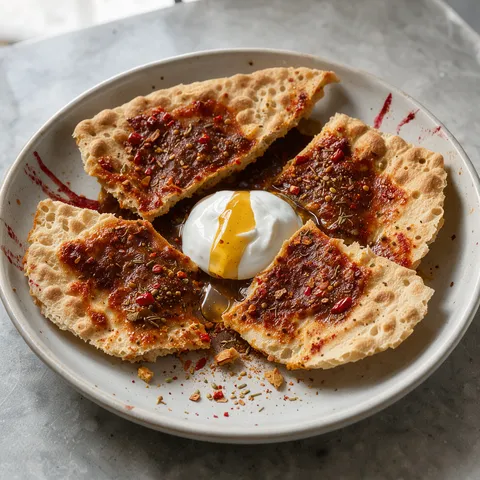
Ethiopian Spiced Fried Flatbread Pieces Chechebsa
An Ethiopian breakfast. Takes 24 min, Serves 4. Difficulty: medium.
At a glance
- Total time
- 24 min
- Serves
- Serves 4
- Difficulty
- Medium
- Cuisine
- Ethiopian cuisine
- Dish type
- Breakfast
- Allergens
- Gluten, Milk
Ingredients
Kita (flatbread)
- 300 g plain flour (150 g of it wholemeal)
- 1 tsp baking powder
- 1/2 tsp fine salt
- 200 ml lukewarm water
- 1 tbsp sunflower oil
Berbere
- 1 tbsp sweet paprika
- 1 tsp chilli flakes
- 1/2 tsp ground ginger
- 1/2 tsp ground cumin
- 1/4 tsp ground cardamom
- 1/4 tsp black pepper
- 1/4 tsp ground cinnamon
- 1/2 tsp fine salt
Spiced butter
- 80 g butter
- 1 garlic clove (crushed)
- 1 cm piece fresh ginger (grated)
To serve
- 200 g strained yoghurt
- 3 tbsp honey
Equipment
- Mixing bowls
- Rolling pin / oklava
- Frying pan
- Saucepan
Method
- Mix the berbere: Put the paprika, chilli flakes, ginger, cumin, cardamom, black pepper, cinnamon and 1/2 tsp salt in a small bowl and mix with a fork for 30 sec. The colour should be an even deep red. Berbere is the signature spice mix of Ethiopian cooking, and here a quick home version is made.
- Knead the dough: In a separate bowl, mix the flours, baking powder and 1/2 tsp salt, then add the lukewarm water and oil. Knead for 3 min, until you have a soft dough that is smooth and does not stick to your hands. If it stays stiff, add 1 tbsp water. A slack dough sticks to the rolling pin.
- Rest and make the spiced butter: Cover the dough and rest for 5 min, so that the gluten relaxes and rolling is easier. Meanwhile, melt the 80 g butter over low heat in a small saucepan and add the crushed garlic and grated ginger. Heat for 4 min, until the garlic is fragrant and the butter is a clear yellow. Turn off the heat if the butter foams and the bottom turns brown. This is a quick version of niter kibbeh, the spiced Ethiopian butter.
- Roll out the kitas: Divide the dough into 4 equal pieces. On a floured worktop, roll each into a round 18 cm across and 3 mm thick with a rolling pin. If rolled too thin, the pieces crumble when fried, and if too thick, the middle stays raw.
- Cook the kitas: Heat a dry pan over medium heat and place the kitas in one at a time. Cook each side for 45 sec, until bubbles appear and the surface is spotted brown. 4 kitas take 6 min in total. Wrap the cooked ones in a cloth so that they do not dry out. Adding oil would crisp the kita, so cook it dry at this stage.
- Tear up and spice: Tear the kitas by hand into irregular pieces of 3-4 cm. Tearing by hand is better than cutting with a knife, because the rough edges absorb the butter better. Put the pieces in a large bowl, sprinkle over the berbere and toss for 2 min to coat every piece.
- Fry in the spiced butter: Heat the spiced butter in the pan over medium heat and add the spiced pieces. Fry for 4 min, turning constantly, until the pieces have absorbed the butter, the edges are lightly crisp and the colour has darkened. Berbere turns bitter over high heat, so keep the heat medium-low. The pieces should be buttery but not swimming in butter.
- Serve: Divide the chechebsa among 4 shallow bowls, put a spoonful of strained yoghurt in the middle of each and drizzle honey over. Eat hot with a spoon or your hands. The yoghurt softens the heat of the spice, and the honey provides a sweet balance.
Chef's note
Chechebsa (also called kita firfir) is eaten at breakfast in Ethiopia and Eritrea, and the traditional method is to tear the kita and fry it in berbere-spiced niter kibbeh. Teff flour may be hard to find, so wholemeal flour was mixed into the wheat flour. In Ethiopia berbere is usually bought ready-made or prepared at length at home, and here a quick home version is given. The dish is vegetarian and contains no egg, but it does contain dairy. If you want less heat, leave out the chilli flakes.
Frequently asked questions
- Why tear the bread by hand for Chechebsa?
- Torn edges are rough and soak up the butter better. That is why cutting with a knife is not preferred.
- What if the berbere turns bitter in the butter?
- Berbere turns bitter over a high heat, so fry the pieces in the spiced butter over a medium-low heat. The pieces should be coated in butter but not swimming in it.
- Why is the kita cooked in a dry pan?
- Adding oil would make the kita crisp. So it is cooked dry at this stage and the crispness is left to the later frying in butter.
 Ethiopian Chicken Stew1 hr 30 min · Main course
 Ethiopian Sour Fermented Flatbread40 min · Bread & pastry
 Ethiopian Chickpea Flour Stew55 min · Main course
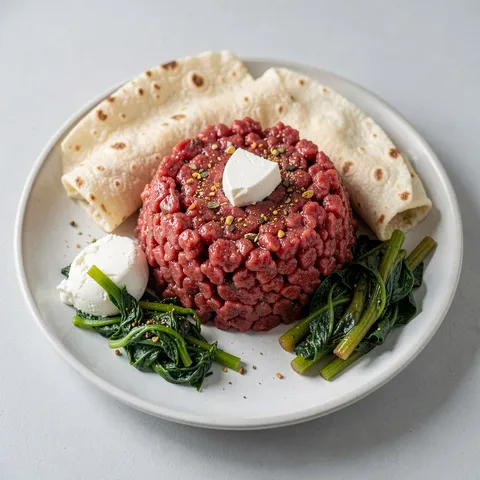 Ethiopian Spiced Beef Tartare30 min · Main course
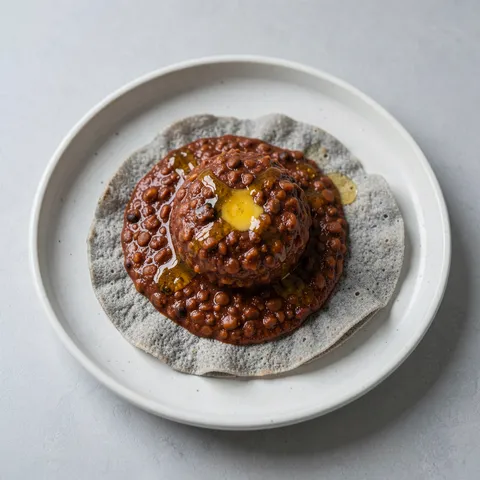 Ethiopian Red Lentil Stew50 min · Main course
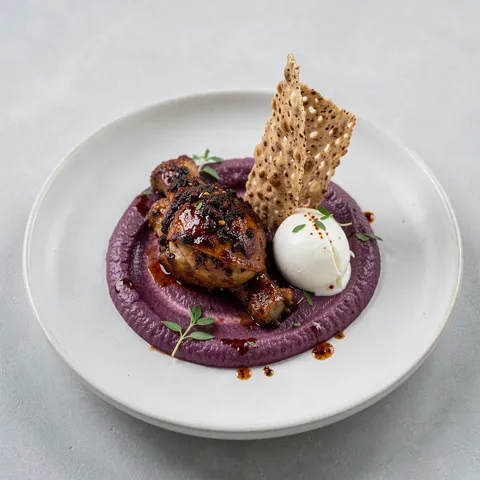 Doro Wat 2.01 hr 15 min · Main course