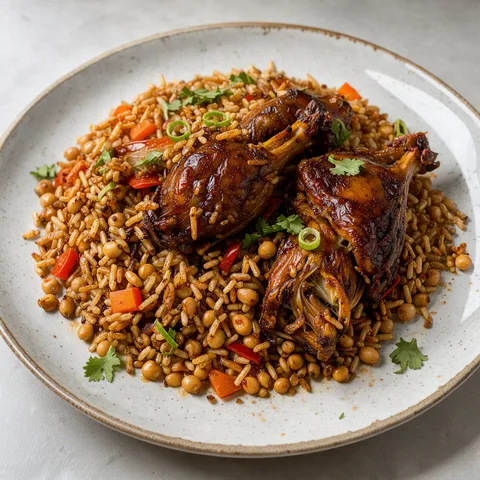
Trinidadian Caramelised Chicken Pilaf Chicken Pelau
A Trinidad and Tobago main course. Takes 1 hr 35 min · +8 hr soaking, Serves 4. Difficulty: medium.
At a glance
- Total time
- 1 hr 35 min · +8 hr soaking
- Serves
- Serves 4
- Difficulty
- Medium
- Cuisine
- Trinidad and Tobago cuisine
- Dish type
- Main course
- Diet
- Gluten-free
- Allergens
- Milk, Tree nuts
Ingredients
Chicken
- 1 kg bone-in chicken thighs and drumsticks (8 pieces)
- 1 tsp salt
- 1/2 tsp black pepper
Green seasoning
- 1/2 bunch coriander
- 4 spring onions
- 4 garlic cloves
- 1 tbsp fresh thyme leaves
- 1/2 green pepper
- 2 tbsp water
Peas
- 150 g dried pigeon peas (soaked overnight; if unavailable, black-eyed beans)
- 1 litre water
Coconut milk
- 120 g unsweetened desiccated coconut
- 500 ml hot water
Pilaf
- 3 tbsp neutral oil
- 60 g light brown sugar
- 1 onion (chopped)
- 1 red pepper (diced)
- 1 carrot (small dice)
- 2 garlic cloves
- 300 g long-grain rice (washed)
- 1 whole Scotch bonnet
- 250 ml water
- 1 tsp salt
- 15 g butter
To serve
- 2 spring onions (thin rings)
- 1 tbsp chopped coriander
Equipment
- Saucepan
- Blender
- Muslin
- Cast-iron casserole
- Wooden spoon / spatula
- Probe thermometer
- Pressure cooker (optional)
Method
- Boil the peas: Boil the soaked pigeon peas in fresh water for 30-35 min, until tender but not yet falling apart, and drain. They should stay firm, as they will go on cooking in the pilaf. If using black-eyed beans, 15-20 min is enough. In a pressure cooker this drops to 10 min
- Marinate the chicken: Blend the green seasoning ingredients in a blender into a dark paste. Rub the chicken with the salt, pepper and 3 tbsp of the green seasoning and leave for 20 min while the peas cook. Overnight is better
- Extract the coconut milk: Blend the desiccated coconut with the hot water in a blender for 2 min. Strain, squeezing hard through muslin, to get about 450 ml of cream-coloured milk. Discard the remaining pulp
- Burn the sugar: In a wide, heavy-based cast-iron pot heat the oil and brown sugar over medium heat. The sugar melts, foams and in 3-4 min turns dark amber-brown, giving off a thin smoke. Add the chicken at exactly this moment. If the sugar turns black it will be bitter. Wash the pot and start again. Hot caramel burns badly, so take care
- Caramelise the chicken: Add the chicken to the pot, wiping off the marinade. The caramel spits, so stand back. Turn for 8-10 min, coating every side in dark brown caramel. The colour and smoky sweetness of the pelau come from this step
- Add the vegetables: Add the onion, red pepper, carrot, garlic and the remaining green seasoning and stir for 4 min
- Add the rice and liquid: Add the rice and stir for 2 min to coat it in caramel and oil. Add the peas, coconut milk, water and salt. Place the Scotch bonnet whole on the surface and do not burst it. Bring to the boil over high heat
- Cook: Lower the heat, close the lid and cook for 25-30 min. The rice should absorb all the liquid, and the internal temperature of the chicken at the thickest part should reach 80°C. A lightly browned layer sticking to the bottom is wanted, so do not stir
- Rest: Take off the heat, add the butter, close the lid and rest for 10 min. Remove the Scotch bonnet and fold the pilaf from bottom to top with a wooden spoon
- Plate: Pile the pelau on a wide plate, put the chicken pieces on top and share out some of the browned layer from the bottom. Finish with spring onion and coriander and serve with a cabbage salad alongside
Chef's note
Pelau is Trinidad's one-pot Sunday and beach dish, and chicken caramelised in sugar is the technique where African and Indian culinary heritages meet on the island. Pigeon peas are the staple pulse of the Caribbean; in Türkiye, if you cannot find them, black-eyed beans give a similar texture. Some families add ketchup to pelau; it is not added here. The browned rice at the bottom is the most fought-over part of the table.
Frequently asked questions
- Where does the colour of pelau come from?
- It comes from caramelising the brown sugar in the oil until a dark amber-brown. The chicken goes in at just that moment, and the colour and smoky sweetness of pelau come from this step.
- What if the sugar burns?
- If the sugar turns black it becomes bitter, so wash the pan and start again. Take care, as hot caramel burns badly.
- What can I use if I cannot find pigeon peas?
- Use black-eyed beans. They only need 15-20 minutes of boiling.
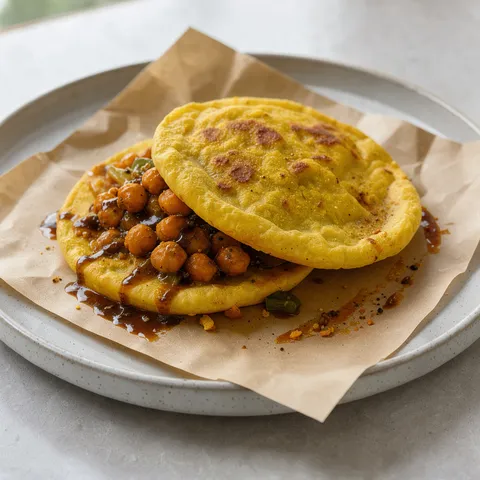 Trinidadian Curried Chickpea Bara Sandwich1 hr 50 min · Bread & pastry
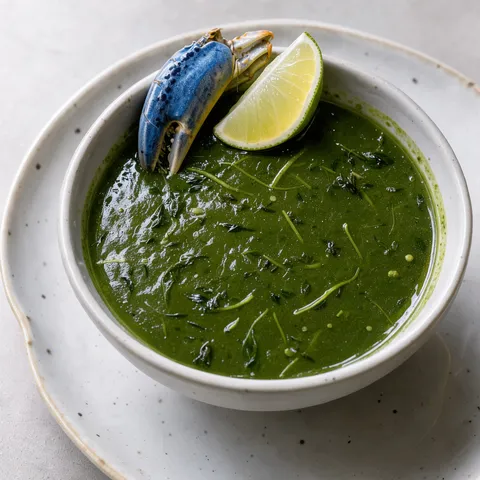 Coconut, Greens and Okra Soup55 min · Soup
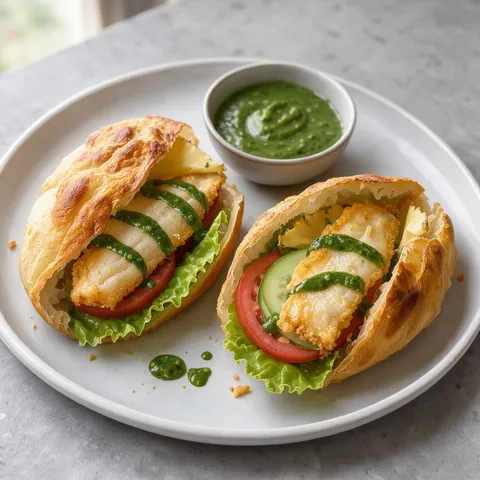 Maracas Fried Fish Sandwich1 hr 30 min · Main course
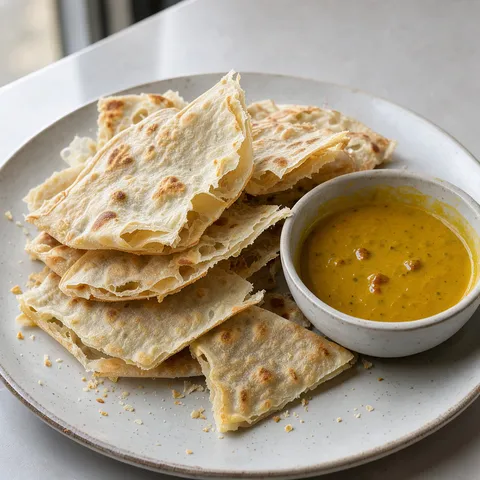 Trinidadian Shredded Layered Paratha Roti1 hr 25 min · Bread & pastry
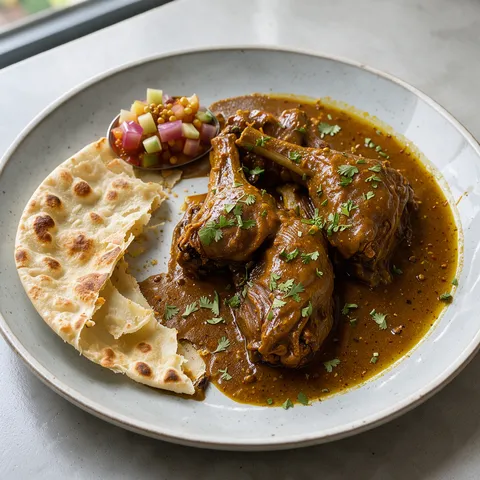 Trinidadian Duck in Curry Sauce2 hr 40 min · Main course
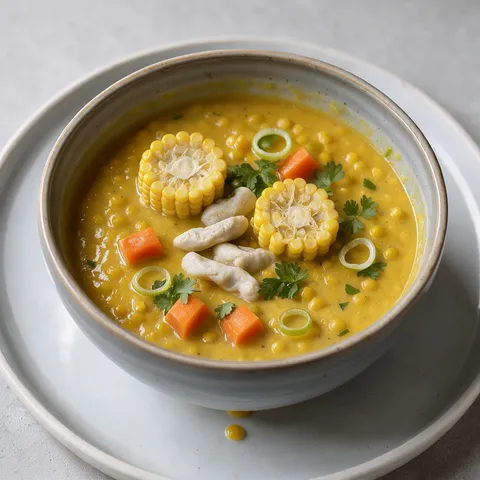 Split Pea, Corn and Dumplings1 hr 40 min · Soup