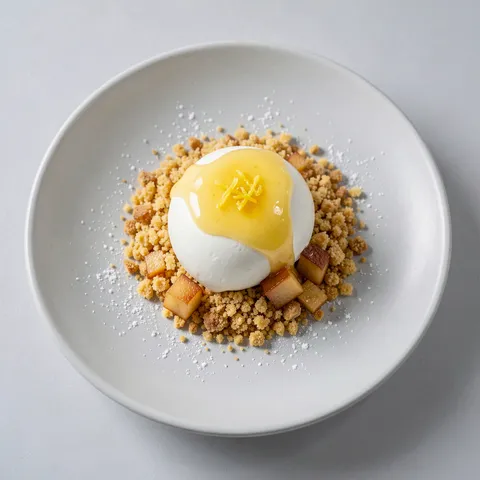
Sächsische Eierschecke 2.0
A German dessert. Takes 50 min, Serves 4. Difficulty: challenging.
At a glance
- Total time
- 50 min
- Serves
- Serves 4
- Difficulty
- Challenging
- Cuisine
- German cuisine
- Dish type
- Dessert
- Allergens
- Gluten, Milk, Eggs
Ingredients
Streusel crumb
- 100 g plain flour
- 60 g cold butter
- 50 g caster sugar
- a pinch of salt
Fresh curd cheese mousse
- 300 g strained full-fat fresh curd cheese
- 200 ml cold double cream
- 40 g icing sugar
- finely grated zest of 1 lemon
- 1 tsp vanilla extract
- 2 gelatine leaves (about 3.5 g)
- 2 tbsp milk
Sabayon
- 4 egg yolks
- 50 g caster sugar
- 60 ml milk
- 1 tsp vanilla extract
- 1 tbsp cornflour
Apple compote
- 2 tart apples (5 mm cubes)
- 20 g butter
- 1 tbsp sugar
- 1 tsp lemon juice
- 1/4 tsp cinnamon
Garnish
- finely grated zest of 1 lemon
- 4 edible flower petals or mint leaves
- icing sugar
Equipment
- Oven
- Baking tray
- Baking paper
- Mixing bowls
- Hand mixer
- Balloon whisk
- Frying pan
- Saucepan
Method
- Make the streusel crumb: Preheat the oven to 180°C. Rub the flour, butter, sugar and salt together with your fingertips until coarse crumbs form. Spread in a thin single layer on a tray lined with baking paper and bake for 12 min, until golden. The crumbs crisp as they cool, so stir lightly and break them up. (~15 min)
- Dissolve the gelatine: Soften the gelatine leaves in cold water for 5 min (in parallel), squeeze out the water and warm with the milk for 30 sec in the microwave or in a hot pan until melted. The gelatine gives the mousse a shape that holds. (in parallel, ~6 min)
- Build the fresh curd cheese mousse: Whisk the fresh curd cheese, icing sugar, lemon zest and vanilla until smooth. Add the melted gelatine in a thin stream and stir at once. Whip the cold cream with a hand mixer to soft peaks and fold gently into the fresh curd cheese. If the gelatine meets the cold cream directly it sets and clumps, so combine it with the fresh curd cheese first. (~10 min)
- Chill the mousse: Put the mousse in a small container, cover and chill in the freezer for 25 min, until firm enough to scoop at the edge with a spoon. Meanwhile prepare the compote and sabayon. (in parallel, ~25 min)
- Cook the compote: Melt the butter in a pan, add the apple cubes and turn for 4 min, until the edges soften and take colour. Add the sugar, lemon juice and cinnamon and caramelise for 2 min. The apple should not become too soft and should resist when bitten. (~7 min)
- Make the sabayon: Put the yolks, sugar, milk, vanilla and cornflour in a stainless steel bowl. Whisk constantly over simmering water (the bowl not touching the water) for 6-7 min. The volume should reach three times its size and 75°C, the colour should lighten and it should run in a thick ribbon. The cornflour stops the sabayon separating. (~9 min)
- Let the sabayon cool slightly: Take the bowl off the water and whisk for 2 min, and while you wipe the plates dry, keep the bowl warm over lukewarm water. It will be served at once. If the sabayon waits it collapses and thins, so it is made last, when the plate is completely ready. (~2 min)
- Build the plate: Scatter a spoonful of streusel crumb over the base of a flat plate. Place the apple compote on it, then a quenelle of mousse shaped with two spoons. (~4 min)
- Coat with sabayon and finish: Spoon the hot sabayon beside the mousse. Scatter over the remaining streusel, lemon zest and icing sugar and add the petal. Serve at once. (~3 min)
Chef's note
Sächsische Eierschecke 2.0 carries the layers of the three-layer cake to the plate: the shortcrust base became crisp streusel crumb, the curd layer a cold mousse and the egg cream a hot sabayon, and the apple compote adds a fresh acidity the cake does not have. The contrast of hot and cold and of crisp and creamy is the character of the plate. Buy beef-derived (halal-certified) gelatine. Instead of gelatine leaves, 1 tsp powdered gelatine soaked in 15 ml cold water can be used. Shape the mousse just before serving, as it falls apart if it warms. You can keep the streusel crumb for 3 days in an airtight container, but do not make the sabayon ahead. Do not take the sabayon above 75°C, or the egg scrambles.
Frequently asked questions
- How is the gelatine added to the curd mousse?
- Whisk the curd first with the icing sugar, lemon zest and vanilla, then add the melted gelatine in a thin stream. If the gelatine meets cold cream, it can turn lumpy, so combine the curd with the gelatine first.
- Why is the sabayon made last?
- If the sabayon waits, it collapses and turns watery. Make it last, once the plate is completely ready, and serve it straight away.
- How do I stop the sabayon splitting?
- The cornflour in the mixture stops the sabayon splitting. Whisk the bowl over simmering water without letting it touch the water, until the volume has tripled and reached 75°C.
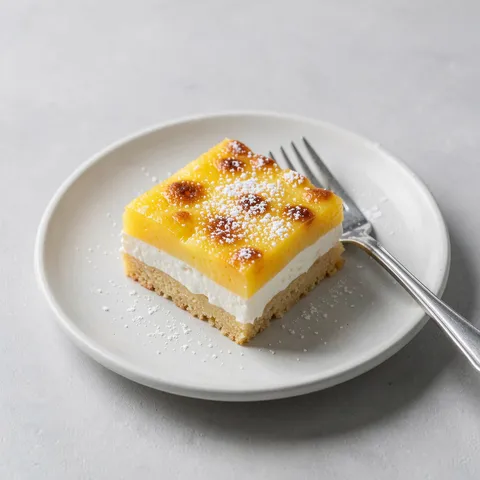 Saxon Three-Layer Curd Cake1 hr 26 min · Patisserie
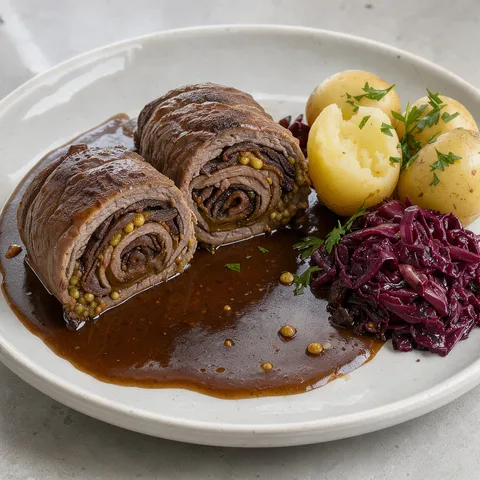 German Beef Roulades2 hr 30 min · Main course
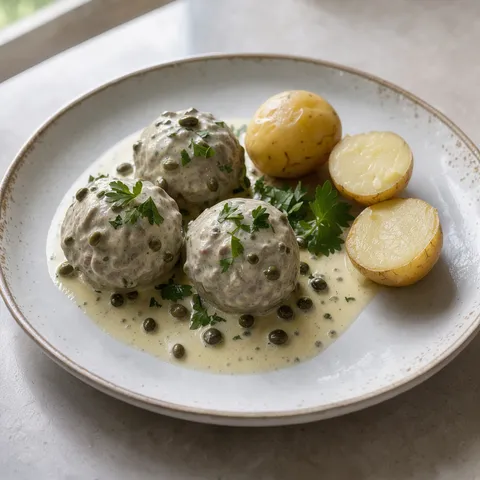 Meatballs in Caper Sauce1 hr 05 min · Main course
 Swabian Cheese Noodles55 min · Main course
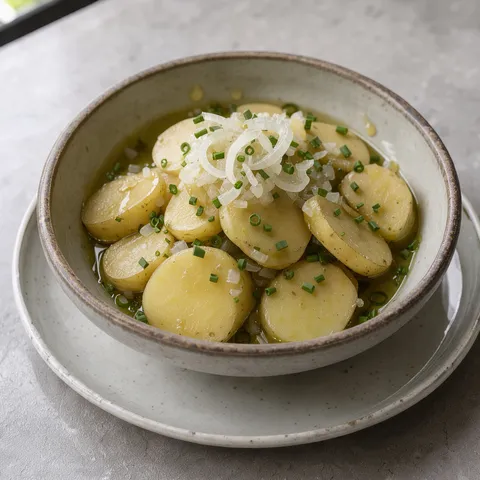 Swabian Potato Salad1 hr · Side dish
 Bavarian Pretzels1 hr 55 min · Bread & pastry
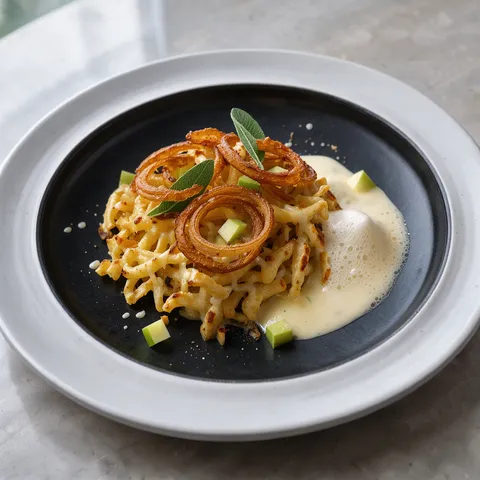 Käsespätzle 2.01 hr 20 min · Main course