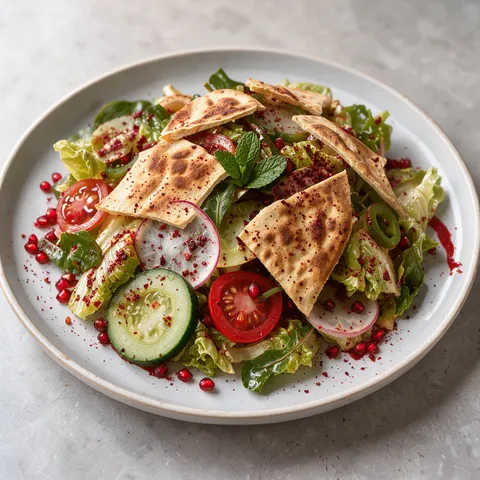
Lebanese Bread Salad Fattoush
A Lebanese meze. Takes 35 min, Serves 4. Difficulty: easy.
At a glance
- Total time
- 35 min
- Serves
- Serves 4
- Difficulty
- Easy
- Cuisine
- Lebanese cuisine
- Dish type
- Meze
- Allergens
- Gluten
Ingredients
Bread
- 2 Pitta Bread (Basics) (about 150 g, ideally a day old)
- 2 tbsp olive oil (for the oven) or oil for deep-frying
- a pinch of salt
Salad
- 1 cos lettuce heart (about 300 g)
- 3 small cucumbers (about 300 g)
- 3 tomatoes (about 350 g)
- 6 radishes
- 1 pale green Charleston pepper
- 4 spring onions
- 1 handful purslane leaves (about 60 g)
- 1/2 bunch flat-leaf parsley
- 1/4 bunch mint
Dressing
- 2 garlic cloves
- 1 tsp salt
- 50 ml lemon juice
- 1 tbsp pomegranate molasses (unsweetened)
- 1 tsp dried mint
- 2 tsp sumac
- 90 ml extra virgin olive oil
To finish
- 1 tsp sumac
Equipment
- Oven
- Baking tray
- Pestle and mortar
- Chef's knife
- Chopping board
- Mixing bowls
- Deep pan / deep-fat fryer (optional)
Method
- Steep the sumac: Stir the sumac into the lemon juice and leave for 10 min. The sumac opens up in the lemon and gives its colour and sourness to the dressing more strongly
- Toast the bread: Split the breads open so you have twice as many thin layers, then tear them into 2-3 cm pieces. Toss with the olive oil and salt, spread in a single layer on a baking tray and bake at 190°C for 8-10 min, turning once halfway, until golden and completely dry. The traditional way is to deep-fry them in 180°C oil for 1-2 min. If the bread is not fully dry, it softens in the salad straight away
- Chop the vegetables: Cut the lettuce into 2 cm ribbons, the cucumbers and tomatoes into large 1.5-2 cm chunks, the radishes into thin half-moons and the pepper and spring onions into thin rings. Fattoush is a chunky, crunchy village salad, so the vegetables should not be crushed
- Prepare the herbs: Pick the purslane leaves off the thick stalks, roughly chop the parsley and tear the mint by hand
- Make the dressing: Crush the garlic with the salt to a paste in a pestle and mortar. Add the sumac lemon, pomegranate molasses and dried mint, then whisk in the olive oil to emulsify. The dressing should be dark burgundy, glossy and sharply sour
- Toss: Mix the vegetables and herbs with the dressing in a large bowl. Add half the bread and turn once, so some of the bread soaks up the dressing
- Plate: Pile the salad high on a wide, shallow plate. Scatter the remaining crisp bread on top, sprinkle with sumac and finish with a mint leaf or two. Serve at once, as the bread loses its crunch if it waits
Chef's note
The name comes from the Arabic root fatt, meaning "to crumble": it is a village salad that makes use of stale bread. Pomegranate molasses is not used in every home, and some make it with just lemon and sumac. If you cannot find purslane, leave it out, and do not replace it with rocket, which makes it too bitter. Baking the bread is a lighter choice than traditional frying. In the Levant the bread is bought from the bakery, and to make it at home, use the Pitta Bread recipe in the Basics section. Serves 4.
Frequently asked questions
- What can I do to stop the bread going soft in the fattoush?
- Fry the bread until it is completely dry. If it isn't fully dry, it goes soft in the salad straight away.
- Why is the sumac mixed into the lemon juice?
- Sumac opens up in lemon and gives the dressing a stronger colour and sourness. Leave the mixture for 10 minutes.
- Why isn't all the bread added at the start of fattoush?
- Half of the bread is tossed with the vegetables so it soaks up the dressing. The remaining crisp bread is scattered over the top when serving.
 Fattoush 2.050 min · Salad
 Lebanese Olive Oil Spinach25 min · Main course
 Lebanese Pea and Carrot Stew30 min · Main course
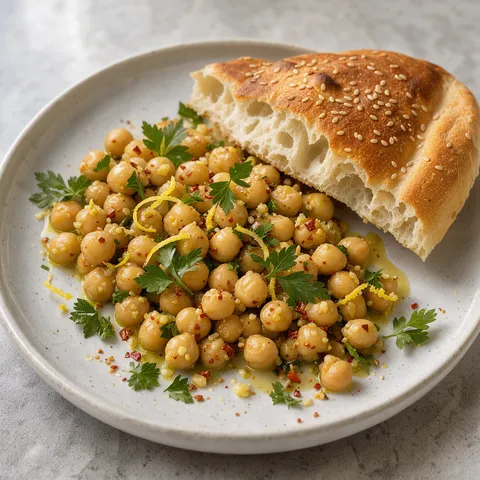 Warm Lebanese Chickpea Salad21 min · Meze
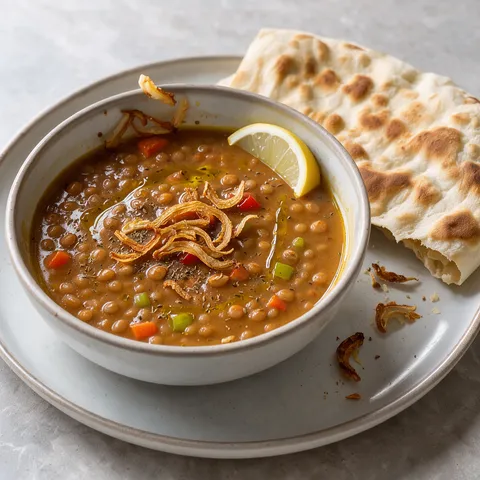 Lebanese Red Lentil Soup30 min · Soup
 Shorbat Adas 2.041 min · Soup
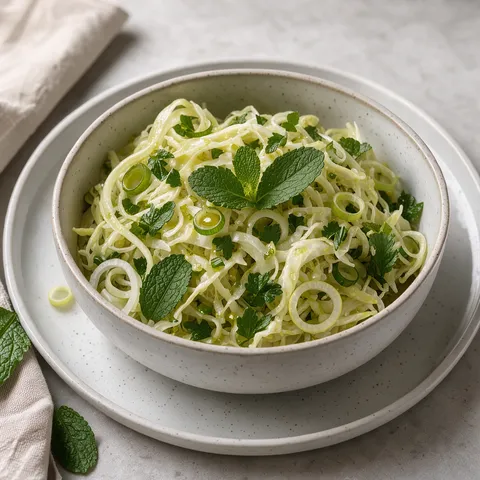 Lebanese Lemony Mint Cabbage Salad20 min · Salad