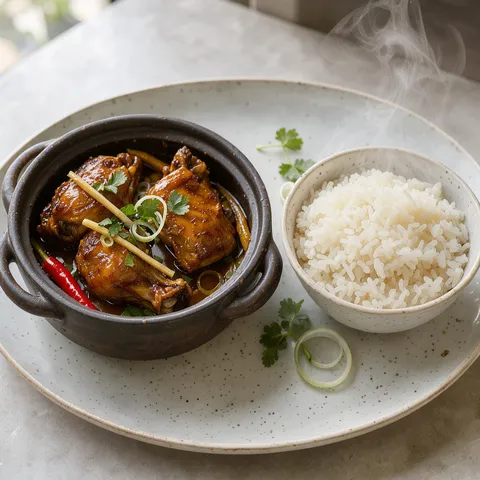
Vietnamese Caramel Chicken with Ginger Gà Kho Gừng
A Vietnamese main course. Takes 55 min, Serves 4. Difficulty: medium.
At a glance
- Total time
- 55 min
- Serves
- Serves 4
- Difficulty
- Medium
- Cuisine
- Vietnamese cuisine
- Dish type
- Main course
- Diet
- Gluten-free
- Allergens
- Milk, Fish, Celery
Ingredients
Chicken
- 800 g boneless skin-on chicken thighs (bite-sized chunks)
- 2 tbsp fish sauce
- 1 tsp sugar
- 1/2 tsp black pepper
- 2 shallots (grated)
Caramel (nước màu)
- 3 tbsp sugar
- 2 tbsp water
- plus 2 tbsp hot water (to stop the cooking)
Cooking
- 60 g fresh ginger (cut into fine matchsticks)
- 3 garlic cloves (finely chopped)
- 1 red chilli (halved)
- 1 tbsp neutral oil
- 150 ml Chicken Stock (Basics) or water
- 1 tbsp fish sauce
- 1/2 tsp coarsely ground black pepper
To serve
- 4 spring onions (thinly sliced into rings)
- 1/2 bunch coriander
- 300 g jasmine rice (uncooked, serves 4)
Equipment
- Heavy-based saucepan
- Saucepan
- Chef's knife
- Chopping board
- Mixing bowls
- Probe thermometer (optional)
Method
- Marinate the chicken: Mix the chicken pieces with the fish sauce, sugar, black pepper and shallots and leave at room temperature for 15 min. This short marinade seasons the surface and helps the chicken take on colour quickly in the caramel
- Cook the rice: While it marinates, rinse the rice 3 times, bring to the boil with 450 ml water, cover and cook over the lowest heat for 15 min, then take off the heat and leave to steam for 10 min
- Make the caramel: In a small heavy-based saucepan or clay pot, melt the sugar and water over medium heat without stirring. After 5-6 min, when the sugar turns deep copper, almost coffee-coloured, immediately add the 2 tbsp hot water (careful, it spits). Nước màu should not be sweet but slightly bitter, with coffee notes. A pale caramel makes the dish sugary, while a burnt one makes it bitter
- Fry the aromatics: Add the oil, two-thirds of the ginger, the garlic and chilli to the caramel and stir for 1-2 min until fragrant. The ginger softens quickly but keeps its bite
- Add the chicken to the caramel: Lay the chicken pieces in a single layer, skin side down, and sear for 3-4 min without touching. Then turn them: the caramel should colour the chicken deep amber all over
- Simmer: Add the stock and fish sauce and, once it boils, reduce the heat and cook with the lid ajar for 15 min. For the last 5 min, remove the lid completely so the sauce thickens
- Glaze the sauce: It is ready when the sauce has reduced to a glossy syrup that clings to the chicken and coats the back of a spoon. The internal temperature of the chicken should reach 74°C. If the sauce gets too thick, add 2 tbsp water. If it is still runny, turn up the heat and boil for 2 min
- Final ginger: Add the remaining raw ginger and the coarse black pepper, stir once and take off the heat. Ginger added at the end leaves a fresh bite on top of the mellowness of the cooked ginger
- Plate: Bring the chicken to the table with its sauce in its own clay pot or a deep bowl and scatter with the spring onions and coriander. Serve steaming white rice in bowls alongside, and spoon the sauce over the rice to eat
Chef's note
Kho is the Vietnamese technique of slow-cooking in a salty caramel, and the same caramel is also used for fish (cá kho) and eggs. A clay pot (nồi đất) is the traditional vessel, but a small heavy-based saucepan does the same job. Fish sauce is a traditional product bought ready-made.
Frequently asked questions
- Why does the caramel turn bitter?
- Burnt caramel makes the dish bitter, while pale caramel makes it sugary. When the sugar reaches a deep copper colour, stop it straight away with hot water.
- Why is the ginger added in two stages?
- Part of it softens as it cooks with the caramel. Raw ginger added at the last moment leaves a fresh sharpness.
- How is the consistency of the sauce adjusted?
- The sauce should reduce to a glossy syrup that coats the back of a spoon. If it gets too thick, add water, and if it stays thin, turn up the heat and boil.
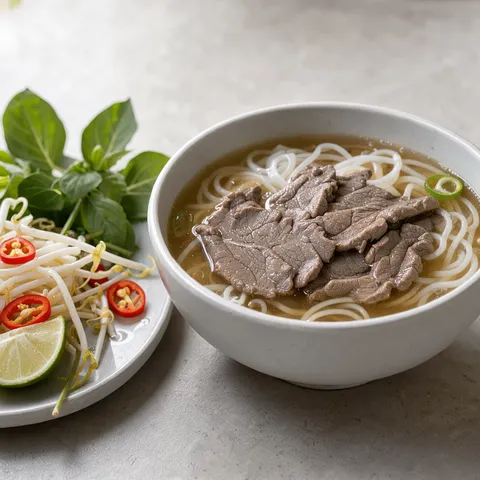 Vietnamese Beef Noodle Soup2 hr 15 min · Soup
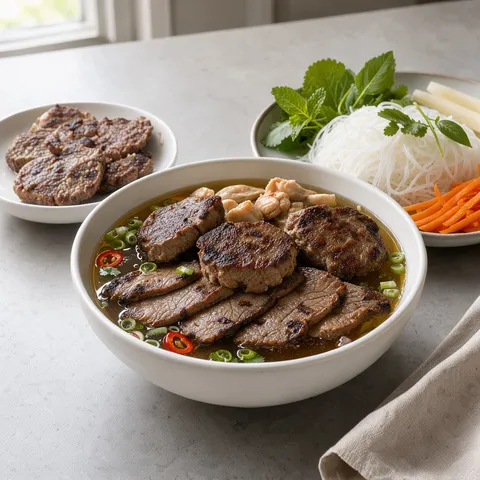 Hanoi Grilled Meat with Rice Noodles1 hr · Main course
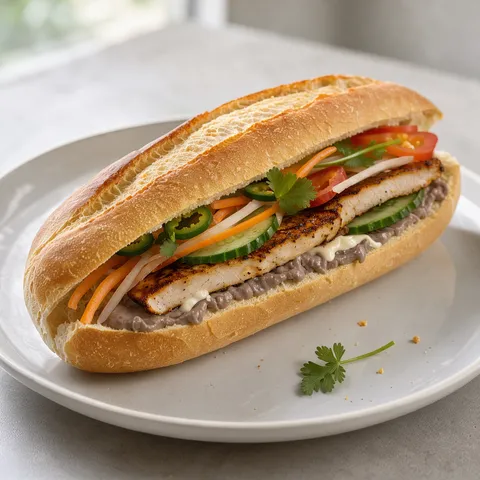 Vietnamese Baguette Sandwich1 hr · Main course
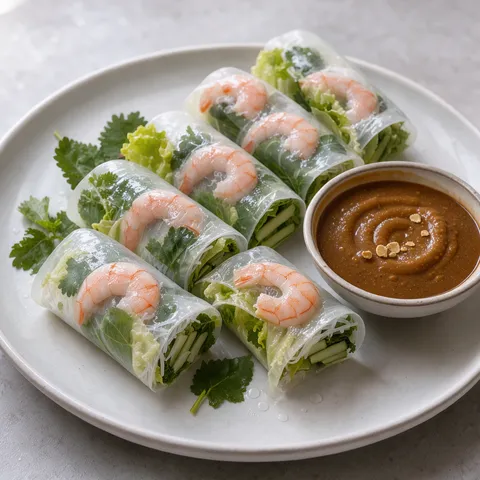 Summer Rolls40 min · Starter
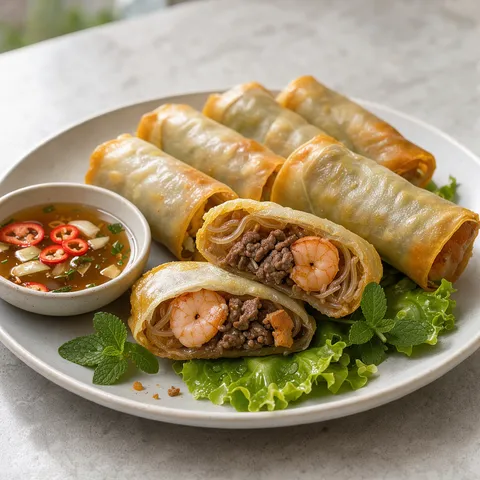 Vietnamese Fried Spring Rolls1 hr · Starter
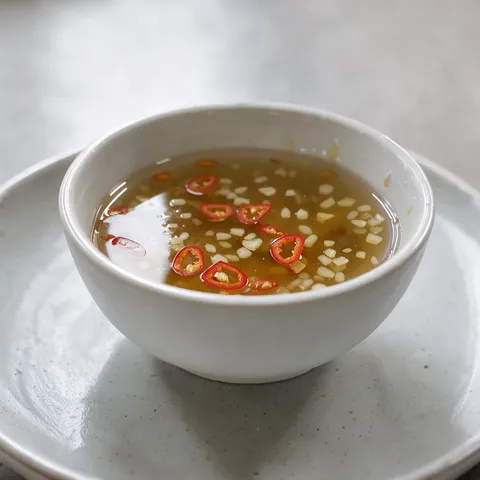 Vietnamese Dipping Sauce5 min · Sauce