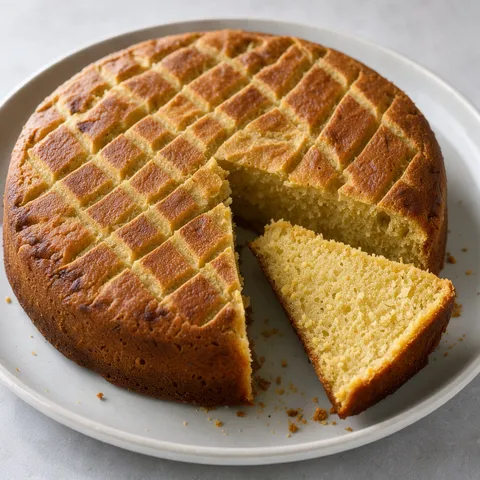
Breton Salted Butter Egg Yolk Cake, 20 cm Gâteau Breton
A French patisserie. Takes 1 hr 25 min, 20 cm cake, 8 slices. Difficulty: medium.
At a glance
- Total time
- 1 hr 25 min
- Serves
- 20 cm cake, 8 slices
- Difficulty
- Medium
- Cuisine
- French cuisine
- Dish type
- Patisserie
- Diet
- Vegetarian
- Allergens
- Gluten, Milk, Eggs
Ingredients
Dough
- 250 g plain flour
- 200 g salted butter (at room temperature)
- 200 g caster sugar
- 4 egg yolks
- 1 tsp baking powder
- 1 tsp vanilla extract
Glaze
- 1 egg yolk
- 1 tbsp milk
Tin
- 1 tbsp butter
- 1 tbsp plain flour
To serve
- 4 tbsp double cream or strained yoghurt (optional)
Equipment
- Stand mixer
- Cake tin
- Oven
- Silicone spatula
- Pastry brush
Method
- Prepare the tin: Grease a 20 cm deep-sided tart or cake tin with butter and dust it with flour. Preheat the oven to 180°C. This is done while the oven heats, so that the dough does not stick and the cake keeps its shape when it is turned out. (~3 min)
- Beat the butter and sugar: Beat the room-temperature salted butter and the sugar in a stand mixer on medium speed for 5 min, until pale and fluffy. Cold butter does not hold air and butter that is too soft gives a greasy texture. A finger pressed into it should leave a dent. (~6 min)
- Add the yolks: Add the four egg yolks one at a time, mixing in each before adding the next. Add the vanilla. The mixture should be smooth and pale yellow. If it splits, bring it back with a spoonful of flour. (~4 min)
- Fold in the flour: Sift in the flour and baking powder and mix with a spatula only until combined. The dough will be like a soft biscuit dough, and if you overmix it the cake turns tough. (~3 min)
- Spread in the tin: Spoon the dough into the tin and level it with a wet spatula, making the surface smooth. As the dough is sticky, dip the spatula in water from time to time. The thickness should be about 3 cm. (~4 min)
- Pattern the top: Mix the remaining egg yolk with the milk and brush a thin coat over the surface. Draw crisscross lines across the top with a fork. This pattern is a Breton classic and leaves golden lines after baking. (~3 min)
- Bake: Bake the tin on the middle shelf of the 180°C oven for 40-45 min, until the top is deep golden brown and a skewer inserted in the centre comes out clean. The edges pull away slightly from the tin. (~45 min)
- Rest and unmould: Rest the cake in the tin for 10 min, then invert it onto a wire rack, unmould it and cool until lukewarm. If you turn it out hot it may fall apart, and the lukewarm cake has the best texture. (~15 min)
- Serve: Cut the cake into 8 slices and put one slice on each plate. If you like, add some thick cream or yoghurt alongside. Traditionally it is eaten plain, with coffee or cider. (~2 min)
Chef's note
This is Brittany's salted butter cake, and the butter sets its flavour, so use a salted, high-fat butter. With plenty of egg yolks and little flour, the cake is both dense and moist. If the dough tastes short of salt, a pinch of sea salt can be added.
Frequently asked questions
- What consistency should the butter be for Gâteau Breton?
- The butter should be at room temperature. If it is cold, it won't hold air, and if it is too soft, the cake turns greasy. It should leave a mark when pressed with a finger.
- Why does the cake turn tough?
- Fold the flour and baking powder in with a spatula only until they come together. If you mix too much, the cake turns tough.
- When is the cake turned out of the tin?
- Rest the cake in the tin for 10 minutes, then turn it out. If it is turned out hot, it may fall apart.
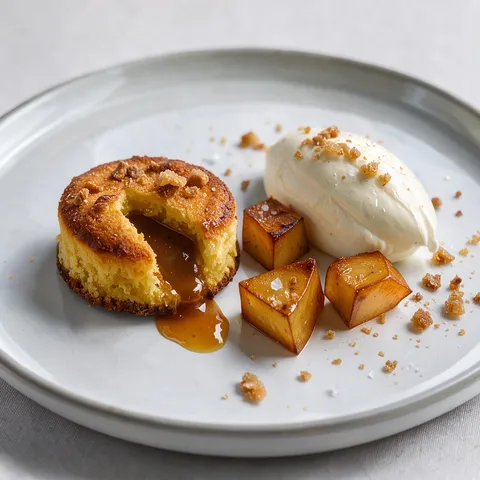 Gâteau Breton 2.01 hr 21 min · Patisserie
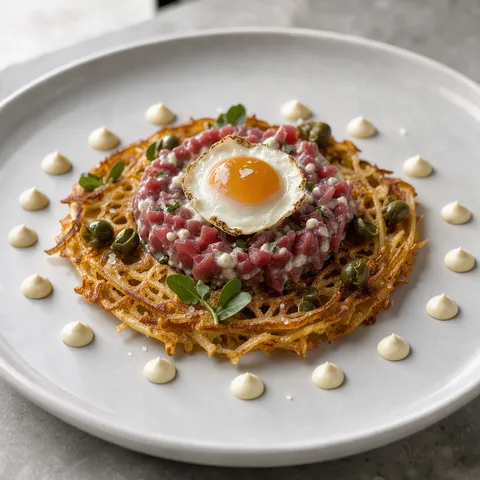 Tuna Tartare, Potato Rösti Disc, Quail's Egg55 min · Starter
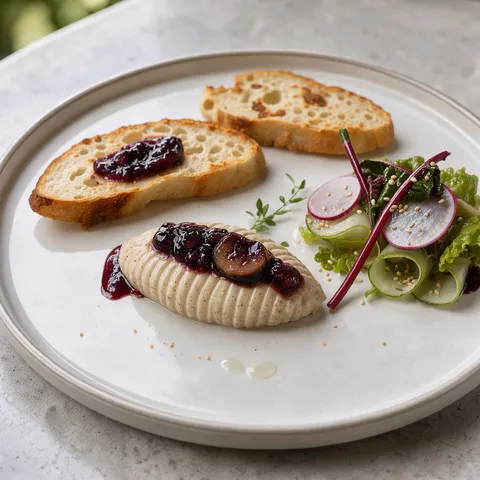 Duck Rillettes, Fig Jam, Crunchy Crostini, Pickle Salad1 hr 30 min · Starter
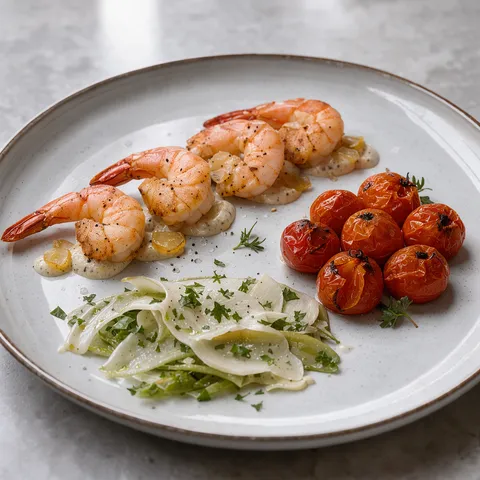 Prawns, Garlic Confit Aioli, Charred Tomatoes, Fennel Salad35 min · Starter
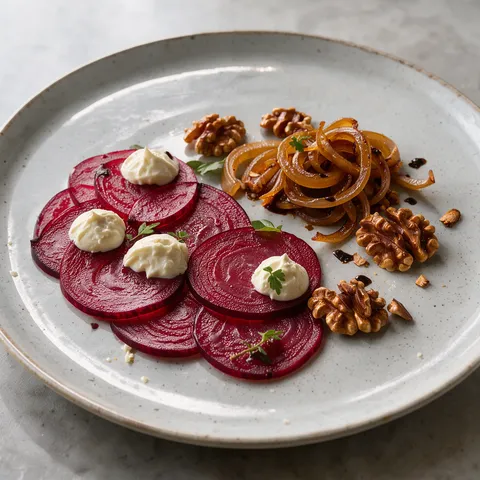 Beetroot Carpaccio, Goat's Cheese Mousse, Walnuts1 hr · Starter
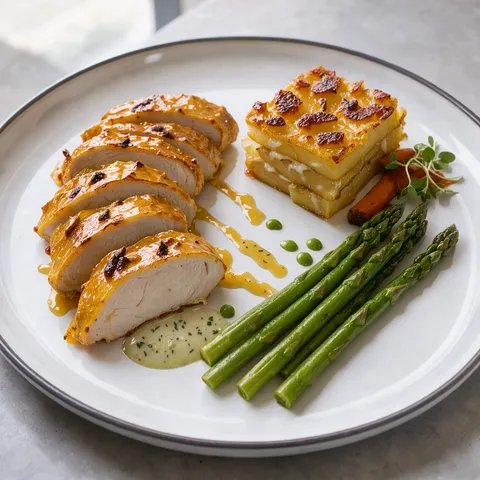 Honey Mustard Chicken, Potato Gratin, Asparagus1 hr 30 min · Main course
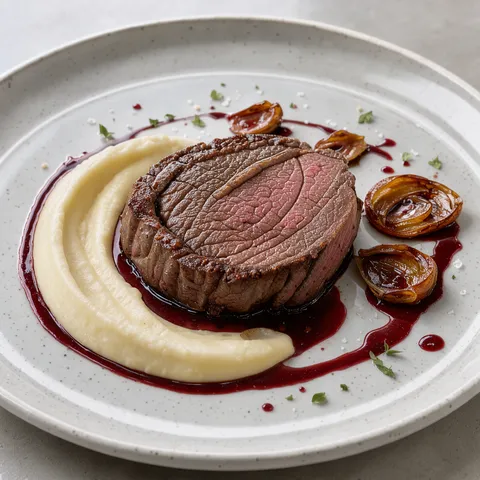 Beef Fillet, Red Wine Sauce, Pommes Purée1 hr 10 min · Main course