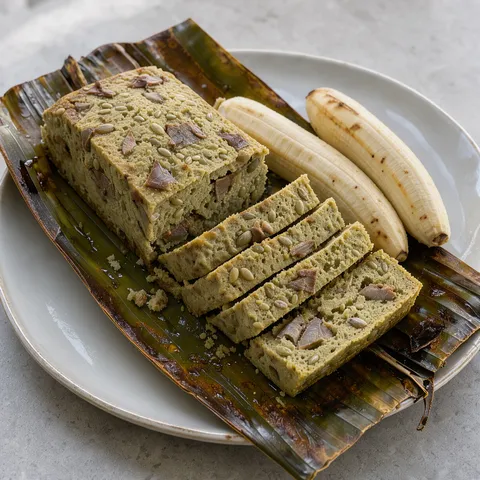
Steamed Pumpkin Seed Cake Gâteau de Courge
A Gabonese main course. Takes 2 hr 40 min, Serves 4. Difficulty: challenging.
At a glance
- Total time
- 2 hr 40 min
- Serves
- Serves 4
- Difficulty
- Challenging
- Cuisine
- Gabonese cuisine
- Dish type
- Main course
- Allergens
- Gluten, Milk, Fish, Crustaceans, Celery, Sulphites
Ingredients
Fish stock
- 250 g smoked mackerel (2 small whole or 2 fillets)
- 1 onion (halved)
- 1 Scotch bonnet or habanero chilli (scored)
- 2 bay leaves
- 600 ml water
Cake
- 400 g raw shelled pumpkin seeds (green, unsalted)
- 150 g raw peeled prawns (optional)
- 1 small onion
- 1 tsp salt
- 1/2 tsp black pepper
Wrapping
- 4 pieces of banana leaf (about 35×35 cm, sold frozen in Asian grocers) or 4 pieces of baking paper and 4 pieces of foil
- kitchen string
To serve
- 2 firm bananas or boiled cassava
Equipment
- Saucepan
- Fine sieve / chinois
- Food processor
- Silicone spatula
- Box grater
- Wooden spoon / spatula
- Steamer basket
- Oven
- Baking tray
- Probe thermometer
- Chef's knife
- Chopping board (optional)
- Baking paper (optional)
Method
- Make the fish stock: Skin and bone the smoked mackerel and break the flesh into large pieces. Put the skin and bones, the halved onion, the scored chilli and the bay leaves in a small pan with the 600 ml water. Once it boils, cook over low heat for 15 min and strain through a fine sieve. About 400 ml of this stock should remain. The smoked skin and bones give the stock that carries the smoky flavour of the cake (20 min)
- Grind the seeds: Put the pumpkin seeds in a food processor and process for 2-3 min, scraping the sides with a spatula now and then, until a fine, moist flour consistency. If the motor heats up, the seeds release oil and the paste clumps, so run it in 30 sec bursts (5 min)
- Bind the mixture: Grate the small onion on the fine side of the grater. Add the grated onion, salt and black pepper to the ground seeds. Gradually add the lukewarm fish stock, starting with 300 ml, and beat with a wooden spoon for 3 min, until the mixture falls slowly off the spoon like a glossy, dense cream. Add the remaining stock if needed. A mixture that is too thick turns dry and crumbly when cooked, and one that is too runny turns loose (6 min)
- Fold in the fish and prawns: Chop the prawns into 1 cm pieces on a chopping board with a chef's knife. Add the mackerel flesh and the chopped prawns to the mixture and fold in with a spatula without breaking up the fish. You should feel pieces of fish in each mouthful (2 min)
- Soften the leaves: Pass the banana leaves over the low flame for a few seconds, and when the leaf turns glossy and soft it folds without cracking. Wipe with a damp cloth. If you are using baking paper, put each piece on a sheet of foil (5 min)
- Wrap: Divide the mixture into four. Put one portion in the middle of each leaf and shape into a rectangle of about 12×8 cm and 3 cm thick. Fold the long edges over first and then the short edges and tie the parcel crosswise with kitchen string. The parcel should be tight, because if steam gets in, the cake goes watery (8 min)
- Steam: Put a steamer basket in a large pan, add water up to the underside of the basket and bring to the boil. Arrange the parcels in the basket with the folds down, close the lid tightly and cook over medium heat for 1 hr 30 min. Check the water level every 30 min and add boiling water if needed. Traditionally the parcels are boiled for 2-3 hr, and steaming shortens this. The cooked cake is firm and sliceable, and the centre should exceed 75°C on a thermometer (1 hr 30 min)
- Boil the bananas: In the last 15 min of steaming, halve the bananas in their skins and boil in a separate pan of boiling water for 12 min, until the skins darken and the flesh is soft. This step fits into the steaming time
- Finish in the oven: Heat the oven to 200°C. Put the parcels on a tray and keep in the oven for 15 min. This final heat lightly crisps the leaves and gives the surface of the cake a toasted aroma and a firm crust. In Gabon this finish is done over embers (15 min)
- Plate: Rest the parcels for 5 min, cut the strings and open the leaves on the plate. Slice the cake 2 cm thick with a chef's knife in the leaf and put the peeled boiled banana alongside. Serve hot or warm (9 min)
Chef's note
In Gabon this cake is called gâteau de courge or pain de concombre, and it is an example of the Central African tradition of binding the paste of white-husked seeds with fish and cooking it in a leaf. The original recipe uses the white seeds of local gourds, and here the green pumpkin seed kernels easily found in shops were used, so the colour is greener and the flavour oilier. Unlike Nigeria's Egusi Soup (Nigerian Melon Seed Stew) and Ghana's Kontomire Stew (Taro Leaves with Melon Seed), which use the seeds to thicken a sauce, here the seed paste steams on its own and becomes a sliceable cake. The cake keeps in the fridge for 3 days, and slices can be reheated in a dry pan before serving.
Frequently asked questions
- Why does the pumpkin seed paste clump?
- If the motor heats up, the seeds release oil and the paste clumps. Run the processor in 30-second bursts.
- What consistency should the cake batter be?
- The batter should be glossy and thick, like cream falling slowly from a spoon. A batter that is too thick bakes dry and crumbly, and one that is too loose falls apart.
- How long do the cake parcels steam?
- The parcels steam for 1 hour 30 minutes, whereas the traditional method boils them for 2-3 hours. The centre of the cake should pass 75°C on a thermometer.
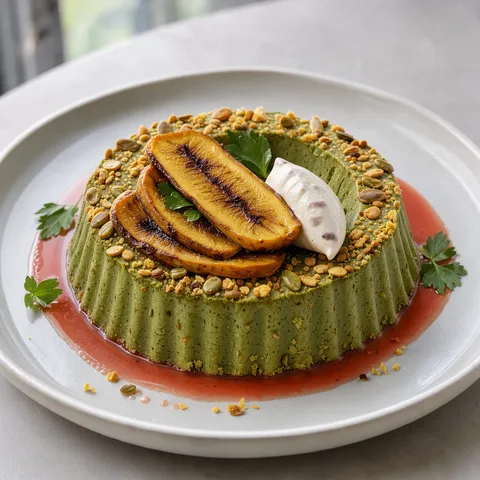 Gâteau de Courge 2.01 hr 12 min · Starter
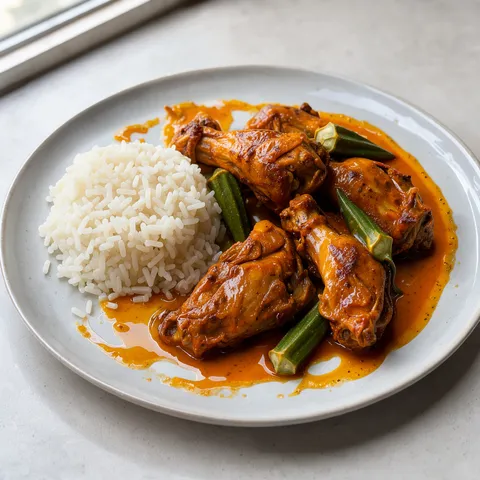 Palm Sauce Chicken with Okra1 hr 25 min · Main course
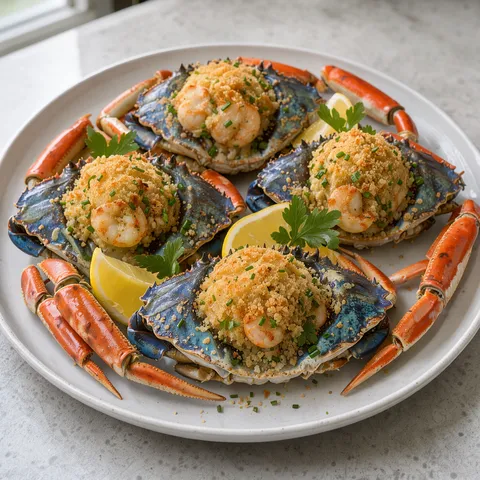 Stuffed Crab Baked in Shell1 hr 50 min · Starter
 Salt Cod and Vegetable Stew1 hr 25 min · Main course
 Gabonese Aubergine1 hr 15 min · Main course
 Breadcrumb-Coated Baked Bananas50 min · Dessert
 Fresh Pineapple Ginger Drink30 min · Drink