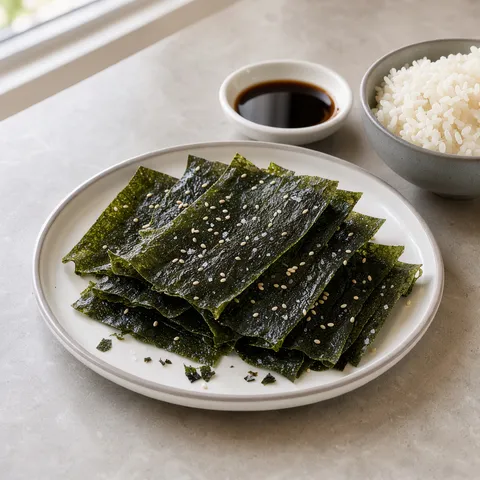
Korean Roasted Seaweed with Sesame Oil and Salt Gim-gui
A Korean side dish. Takes 15 min, Serves 4. Difficulty: medium.
At a glance
- Total time
- 15 min
- Serves
- Serves 4
- Difficulty
- Medium
- Cuisine
- Korean cuisine
- Dish type
- Side dish
- Diet
- Vegetarian, Vegan
- Allergens
- Gluten, Sesame, Soya
Ingredients
Seaweed
- 8 sheets dried gim (nori)
Seasoning
- 2 tbsp sesame oil
- 1 tbsp neutral oil
- 1/2 tsp fine sea salt
- 1 tbsp toasted sesame seeds (crushed)
To serve
- 4 bowls hot rice
- 2 tbsp soy sauce (for dipping)
- 1 tsp gochugaru (Korean chilli flakes, optional)
Equipment
- Frying pan
- Mixing bowls
- Kitchen scissors
- Pastry brush
Method
- Check the seaweed: Hold the gim sheets up to the light and check them, setting aside any with holes or breaks. Good gim is thin and an even dark green-black. Damp gim will not toast and turns rubbery, so if it is damp, dry it in a dry frying pan for 1 min (~1 min)
- Mix the oil: Mix the sesame oil and neutral oil in a small bowl. Pure sesame oil burns the seaweed quickly and its smell is overpowering, so diluting it with neutral oil gives balance. Use very little oil when working with a brush (~1 min)
- Brush with oil: Brush a very thin layer of oil on the rough side of each gim sheet and do all the sheets one by one within 3 min. The oil should make the surface glossy but not wet the gim. Too much oil makes the gim soft and greasy (~3 min)
- Salt and stack: Sprinkle the fine salt and sesame seeds over the oiled side. Stack two sheets with the oiled sides facing outwards. The salt should be sprinkled thinly, as gim absorbs the salt and intensifies it (~2 min)
- Toast in the dry pan: Heat a large frying pan over medium-low heat for 2 min without oil or water. The pan temperature should be about 140°C, and the colour change of the gim is visible as it toasts. The seaweed smells at once, and a pan that is too hot burns it (~2 min)
- Toast the gim: Put the pair of gim in the pan and turn them every 15 sec. The seaweed turns bright green, crisps up and its oily smell opens up, 4 min in total, all the sheets in turn. Dark brown or black spots mean it is burnt, so take it off at once (~4 min)
- Cool and cut: Put the toasted gim on a board and leave to cool for 1 min, and it crisps up. Cut into 6 equal rectangles with scissors. Gim becomes brittle as it cools, and this is normal (~1 min)
- Plate: Stand the rectangles upright in a small bowl or fan them out on a serving plate. Serve at once alongside the rice, and wrap a mouthful of rice in gim and dip it into the soy sauce. If not eaten at once, it is sensitive to moisture (~1 min)
Chef's note
Gwangcheon gim is the famous nori of the Hongseong region of Chungcheong and is toasted with oil and salt. Nori (gim) is a ready-dried product and is not made at home. It keeps for 2 days in a closed container away from moisture.
Frequently asked questions
- Why does gim-gui turn chewy?
- Gim stays chewy if it is damp or the pan isn't hot enough. Dry the gim in a dry pan first and then roast it.
- Is it the same as nori?
- Gim is the Korean word for nori and is made from the same seaweed. Korean gim is usually thinner and roasted with oil.
- How long does it keep?
- It keeps for 2 days in an airtight container in a dry place. Gim kept longer absorbs moisture and goes hard.
 Bibimbap1 hr 15 min · Main course
 Kimchi3 hr · Side dish
 Bulgogi30 min · Main course
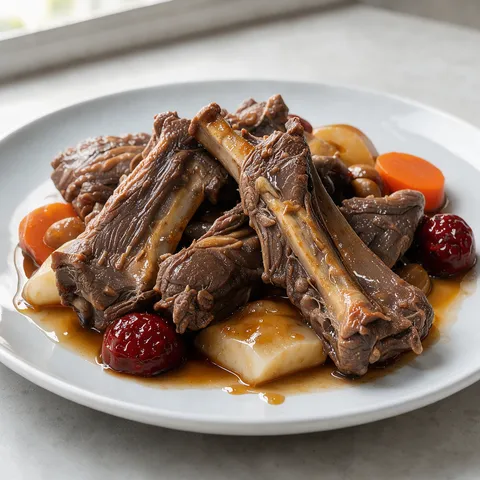 Korean Braised Short Ribs1 hr 30 min · Main course
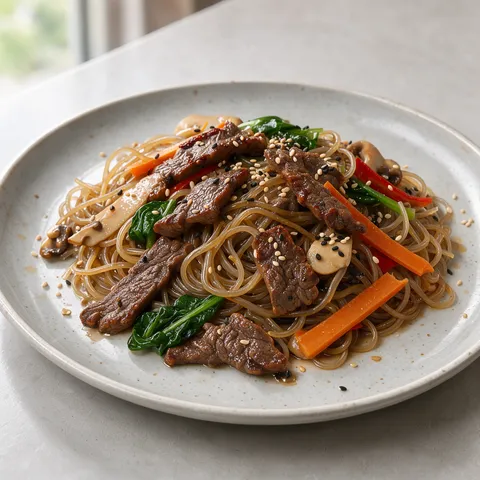 Korean Glass Noodles with Vegetables45 min · Main course
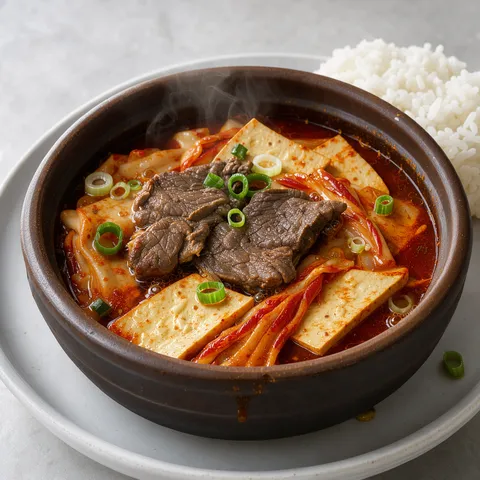 Kimchi Stew40 min · Soup