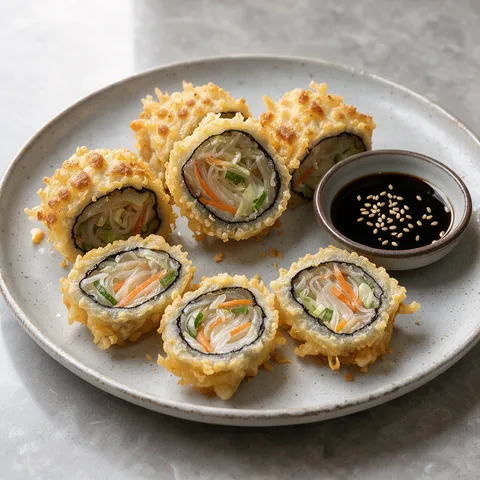
Korean Seaweed-Wrapped Glass Noodle Rolls Gimmari
A Korean meze. Takes 54 min, Makes 24. Difficulty: medium.
At a glance
- Total time
- 54 min
- Serves
- Makes 24
- Difficulty
- Medium
- Cuisine
- Korean cuisine
- Dish type
- Meze
- Diet
- Vegetarian
- Allergens
- Gluten, Eggs, Sesame, Soya
Ingredients
- Filling (8 rolls, 48 g per roll, about 385 g): 70 g dried glass noodles (dangmyeon)
- 1 small carrot (60 g, thin sticks)
- 1 small onion (50 g, thinly sliced)
- 40 g spinach
- 1 tbsp sunflower oil
- 2 tbsp soy sauce
- 1 tsp sugar
- 1 tsp sesame oil
- 1 tsp toasted sesame seeds
Rolls
- 8 sheets nori (19×21 cm)
- 1 tbsp plain flour and 1 tbsp water (nori glue). Coating (eggless tempura batter, about 200 ml): 100 g plain flour
- 20 g cornflour
- 200 ml iced soda water
Frying
- 1.5 litres sunflower oil (about 2.5 cm deep in a deep pan 28 cm across)
Sauce (24 × 5 g)
- 4 tbsp soy sauce
- 2 tbsp rice vinegar
- 1 tbsp sugar
- 1 tsp sesame oil
- 1 tsp toasted sesame seeds
Equipment
- Saucepan
- Kitchen scissors
- Sauté pan
- Mixing bowls
- Probe thermometer
- Colander
- Chef's knife
- Chopping board
Method
- Boil the noodles: Boil the glass noodles in a pan of boiling water for 6 min, plunge into cold water, drain in a colander and cut into 5 cm lengths with scissors. If the noodles are left long, they wind around inside the roll and fall apart when sliced. Meanwhile stir-fry the vegetables. (~7 min)
- Cook the vegetables: Heat the oil in a pan and stir-fry the carrot for 2 min, the onion for 2 min and the spinach for 1 min. The vegetables should be lightly cooked, so they do not release moisture inside the roll. Cook the vegetables one after another in the same pan. (while the glass noodles boil, ~5 min)
- Mix and cool: In a bowl, mix the noodles with the vegetables, soy sauce, sugar, sesame oil and sesame seeds. Spread on a wide plate and cool for 10 min. Hot filling softens the nori and tears it. The filling should weigh about 385 g. Divide it into 8 equal portions. (~10 min)
- Roll: Lay the nori shiny side down on the worktop and spread 48 g filling in a 17 cm line along a strip close to the long edge. Starting from the long edge, roll tightly and seal the last edge with the flour and water paste. If rolled loosely, the filling slips out during frying. Make 8 rolls. (~12 min)
- Fry: Heat the oil in a wide pan to 175°C, using a thermometer. Dip each roll thoroughly in the tempura batter and let the excess drip off, then fry 2 rolls at a time for 3 min, turning occasionally, until golden, in 4 batches. The batter should stay thin, and an eggless batter is light and crisp anyway. If the oil is not hot enough, the batter soaks up the oil. Drain on kitchen paper. (~16 min)
- Rest and cut: Once the rolls have rested for 3 min, the batter firms up. Cut each roll on a chopping board with a sharp knife into 3 equal pieces of 6.3 cm. Cut with a sawing motion. (~4 min)
- Mix the sauce and serve (the sauce is made while frying): Mix the soy sauce, vinegar, sugar and sesame oil and divide among 24 small dishes. Arrange the pieces on a plate with the cut side facing up and sprinkle with sesame seeds
Chef's note
Serve hot. 3 pieces per person, 80 people × 3 = 240 pieces. As the recipe makes 24, the multiplier is 240/24 = 10, or 10.5 with 5% allowed for waste (735 g dried glass noodles, 84 sheets of nori, 630 g carrot, 525 g onion, 420 g spinach, 2.1 litres eggless tempura batter (1.05 kg flour, 210 g cornflour, 2.1 litres iced soda water), about 84 rolls). Gimmari are nori-wrapped glass noodle rolls, a Korean street snack, usually served with spicy tteokbokki. Because the tempura batter has no egg, the recipe is entirely plant-based. Raw wrapped rolls keep under cling film in the fridge for at most 6 hr, and if they wait longer the nori turns damp. Fried rolls are reheated in a 180°C oven for 6 min.
Frequently asked questions
- Why cut the glass noodles with scissors?
- Long noodles tangle inside the roll and fall apart when sliced. Cutting them into 5 cm pieces prevents this.
- Why cool the gimmari filling before rolling?
- Hot filling softens the nori and tears it. Spread the filling on a wide plate to cool.
- Why does the filling slip out while frying?
- It slips out when the roll is wrapped loosely. Roll the nori tightly from the long edge and seal the last edge with the flour and water paste.
 Bibimbap1 hr 15 min · Main course
 Kimchi3 hr · Side dish
 Bulgogi30 min · Main course
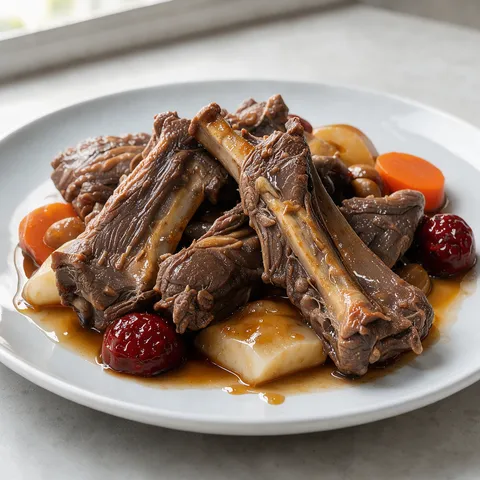 Korean Braised Short Ribs1 hr 30 min · Main course
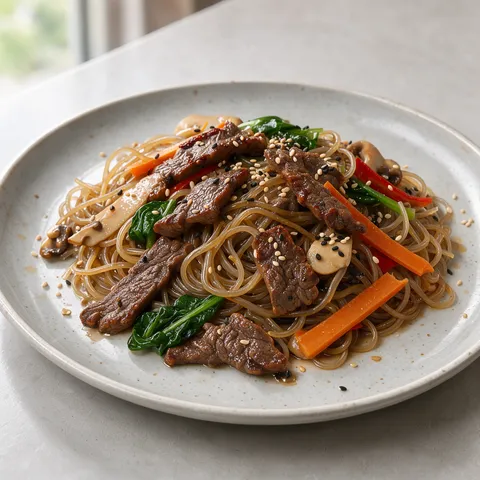 Korean Glass Noodles with Vegetables45 min · Main course
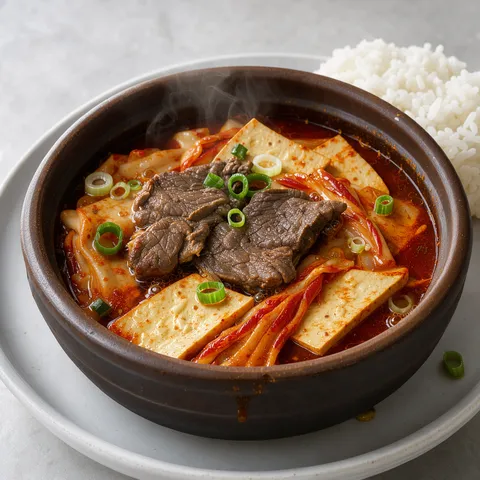 Kimchi Stew40 min · Soup