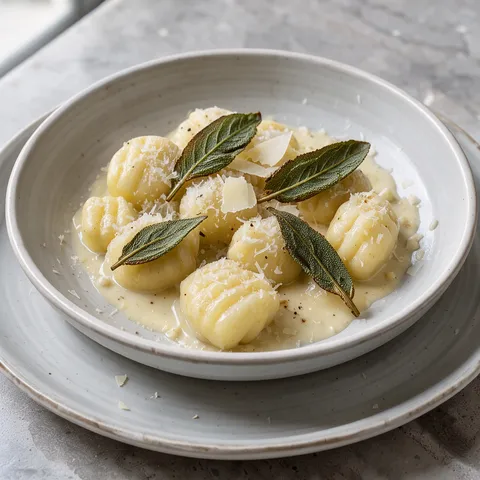
Gnocchi alla Bava Piedmontese Gnocchi with Fontina Sauce
An Italian main course. Takes 1 hr 30 min, Serves 4. Difficulty: medium.
At a glance
- Total time
- 1 hr 30 min
- Serves
- Serves 4
- Difficulty
- Medium
- Cuisine
- Italian cuisine
- Dish type
- Main course
- Diet
- Vegetarian
- Allergens
- Gluten, Milk, Eggs
Ingredients
Gnocchi
- 1 kg floury potatoes (whole, unpeeled)
- 250 g plain flour (approximately)
- 1 egg yolk
- 1 tsp salt
- 1/4 tsp freshly grated nutmeg
Bava sauce
- 250 g fontina (rind removed, cut into 1 cm cubes)
- 200 ml whole milk
- 40 g butter
- 1 egg yolk
- black pepper
Cooking water
- 3 litres water
- 1 tbsp coarse salt
To serve
- 20 g grated Parmigiano Reggiano
- 8 sage leaves
- 20 g butter
Equipment
- Saucepan
- Potato masher
- Frying pan
- Colander
- Mixing bowls
- Chopping board
- Baking tray
Method
- Soak the cheese: Put the fontina cubes in the milk and leave in the fridge. The milk draws out some of the cheese's saltiness and firmness, so it does not turn stringy when heated later and becomes a smooth cream (~5 min)
- Boil the potatoes: Put the unpeeled potatoes in a pan of cold water and boil for 30-35 min once it reaches the boil. Cooking them in their skins stops the potatoes absorbing water, as waterlogged potatoes need more flour and make tough gnocchi. They are ready when the tip of a knife slides in without resistance (~35 min)
- Mash and cool: Peel the hot potatoes, pass them through a potato ricer and spread in a thin layer on a large board. Let the steam escape for 5 min, as damp potato makes a sticky dough rather than a soft one (~10 min)
- Bring the dough together: Sift the flour over the potato and put the egg yolk, salt and nutmeg in the centre. Gather it with short folds using the palm of your hand and do not knead. The dough should stay soft and slightly sticky, as overworked dough turns rubbery and the gnocchi come out heavy (~6 min)
- Shape: Divide the dough into four and roll each piece into a long rope as thick as a finger. Cut into 2 cm pieces and roll each one gently over the back of a fork, pressing lightly. The ridges help the sauce cling. Arrange the gnocchi separately on a floured tray (~15 min)
- Make the bava sauce: Put the fontina with the milk in a wide pan and melt over the lowest heat for 6-8 min, stirring constantly, then add the butter. Do not let it boil, as at a high heat the cheese releases its fat and turns lumpy. Take off the heat and whisk in the egg yolk, then season with black pepper. The sauce should coat the back of a spoon (~8 min)
- Cook the gnocchi: Bring the cooking water to the boil and salt it. Add the gnocchi in two batches. Once they rise to the surface, wait 30 sec more and lift them with a slotted spoon into the sauce in the pan. Rising shows they are cooked through, and if left too long they fall apart (~6 min)
- Combine with the sauce: Toss the gnocchi in the sauce for 1 min, shaking the pan, and add 2-3 spoonfuls of cooking water if needed. The sauce should coat the gnocchi in a glossy layer and should not run to the bottom of the pan (~2 min)
- Plate and serve: Heat 20 g butter in a small pan with the sage leaves for 1 min until foaming and the leaves are crisp. Spoon the gnocchi into warm deep plates, drizzle with the sage butter, sprinkle with Parmigiano and serve immediately. Bava stiffens as it cools, so the plates should be warmed beforehand (~3 min)
Chef's note
Bava is Italian for dribble and describes the silky flow of the sauce. Fontina, traditionally a cheese of the Aosta Valley, is used, and if you cannot find it, a mixture of taleggio and Gruyère works well. Using old, floury potatoes determines how light the gnocchi are.
Frequently asked questions
- Why are they called gnocchi alla bava?
- Bava means drool in Italian, and it refers to the slow, silky flow of the melted fontina sauce. The sauce should flow creamily off the spoon without stringing.
- What can I use if I can't find fontina?
- A mix of Taleggio and Gruyère gives the closest result. Soaking the cheese in the milk first helps the sauce turn out smooth with either option.
- Why is my gnocchi dough tough or sticky?
- It turns tough if the potatoes are waterlogged or the dough is overworked. Boil the potatoes in their skins, let the steam escape, and mix the dough only until it comes together for light gnocchi.
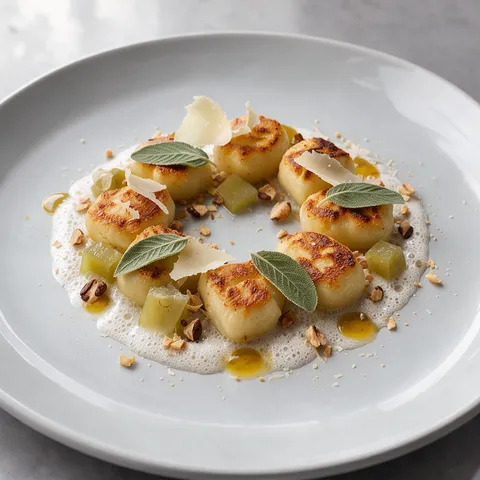 Gnocchi alla Bava 2.01 hr 17 min · Main course
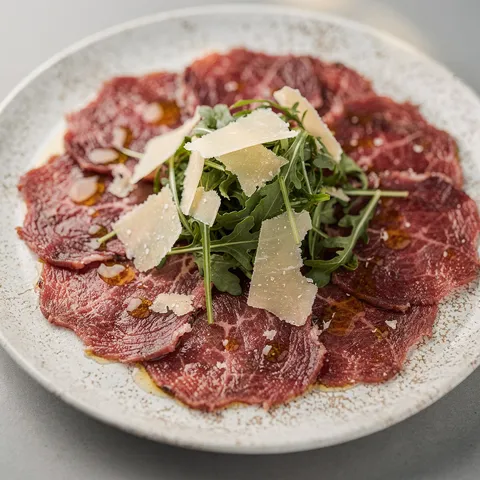 Beef Carpaccio, Mini Hunkar Begendi Croquettes, Parmesan Cream1 hr 30 min · Starter
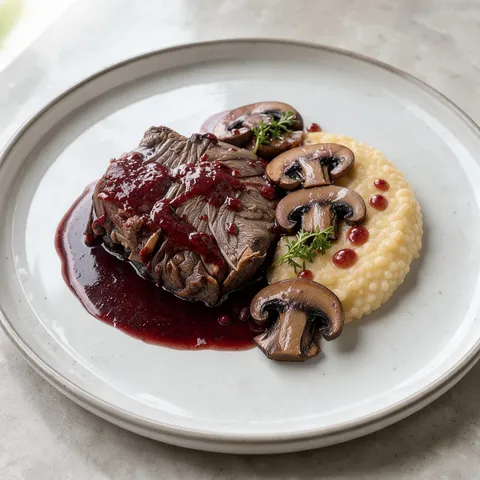 Beef Cheeks, Red Wine, Mushrooms, Polenta2 hr · Main course
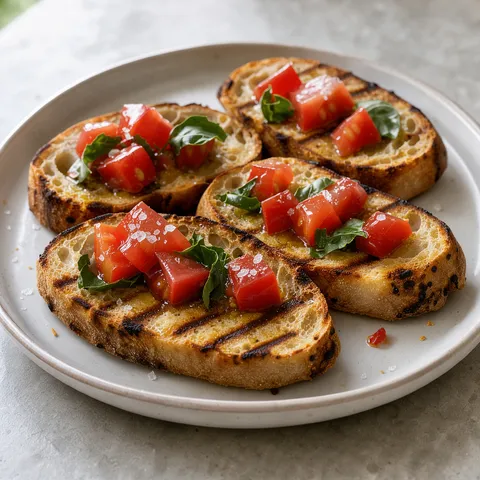 Bruschetta al Pomodoro25 min · Starter
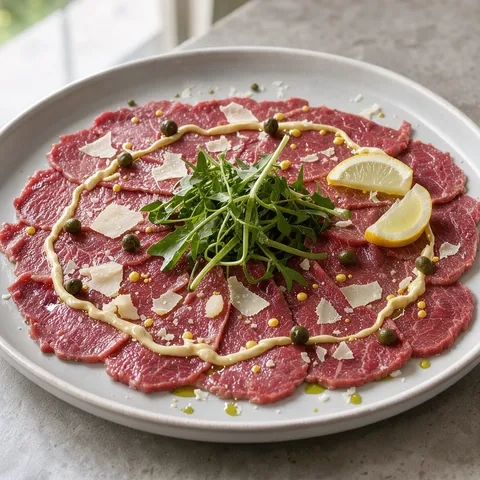 Carpaccio di Manzo30 min · Starter
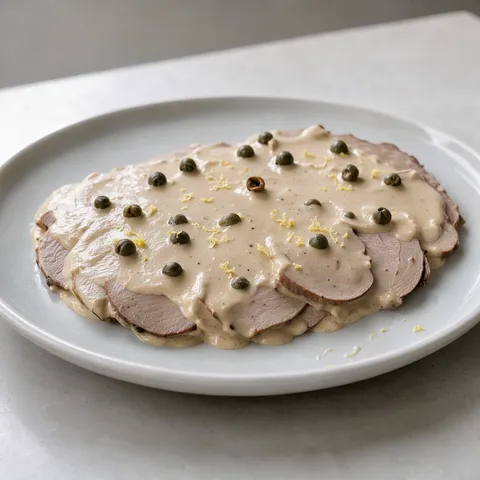 Vitello Tonnato1 hr 30 min · Starter
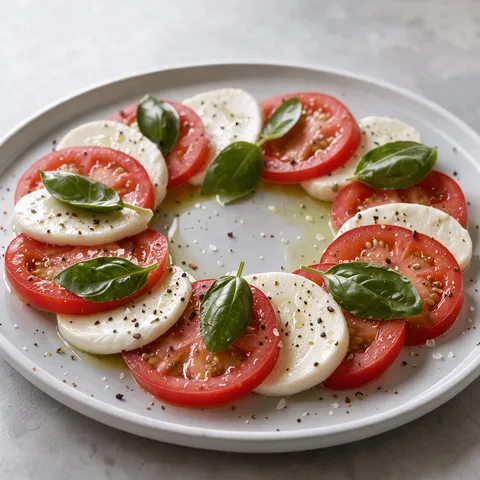 Insalata Caprese10 min · Starter