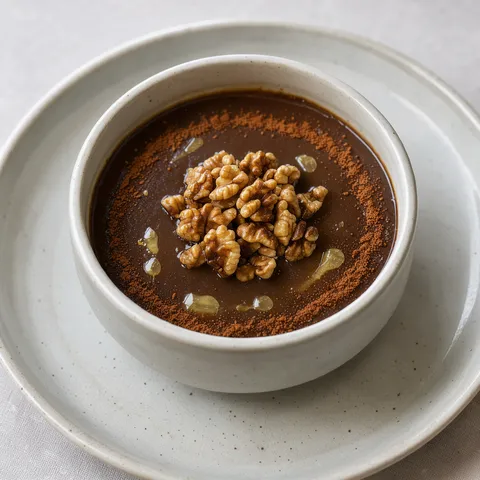
Grape Molasses Pudding Harire
A Turkish dessert. Takes 35 min · +2 hr cooling, 4 servings (4 bowls). Difficulty: easy.
At a glance
- Total time
- 35 min · +2 hr cooling
- Serves
- 4 servings (4 bowls)
- Difficulty
- Easy
- Cuisine
- Turkish cuisine
- Dish type
- Dessert
- Diet
- Vegetarian
- Allergens
- Gluten, Milk, Tree nuts
Ingredients
Pudding
- 400 ml thick grape molasses (grape molasses from Mardin or Kilis)
- 800 ml water
- 90 g plain flour
- 2 tbsp wheat starch
- 1/2 tsp ground cinnamon
- a pinch of salt
Topping
- 120 g walnuts
- 1 tsp ground cinnamon
- 1 tbsp butter (optional)
Equipment
- Oven
- Baking tray
- Chef's knife
- Chopping board
- Frying pan
- Mixing bowls
- Balloon whisk
- Heavy-based saucepan
- Wooden spoon / spatula
- Fine sieve / chinois
Method
- Toast the walnuts: Preheat the oven to 160°C. Spread the walnuts on a baking tray and toast for 8 min, until fragrant and a shade darker. Once cool, chop with a knife into large and small pieces, some almost to a powder. Toasted walnuts balance the intense sweetness of the molasses
- Toast the flour: Heat the flour in a dry frying pan over low heat for 4-5 min, stirring constantly. It shouldn't colour: only the raw flour smell should go, giving way to a faint biscuity smell. This step stops the pudding tasting of flour. Tip it straight into a bowl and leave to cool slightly
- Dissolve the flour: Whisk the cooled flour and the starch with 300 ml cold water in a bowl until no lumps remain. If flour goes straight into hot liquid it forms lumps: dissolving it in cold water is essential
- Heat the molasses: Mix the remaining 500 ml water, the molasses, cinnamon and salt in a heavy-based pan. Heat over medium heat until steaming, to about 70°C, without boiling. Molasses boiled hard can caramelise and turn bitter
- Combine: Whisk the flour mixture once more, then pour it into the molasses water in a thin stream, whisking constantly. Lower the heat to medium-low and start stirring with a wooden spoon, scraping the bottom
- Cook: Cook the pudding for 12-15 min, stirring constantly. The mixture, cloudy and thin at first, turns glossy and dark brown as it thickens. It's done when a line drawn with your finger through the pudding on the back of a spoon doesn't close up and large, heavy bubbles appear. Cook for 1 min more and take off the heat
- Pour into bowls: Rinse four bowls with cold water and don't dry them: the wet surface helps the pudding turn out smooth. Divide the harire between the bowls, level the surface with the back of a spoon and sprinkle over half the toasted walnuts while it's still hot, so they stick lightly to the surface
- Chill: Leave the bowls to cool at room temperature for 30 min, then chill in the fridge for at least 1 hr 30 min, until completely set. It's ready when the pudding wobbles in one piece as you tilt the bowl
- Plate: For those who like it, melt the butter gently and drizzle a few drops into each bowl. Pile the remaining walnuts in a small mound in the centre and dust the cinnamon through a fine sieve in a thin ring around the edge. Serve cold
Chef's note
In Mardin, harire is also made at grape harvest with fresh grape must: if you use must, 1.2 litres of it replaces the water and the molasses. Molasses is traditionally a bought product, so choose a thick one with no additives. For a milder flavour there is also a local variant that replaces 100 ml of the molasses with milk.
Frequently asked questions
- Why is the flour toasted first for the harire?
- Warming the flour in a dry pan without colouring it removes the raw smell. The pudding then has no floury taste.
- Why does harire go lumpy?
- Flour goes lumpy if it hits hot liquid directly. Whisk the flour and starch into cold water first and pour it into the molasses water in a thin stream.
- How can I tell the harire has thickened enough?
- It is ready when the pudding wobbles in one piece as you tilt the bowl. Cool the bowls at room temperature first, then in the fridge.
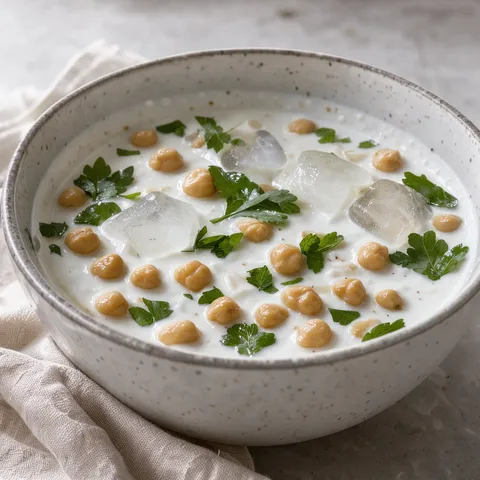 Chilled Wheat Yoghurt Soup1 hr · Soup
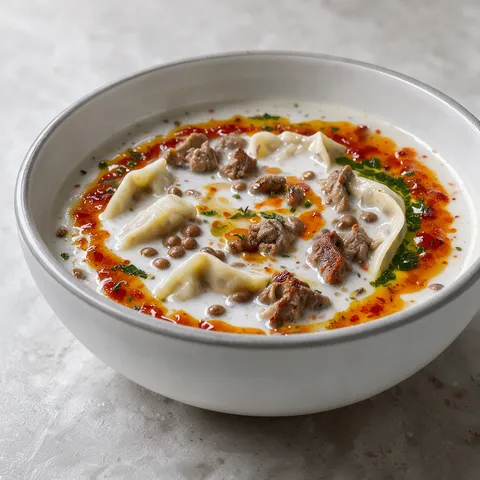 Noodle and Yoghurt Soup1 hr 10 min · Soup
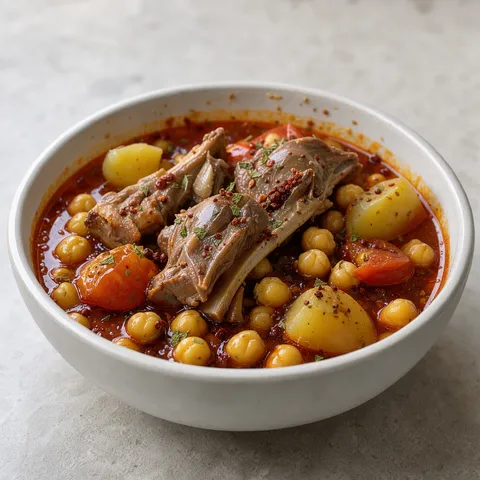 Lamb, Chickpea and Potato Stew1 hr 15 min · Soup
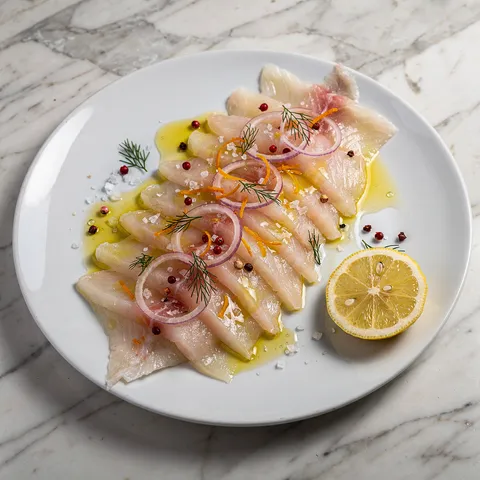 Marinated Sea Bass30 min · Meze
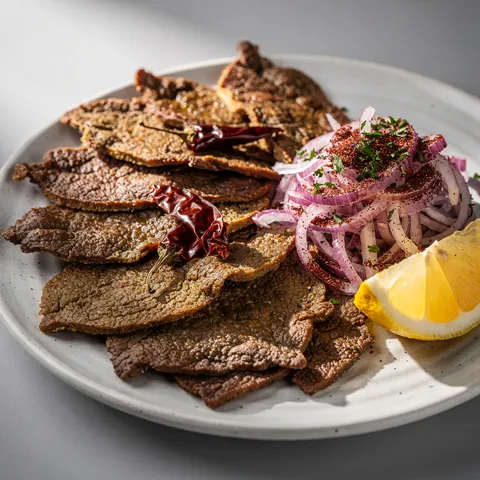 Crispy Fried Liver Slices25 min · Meze
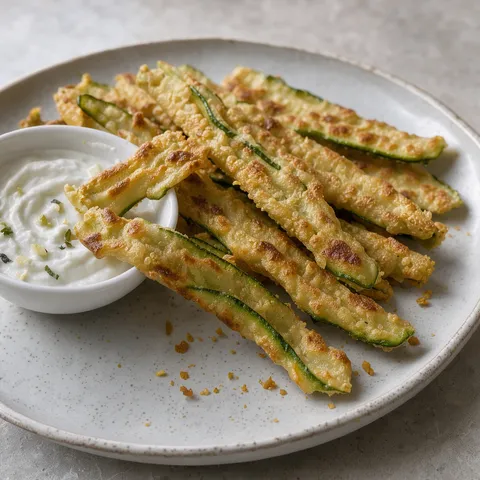 Courgette Crisps30 min · Meze