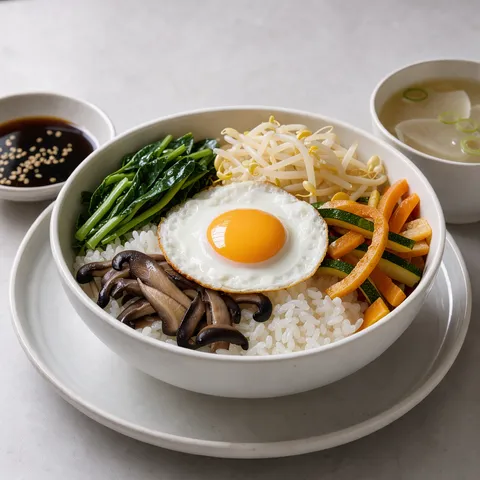
Heotjesabap Namul and Egg Rice Bowl
A Korean main course. Takes 1 hr 25 min, Serves 4. Difficulty: medium.
At a glance
- Total time
- 1 hr 25 min
- Serves
- Serves 4
- Difficulty
- Medium
- Cuisine
- Korean cuisine
- Dish type
- Main course
- Diet
- Vegetarian
- Allergens
- Gluten, Eggs, Sesame, Soya
Ingredients
Rice
- 300 g short-grain rice
- 360 ml water
Namul
- 150 g soybean sprouts
- 150 g spinach
- 1 small courgette (strips)
- 100 g radish (strips)
- 4 dried shiitake mushrooms (strips)
- 1 tsp salt
- 2 tsp sesame oil
- 1 garlic clove
Egg
- 4 eggs
- 1 tsp oil
Sauce
- 3 tbsp soy sauce
- 1 tbsp sesame oil
- 1 tbsp gochugaru
- 1 tbsp water
- 1 tsp sugar
- 1 tbsp toasted sesame seeds
- 1 garlic clove (grated)
- 1 spring onion (chopped)
Soup
- 800 ml water
- 6×6 cm kombu
- 150 g radish (slices)
- 1 tbsp soy sauce
- 1 spring onion
Equipment
- Saucepan
- Frying pan
- Colander
- Mixing bowls
Method
- Cook the rice: Wash the rice 3 times, soak in the water in a pan for 20 min and then cover. Cook over medium heat until it boils, then over the lowest heat for 12 min, and take off the heat and leave to steam for 10 min without lifting the lid. Standing steams the grains and separates them (~43 min)
- Start the soup: While the rice cooks, put the kombu in cold water on the hob and remove before it foams. Add the radish slices and soy sauce, cook for 15 min and add the spring onion. The soup should be clear and light (~15 min)
- Boil the soybean sprouts: While the rice steams, soften the shiitake in lukewarm water for 15 min, squeeze and cut into strips. Boil the sprouts in salted boiling water with the lid on for 5 min, drain in a colander and toss with half a teaspoon of sesame oil, the garlic and a pinch of salt. If you lift the lid, the sprouts smell raw (~6 min)
- Blanch the spinach: Blanch the spinach in boiling water for 40 sec, put in iced water, squeeze and cut into 5 cm pieces. Toss with garlic, half a teaspoon of sesame oil and salt (~4 min)
- Sauté the vegetables: In a pan with a little oil sauté the courgette, then the radish strips, and finally the shiitake, each separately for 2 min, and season with half a teaspoon of sesame oil. Cooking separately keeps the colours and textures apart (~8 min)
- Make the sauce: Mix the soy sauce, sesame oil, gochugaru, sugar, garlic, sesame seeds, water and spring onion in a small bowl. The original heotjesabap sauce contains no gochujang and is soy-based (~2 min)
- Cook the eggs: Heat the oil in a pan, crack in the eggs and cook for 2-3 min so that the yolk stays runny. Let the white edges crisp lightly. To avoid the risk of raw egg, the white must set completely (~4 min)
- Plate: Put the hot rice in wide bowls and arrange the namul in colours on top, and put the egg with its runny yolk around and in the centre. Serve the sauce alongside. At the table it is mixed and seasoned with the sauce, and the soup is drunk alongside (~3 min)
Chef's note
Heotjesabap is a bibimbap cousin specific to Andong, seasoned with soy sauce instead of gochujang (red pepper paste). Its name means fake ritual meal, imitating the namul and rice of the ancestral memorial table. Traditionally meat and fish also go in; here it is written as vegetarian.
Frequently asked questions
- How does Heotjesabap differ from bibimbap?
- Heotjesabap is unique to Andong and its sauce is soy-based instead of gochujang. A clear radish soup is usually served alongside.
- Can Heotjesabap be made vegetarian?
- Yes, this recipe has no meat or fish and is made with namul, egg and rice. If you leave out the egg, it becomes vegan.
- Can Heotjesabap be eaten without the soup?
- It can, but the soup balances the dish. If there is no soup, warm water or barley tea works alongside.
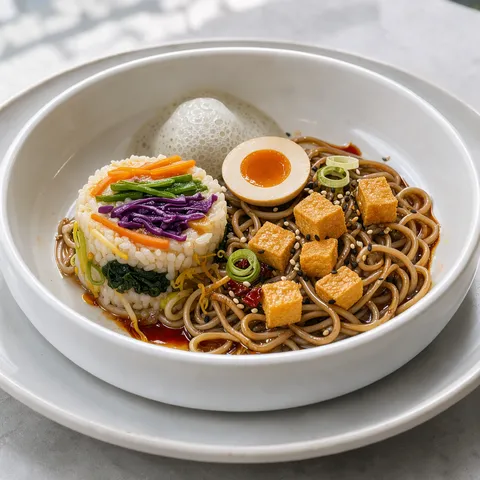 Heotjesabap 2.01 hr 26 min · Main course
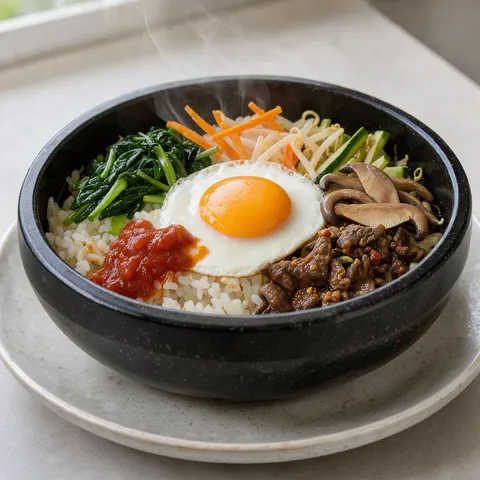 Bibimbap1 hr 15 min · Main course
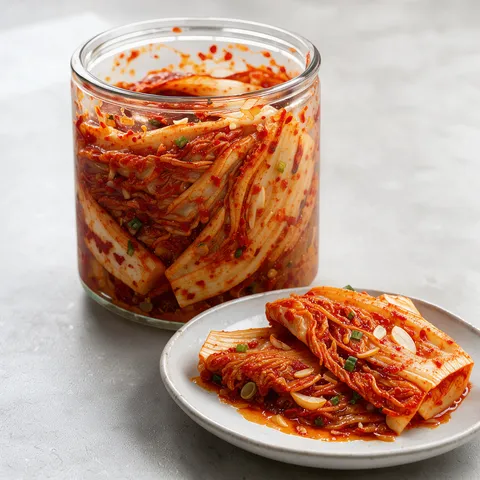 Kimchi3 hr · Side dish
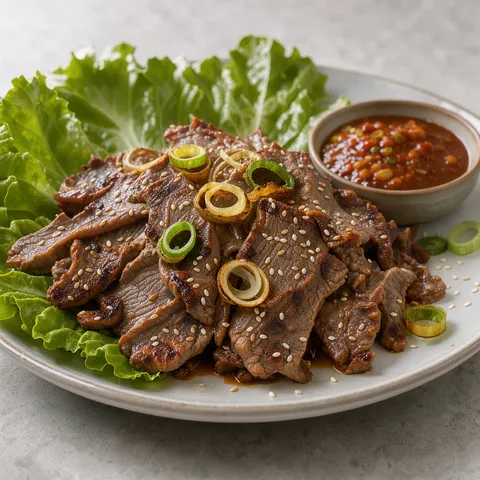 Bulgogi30 min · Main course
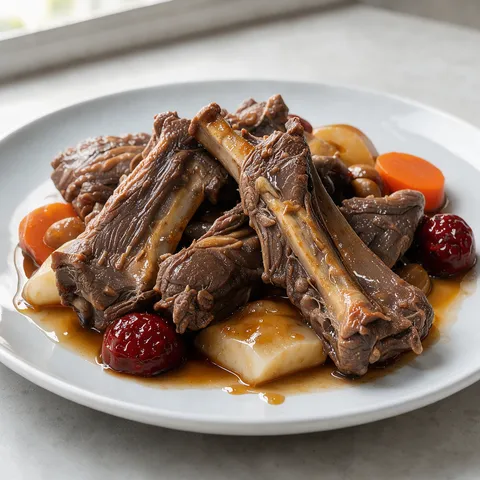 Korean Braised Short Ribs1 hr 30 min · Main course
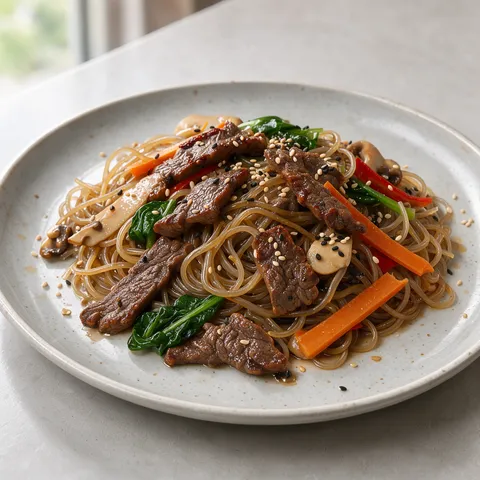 Korean Glass Noodles with Vegetables45 min · Main course
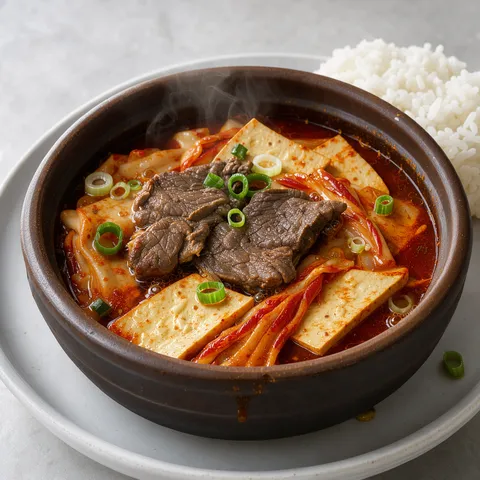 Kimchi Stew40 min · Soup