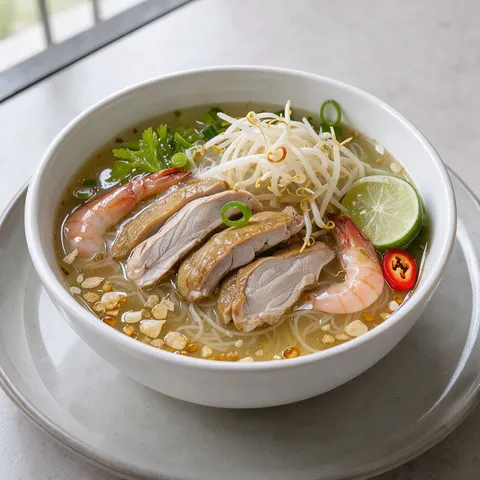
Saigon Clear Noodle Soup with Chicken, Prawns and Fried Garlic Oil Hủ Tiếu Nam Vang
A Vietnamese soup. Takes 36 min, Serves 4. Difficulty: easy.
At a glance
- Total time
- 36 min
- Serves
- Serves 4
- Difficulty
- Easy
- Cuisine
- Vietnamese cuisine
- Dish type
- Soup
- Allergens
- Gluten, Fish, Crustaceans, Soya, Celery
Ingredients
Soup
- 1.5 litres Chicken Stock (Basics)
- 2 shallots (charred until blackened)
- 1 tbsp fish sauce
- 1 tsp sugar
- 1 tsp salt
Meat and seafood
- 300 g boneless chicken thighs (thinly sliced)
- 12 medium prawns (peeled)
- 1 tsp salt
- 1/2 tsp black pepper
Garlic oil
- 5 garlic cloves (finely chopped)
- 3 tbsp vegetable oil
Noodles and to serve
- 300 g dried thin rice noodles
- 100 g soybean sprouts
- 4 spring onions
- 1 handful celery leaves
- 1 lemon
- 1 hot chilli
Equipment
- Chef's knife
- Chopping board
- Colander
- Ladle
- Mixing bowls
- Saucepan
- Frying pan
Method
- Char the shallots: Char the shallots in a dry pan over medium-high heat, turning, until every side is black. The charred skin gives the soup a lightly smoky and sweet depth, which is one of the signatures of Nam Vang soup (~6 min)
- Prepare the soup: Heat the chicken stock in a saucepan and add the charred shallots, fish sauce, sugar and salt. As it nears the boil, reduce the heat, leave the lid ajar and simmer gently. Do not boil, so the soup stays clear (~12 min)
- Prepare the chicken and prawns: Toss the chicken slices and prawns with the salt and black pepper. Thin slices cook in seconds in the soup. Slice 3 mm thick with a chef's knife on a chopping board (~5 min)
- Make the garlic oil: Heat the oil in a small pan over medium heat, add the garlic and stir constantly. As soon as it turns golden, take off the heat and pour into a bowl, as if it waits in the pan it darkens and turns bitter. The oil and crisp garlic are drizzled over the soup (~3 min)
- Boil the noodles: Boil the rice noodles in plenty of boiling water for the time on the packet. Drain in a colander and rinse with cold water. Once the starch is gone, the noodles do not stick in the soup and the soup does not turn cloudy. Divide between bowls (~6 min)
- Cook the meat in the soup: Drop the chicken slices into the boiling soup and wait for it to bubble gently. When the chicken turns white, add the prawns and cook until pink. Overcooked prawns turn rubbery (~3 min)
- Prepare the garnishes: Finely chop the spring onions and celery leaves. Blanch the soybean sprouts quickly in boiling water in a colander and drain. Add soybean sprouts and noodles to each bowl (~3 min)
- Plate: Arrange the chicken and prawns over the noodle bowls. Ladle in boiling soup to come two thirds of the way up each bowl. Drizzle with the garlic oil and sprinkle with spring onions and celery. Put lemon and chilli alongside (~3 min)
Chef's note
Hủ tiếu Nam Vang takes its name from Phnom Penh, the capital of Cambodia (Nam Vang in Vietnamese), and is a soup in which Chinese and Khmer influences meet in Saigon. The original recipe uses pork bone stock and pork; here it is made with chicken stock and chicken thighs. The charred shallot gives the soup its characteristic taste.
Frequently asked questions
- What is Hủ Tiếu Nam Vang?
- It is Saigon's clear-broth rice noodle dish, of Phnom Penh origin with Khmer and Chinese influences. It is served with chicken, prawns and fried garlic oil.
- What is the difference between hủ tiếu and phở?
- Hủ tiếu is made with thinner, lighter rice noodles and a sweeter broth. Phở is a spiced beef soup with wide noodles.
- Why is the broth made with charred shallots?
- Charring gives the broth a gently sweet, smoky depth. It also doesn't darken the colour of the broth.
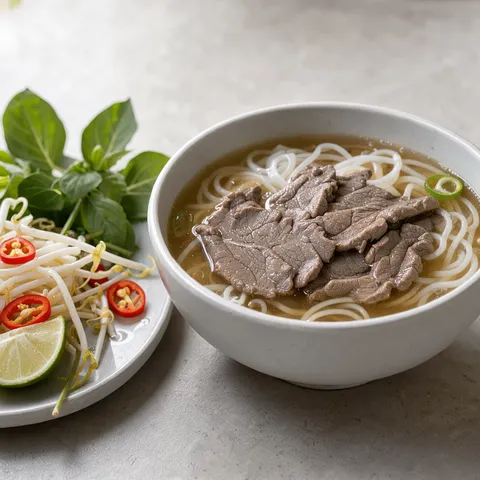 Vietnamese Beef Noodle Soup2 hr 15 min · Soup
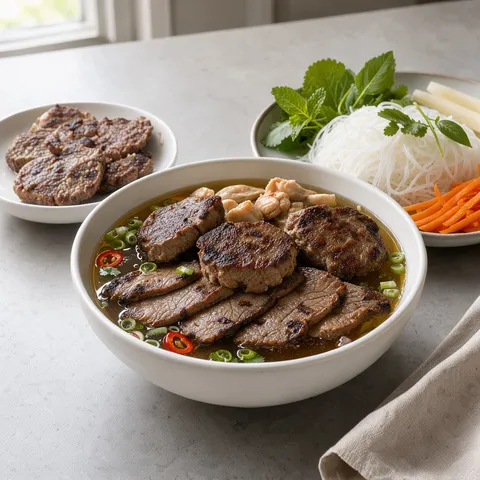 Hanoi Grilled Meat with Rice Noodles1 hr · Main course
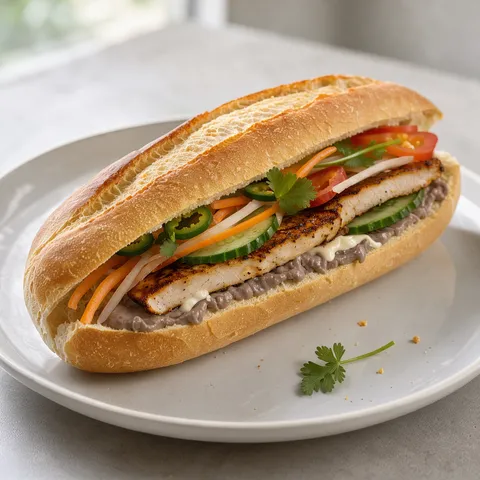 Vietnamese Baguette Sandwich1 hr · Main course
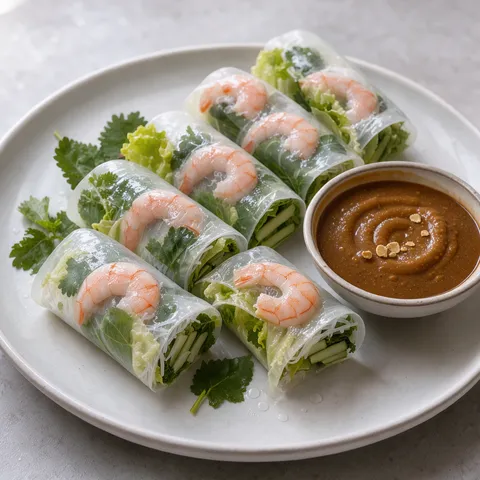 Summer Rolls40 min · Starter
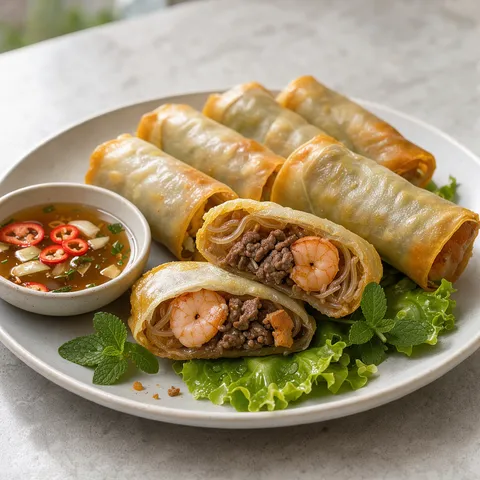 Vietnamese Fried Spring Rolls1 hr · Starter
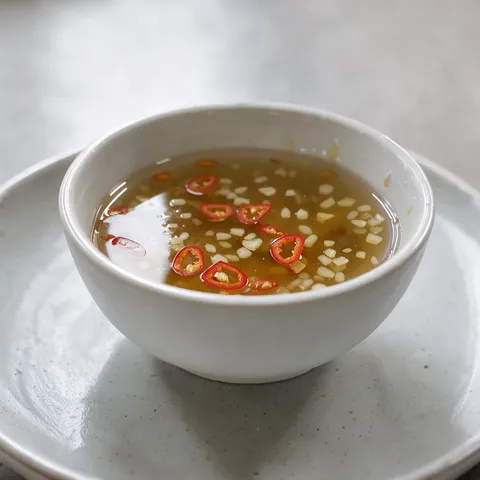 Vietnamese Dipping Sauce5 min · Sauce