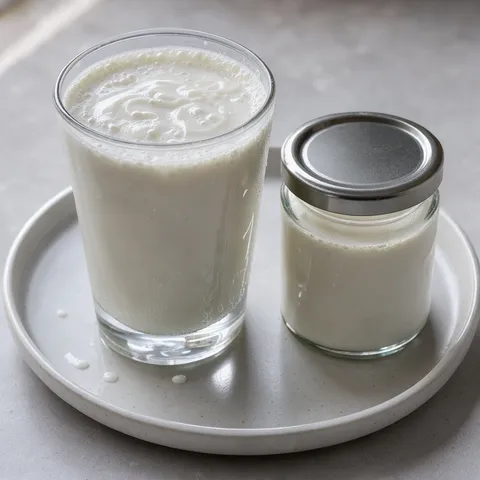
Homemade Soured Milk Drink Ikivuguto
A Burundian drink. Takes 40 min · +10 hr fermenting and 4 hr chilling, Serves 4. Difficulty: medium.
At a glance
- Total time
- 40 min · +10 hr fermenting and 4 hr chilling
- Serves
- Serves 4
- Difficulty
- Medium
- Cuisine
- Burundian cuisine
- Dish type
- Drink
- Diet
- Vegetarian
- Allergens
- Gluten, Milk
Ingredients
Milk
- 2 litres whole pasteurised cows' milk
Starter
- 3 tbsp fresh additive-free live-culture plain yoghurt (or previous ikivuguto)
To serve
- 2 tbsp honey or sugar (optional)
- a pinch of salt (optional)
- 50-100 ml cold milk (optional, to thin)
Equipment
- Saucepan
- Heavy-based saucepan
- Probe thermometer
- Wooden spoon / spatula
- Mixing bowls
- Balloon whisk
- Ladle
- Oven (optional)
Method
- Sterilise the jars: Boil two 1 litre glass jars and their lids in a pan of boiling water for 5 min, lift out with tongs and dry on a clean cloth. If bacteria get in, the milk will not sour and will smell off
- Heat the milk: Put all the milk in a heavy-based pan and bring to 85°C on a thermometer over medium heat, stirring often with a wooden spoon so the bottom does not catch (about 12 min). Hold at this temperature for 5 min. Heating alters the milk proteins and gives ikivuguto a thick, creamy consistency
- Cool the milk: Set the pan in a large bowl of iced water and cool to 43°C on a thermometer, stirring (about 10-12 min). Above 45°C the starter culture dies, and below 38°C it works slowly
- Add the starter: Ladle 100 ml of the 43°C milk into a bowl, whisk smooth with the yoghurt, then pour back into the pan and stir for 30 sec. Yoghurt added directly will clump
- Fill the jars: Share the milk between the two jars with a ladle and close the lids loosely. Insulate the jars by wrapping them in a clean towel
- Ferment: Put the jars in a place at about 35-40°C, such as inside the oven with only the light on, and leave undisturbed for 8-10 hr. When a jar is gently shaken, the milk should wobble like jelly, and a clear whey may collect on the surface. In Burundi, milk is traditionally soured naturally for a day in gourd (calabash) vessels
- Chill: Close the lids tightly and chill the jars in the fridge for at least 4 hr. As it cools, the texture firms up and the sourness softens
- Stir and serve: Before serving, stir the ikivuguto with a spoon or whisk until smooth and pourable, adding 50-100 ml cold milk if it is too thick. Divide between cold glasses and add honey or a pinch of salt if you like
Chef's note
Ikivuguto is a traditional fermented milk made in Burundi and Rwanda by naturally souring cows' milk. It is drunk cold or eaten with ubugali, millet porridge and boiled sweet potato. Traditionally the milk ferments by itself in gourd vessels, and here it is made with live-culture yoghurt for a safe, consistent result. It keeps in the fridge for 5 days. Ready-made ikivuguto is sold in Rwandan and Burundian markets. To make it at home, this recipe is all you need.
Frequently asked questions
- Why won't the milk sour, or why does the yoghurt clump?
- If the yoghurt starter is added straight to the milk it clumps, so first loosen it with 100 ml of the milk at 43°C. Above 45°C the culture dies, and below 38°C it works slowly.
- How is homemade ikivuguto fermented?
- Insulate the jars and leave them untouched somewhere at about 35-40°C, for example in an oven with only the light on. The milk should wobble like jelly, and a clear liquid whey may collect on the surface.
- What should I do if the ikivuguto is too thick?
- Before serving, whisk it with a spoon or whisk until smooth and runny. If it is too thick, add 50-100 ml cold milk.
 Burundian Palm Oil Red Beans55 min · Main course
 Chargrilled Whole Sea Bass1 hr 5 min · Main course
 Fried Sand Smelt with Salad45 min · Meze
 Roast Sweet Potatoes and Spinach1 hr · Main course
 One-Pot Chicken and Vegetable Stew1 hr 25 min · Main course
 Minty Greens and Tomato Stew40 min · Side dish