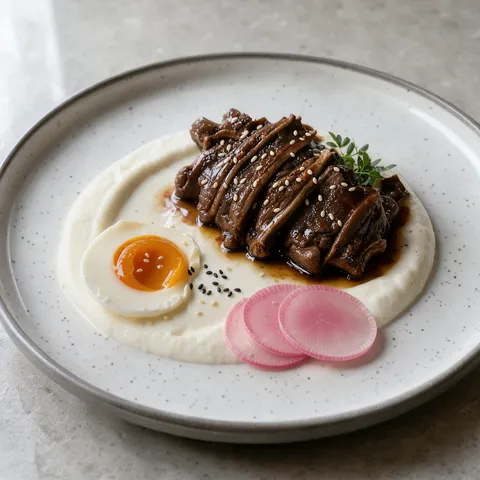
Jang-jorim 2.0
A Korean main course. Takes 1 hr 17 min (steps 4-6 run alongside the cooking time of step 3), Serves 4. Difficulty: medium.
At a glance
- Total time
- 1 hr 17 min (steps 4-6 run alongside the cooking time of step 3)
- Serves
- Serves 4
- Difficulty
- Medium
- Cuisine
- Korean cuisine
- Dish type
- Main course
- Allergens
- Gluten, Milk, Eggs, Sesame, Soya
Ingredients
Beef cheeks
- 4 beef cheeks (about 200 g each)
- 600 ml water
- 80 ml soy sauce
- 4 tbsp mirin
- 3 tbsp light brown sugar
- 1 onion (quartered)
- 4 slices ginger
- 8 garlic cloves
- 2 spring onion stalks
- 8 black peppercorns
Rice purée
- 100 g short-grain rice
- 600 ml water
- 100 ml milk
- 20 g butter
- 1/2 tsp salt
Soft-boiled eggs
- 4 eggs
Pickled radish
- 8 red radishes (thinly sliced)
- 3 tbsp rice vinegar
- 1 tsp sugar
- 1/2 tsp salt
Glaze
- 300 ml of the strained cooking liquid
- 1 tbsp butter
- 1 tsp sesame oil
To finish
- toasted sesame seeds
- thin spring onion rings
Equipment
- Pressure cooker
- Chef's knife
- Chopping board
- Heavy-based saucepan
- Saucepan
- Stick blender
- Fine sieve / chinois
- Ladle
Method
- Trim the cheeks (6 min): Trim the tough membrane and fat from the cheeks on a chopping board with a chef's knife, keeping the meat itself whole. Rinse in cold water. Any membrane left turns rubbery when cooked
- Draw out the blood (6 min): Put the cheeks in boiling water, boil for 4 min, drain and rinse with hot water. Wash the pan. The liquid stays clear
- Pressure-cook (44 min): Put the cheeks, 600 ml water, soy sauce, mirin, brown sugar, onion, ginger, garlic, spring onion stalks and peppercorns in the pressure cooker. Close the lid, bring to pressure over high heat (6 min) and cook on low heat for 38 min. The cheek should come apart easily with the tip of a fork. Do steps 4, 5 and 6 meanwhile
- Cook the rice purée (25 min, alongside step 3): Wash the rice and bring to the boil with 600 ml water in a heavy-based pan. Cook over low heat for 25 min, stirring occasionally, until the grains are soft enough to crush completely. Add the milk, butter and salt and blend with a stick blender for 20 sec, until silky smooth. Keep covered. If the liquid reduces, add hot water
- Cook the eggs (7 min, alongside step 3): Lower the eggs into boiling water, boil for 6.5 min, cool in iced water and peel. The middle of the yolk should stay soft
- Make the pickle (3 min, alongside step 3): Rub the radish slices with the vinegar, sugar and salt and leave to turn pink
- Release the pressure (4 min): Open the valve of the pressure cooker carefully to release the steam and open the lid. Lift the cheeks out slowly with a ladle, as they may fall apart
- Make the glaze (12 min): Pass the liquid through a fine sieve, put 300 ml of it in a wide shallow pan (keep the rest for rice or soup) and boil over high heat for 8 min, until reduced to 80-100 ml. Add the cheeks and turn them for 3 min to glaze. Add the butter and sesame oil and whisk for 1 min. The sauce should be glossy and coat the spoon. If it boils down too far it turns salty
- Plate (5 min): Spread 3 tbsp of rice purée on the plate. Put the cheek on top and drizzle over the glaze. Halve the egg and place beside it and finish with the radish slices, sesame seeds and spring onion. Serve at once
Chef's note
Classic jang-jorim is eaten with shredded beef in soy sauce and eggs. Here the same soy-mirin flavour turns into an intense glaze on beef cheeks in the pressure cooker. The rice purée combines the stew and the rice in one dish, and the pickled radish balances with acidity. If the cheeks are not well trimmed of their thin membranes they turn rubbery. The pressure cooker shortens the time. The cheek's abundant collagen turns to gelatine in the pressure cooker and gives the glaze a natural shine, so no extra thickener is needed. The rice purée forms a creamy base to carry the sauce instead of traditional rice. If the yolk of the egg stays soft, it gives its own sauce to the plate. If you cannot find cheeks, beef shin cooks in the same liquid in 30 min under pressure, but the texture is more fibrous. Soy sauce is salty, so reduce only 300 ml of the liquid for the glaze and keep the rest for rice or soup. Check the seasoning and, if necessary, add 1 tbsp water.
Frequently asked questions
- Why are the membranes on the beef cheeks trimmed?
- If tough membrane is left on, it turns rubbery once cooked. Trim the cheeks of tough membrane and fat, keeping the meat itself whole.
- Why isn't the glaze boiled for too long?
- If it boils too far, it turns salty. Boil the strained liquid until it has reduced to 80-100 ml. The sauce should be glossy and coat the spoon.
- How long for soft-boiled eggs?
- Boil the eggs for 6.5 minutes, plunge into iced water and peel. The yolk stays soft in the centre.
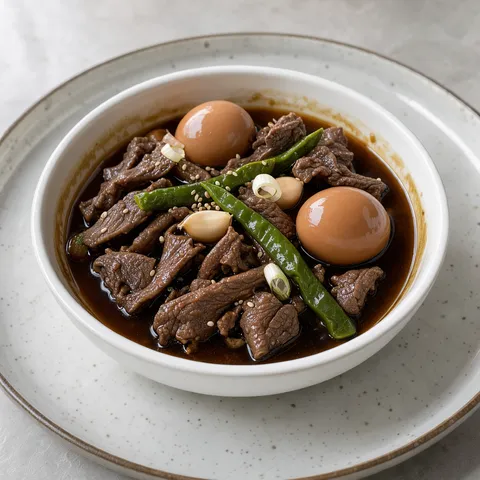 Korean Soy-Braised Beef1 hr 5 min · Main course
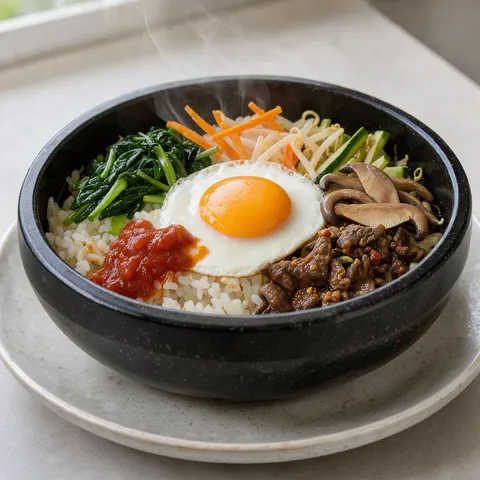 Bibimbap1 hr 15 min · Main course
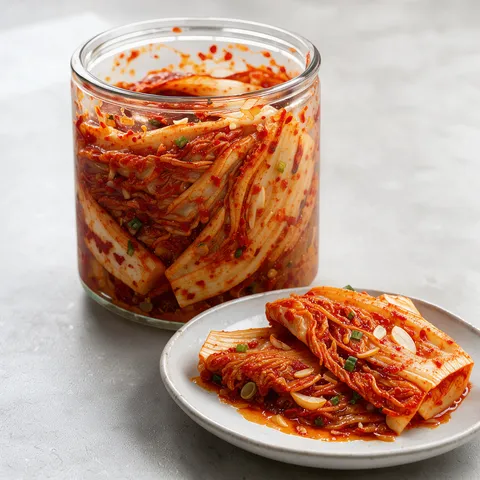 Kimchi3 hr · Side dish
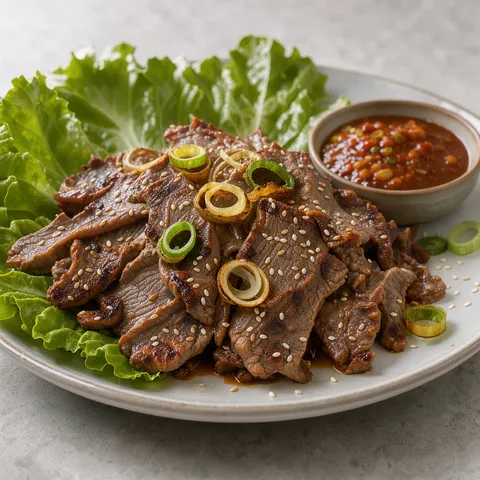 Bulgogi30 min · Main course
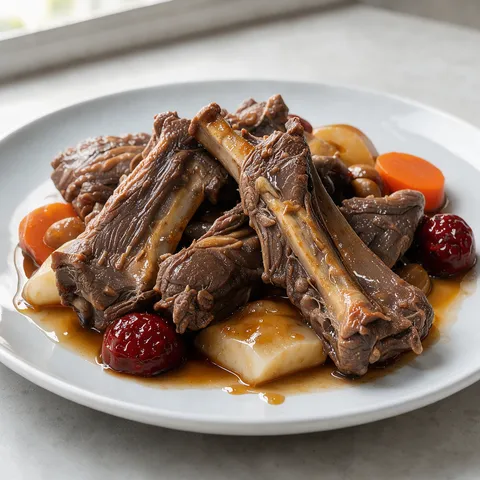 Korean Braised Short Ribs1 hr 30 min · Main course
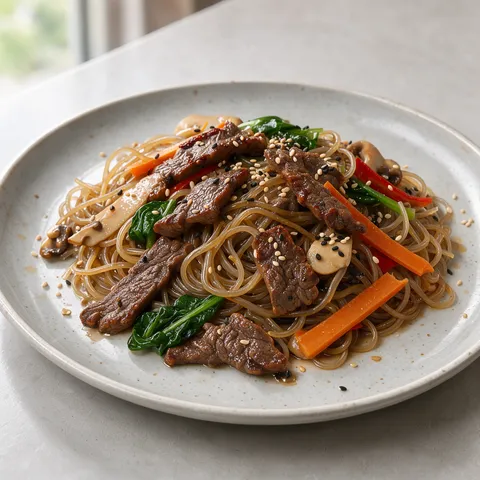 Korean Glass Noodles with Vegetables45 min · Main course
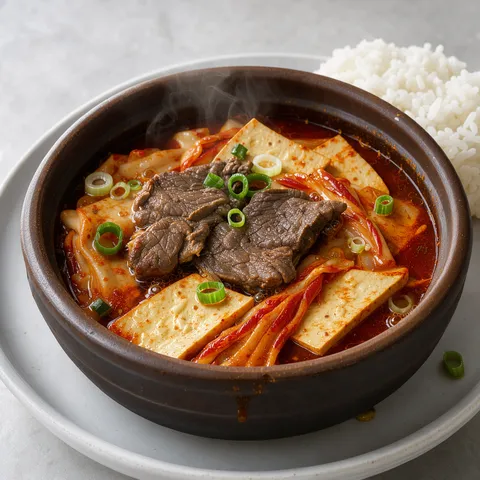 Kimchi Stew40 min · Soup