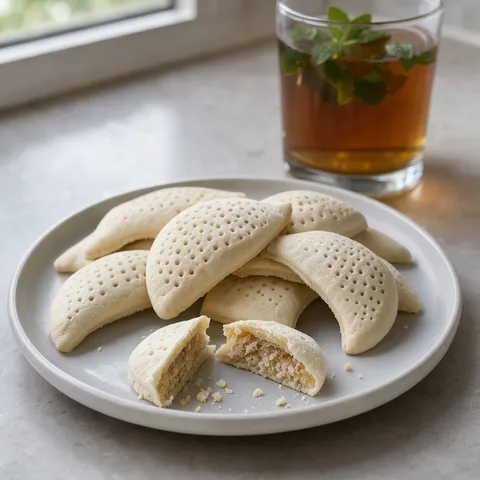
Moroccan Gazelle Horn Biscuits Kaab el Ghazal
A Moroccan dessert. Takes 1 hr 50 min, Serves 4. Difficulty: medium.
At a glance
- Total time
- 1 hr 50 min
- Serves
- Serves 4
- Difficulty
- Medium
- Cuisine
- Moroccan cuisine
- Dish type
- Dessert
- Diet
- Vegetarian
- Allergens
- Gluten, Milk, Eggs, Tree nuts
Ingredients
Dough
- 250 g plain flour
- 40 g butter (melted and cooled slightly)
- 1 egg
- a pinch of salt
- about 70 ml cold water
- 2 tbsp plain flour for rolling
Almond paste
- 300 g blanched white almonds
- 150 g icing sugar
- 30 g butter (melted)
- 1/2 tsp ground cinnamon
- 1 tsp orange zest (from 1 orange)
- 2 tbsp water
Equipment
- Saucepan
- Mixing bowls
- Cling film
- Food processor
- Fine grater
- Precision scales
- Oven
- Baking tray
- Baking paper
- Rolling pin / oklava
- Chef's knife
Method
- Melt the butter: Melt 70 g butter in a small pan over low heat and leave to cool slightly for 5 min. 40 g is set aside for the dough and 30 g for the almond paste. Hot butter cooks the egg, so it should be lukewarm
- Knead the dough: Put the flour and salt in a bowl and make a well in the middle. Add the egg and 40 g lukewarm butter and work into the flour with your fingers. Add the water little by little to bring together a dough, turn out onto the work surface and knead for 8-10 min, until smooth, elastic and slightly firmer than an earlobe. Well-kneaded dough can be rolled paper-thin without tearing. Wrap in cling film and rest at room temperature for 30 min, to relax the gluten
- Grind the almond paste: While the dough rests, grind the almonds in a food processor with the icing sugar for 2-3 min, until they reach the consistency of fine wet sand. Stop the processor from time to time to scrape down the sides. Do not overprocess, or the almonds release their oil and turn into an oily paste. Grinding the sugar with the almonds delays the oil separating
- Bind the paste: Add 30 g lukewarm butter, the cinnamon, the orange zest grated with a microplane and 1 tbsp water and run for 20-30 sec. Squeeze the mixture in your palm: it should come together easily and not stick to your hand. If it crumbles, add the remaining 1 tbsp water. This makes about 510 g paste in total
- Shape the filling: Divide the paste into 30 pieces of 17 g on the scale. Roll each piece in your palms into a navette shape 8 cm long, 1.5 cm thick in the middle and pointed at both ends, and arrange on a plate. Start preheating the oven to 170°C (conventional) and line 2 trays with baking paper
- Roll out the dough: Divide the dough into 4 pieces, work one and keep the others in cling film. On a lightly floured surface, roll out with a rolling pin to a rectangle of about 28×35 cm and 1 mm thick, so thin that you can see your hand through it. Thin dough becomes paper-crisp when baked, and thick dough makes the biscuit doughy
- Wrap and make the crescents: Place one filling horizontally 3 cm in from the bottom edge of the dough. Fold the edge of the dough over the filling, press with your fingers to push out the air and cut out a half-moon shape with a chef's knife, leaving a 1 cm margin around the filling. Seal by pressing the edges, then hold by the ends and bend slightly into a crescent (gazelle horn) shape. Each rolled sheet gives 8 biscuits: re-roll the trimmings into a ball together with the last piece. Arrange the biscuits on the trays 2 cm apart and prick 3-4 small holes in each with a cocktail stick, so the steam escapes and the crust does not burst
- Bake: Bake each tray on the middle shelf for 15 min. The biscuits should not colour, only the bases and tips turning a very pale honey colour. Kaab el ghazal is a biscuit that stays white, and if it has coloured it is overbaked. Shape the second tray while the first bakes
- Cool and store: Cool on the tray for 10 min while the crust firms up. Transfer to a plate. Stored in an airtight container at room temperature, they keep for 1 week. Serve with mint tea
Chef's note
Kaab el ghazal (gazelle horn) is one of the best-known biscuits served at weddings, festivals and tea for guests in Morocco. Traditionally orange blossom water goes into the paste. Here orange zest and water are used, and if you can find it, put 2 tbsp orange blossom water in place of the water. If the dough is not rolled thin enough the biscuit turns out thick and hard. Not suitable for people with an almond allergy. You can freeze the biscuits unbaked and bake them straight from the freezer, adding 3 min to the time.
Frequently asked questions
- Why should kaab el ghazal stay pale?
- Kaab el ghazal is a biscuit that stays pale, and if it has taken colour it is overbaked. When baked, only the undersides and tips should turn a very light honey colour.
- Why does the almond paste turn oily?
- If the almonds are ground too much they release their oil. Grinding the almonds with the icing sugar delays the oil separating, and the paste is left with the consistency of fine wet sand.
- How is kaab el ghazal stored?
- After cooling on a tray, keep in an airtight container at room temperature for 1 week.
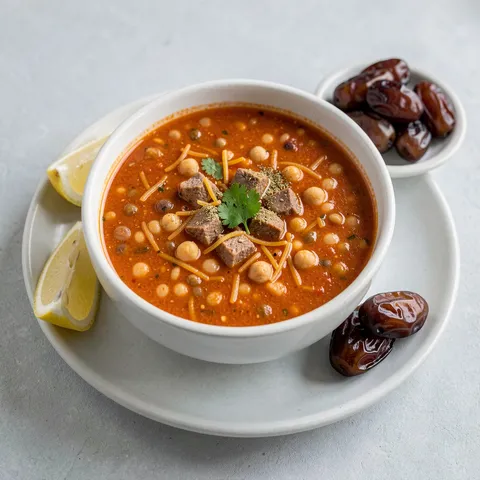 Harira2 hr · Soup
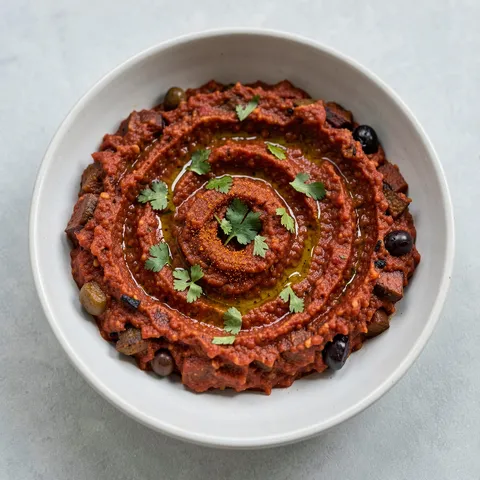 Moroccan Aubergine and Tomato Salad1 hr 30 min · Meze
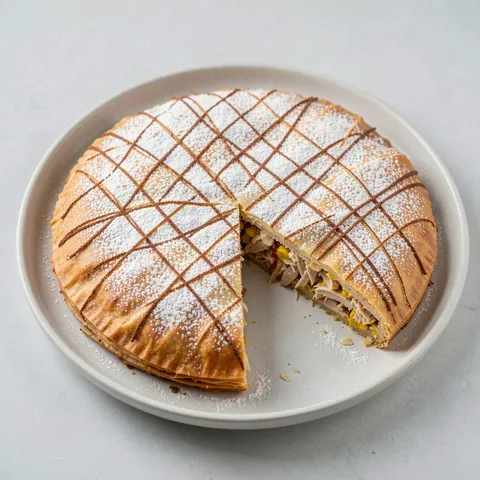 Chicken Bastilla3 hr 15 min · Main course
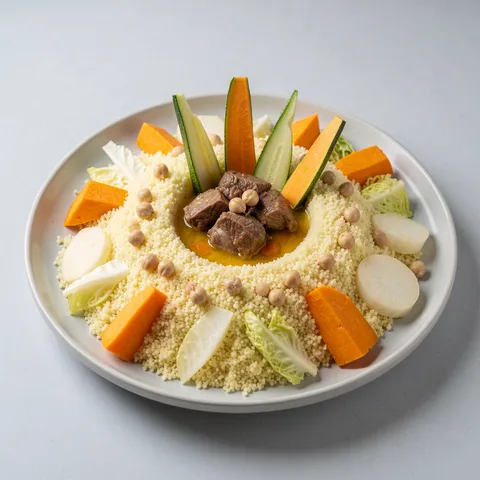 Couscous Bidaoui3 hr · Main course
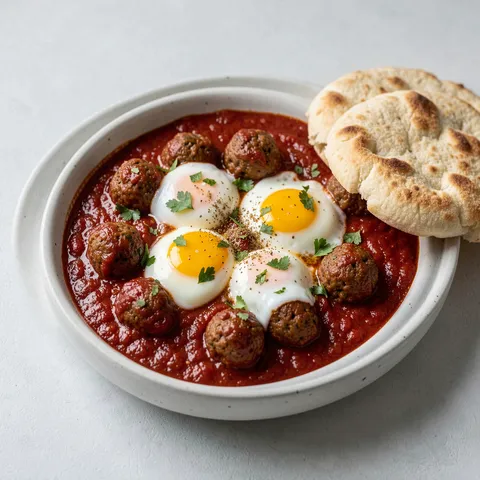 Meatball Tagine in Tomato Sauce with Eggs1 hr · Main course
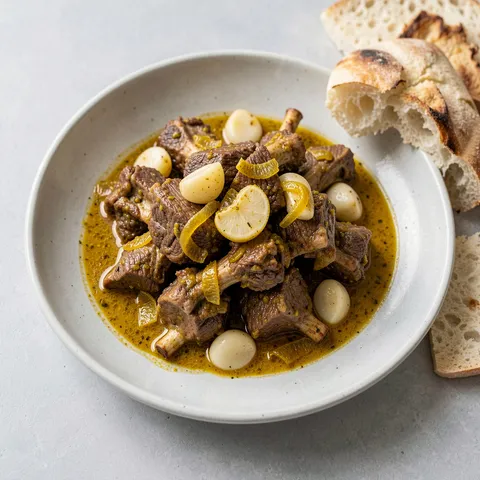 Marrakech Clay Jar Kebab5 hr 30 min · Main course