
Karashi Renkon Mustard Miso Stuffed Lotus Root
A Japanese starter. Takes 29 min, Serves 4. Difficulty: easy.
At a glance
- Total time
- 29 min
- Serves
- Serves 4
- Difficulty
- Easy
- Cuisine
- Japanese cuisine
- Dish type
- Starter
- Allergens
- Gluten, Milk, Eggs, Fish, Soya, Mustard, Sulphites
Ingredients
Root
- 2 lotus roots (renkon about 450 g in total)
- 1 tbsp white vinegar
- 1 litre water
Filling
- 3 tbsp white miso
- 1 tbsp mustard powder
- 1 tbsp lukewarm water
- 1 tsp sugar
Batter
- 80 g plain flour
- 1/2 tsp turmeric
- 100 ml cold water
- 1/4 tsp salt
Frying
- 400 ml vegetable oil
To serve
- 1 lemon wedge
Equipment
- Saucepan
- Frying pan
- Probe thermometer
- Mixing bowls
- Vegetable peeler
- Balloon whisk
- Chopping board
- Chef's knife
Method
- Prepare the root: Peel the lotus roots with a peeler and trim the ends. Put them in vinegared water so they do not discolour. Briefly boil in boiling vinegared water in a saucepan and drain. Boiling softens the root and reduces the starch. (~8 min)
- Wake up the mustard: Mix the mustard powder with the lukewarm water, cover and leave. The sharp taste of mustard develops after it has stood a little. (~5 min)
- Prepare the filling: Knead the white miso, activated mustard and sugar smooth in a bowl. The filling should be the consistency of a paste, because if it is too runny it leaks out during frying. (~2 min)
- Fill: Press the filling into the holes of the lotus root with your finger or a small spoon. Make sure every hole is filled. Pat the root dry with kitchen paper. (~5 min)
- Make the batter: Whisk the flour, turmeric and salt with the cold water in a bowl. Bring to the consistency of a runny pancake batter. The turmeric gives the traditional yellow colour. (~3 min)
- Fry: Heat the oil to 170°C in a deep frying pan and check with a thermometer. Dip the roots in the batter and scrape off the excess, then fry in the oil, turning, until every side is golden yellow. Lift out onto kitchen paper. (~8 min)
- Cut and serve: Cut the fried root into 1 cm rings on a chopping board with a chef's knife. Let the pattern of holes on the cut surface show. Serve with the lemon wedge. It is eaten hot or at room temperature. (~3 min)
Chef's note
Karashi renkon is a dish of the Kumamoto region that dates from the time of the Hosokawa clan. The holes of the lotus root are filled with mustard miso and fried. If the mustard powder is not left to stand after being mixed with water, its sharpness does not develop. If you cannot find lotus root, thick celery stalks or courgette cubes can be used in a similar way, with a different flavour.
Frequently asked questions
- What can I do if I can't find lotus root?
- Thick celery stalks or courgette cubes can be used. You won't get the hole pattern, but the miso and mustard filling suits them just as well.
- Why is mustard powder left to stand?
- When mustard powder meets water, an enzyme reaction starts and the sharp flavour develops in a few minutes. If you use it straight away, the flavour stays flat.
- Is Karashi Renkon eaten hot or cold?
- Both are fine. Hot, the batter is crisp, and at room temperature the mustard flavour is more noticeable.
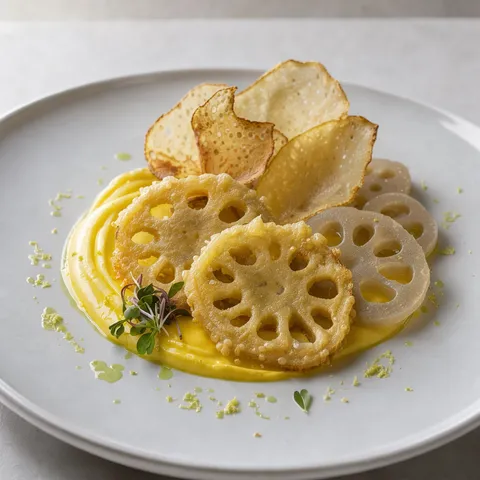 Karashi Renkon 2.046 min · Starter
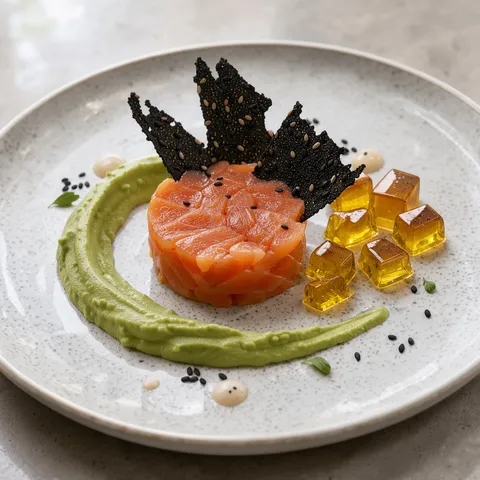 Salmon Tartare, Black Sesame Crisp, Wasabi Avocado45 min · Starter
 Salmon, Miso Glaze, Dashi Beurre Blanc, Edamame Purée50 min · Main course
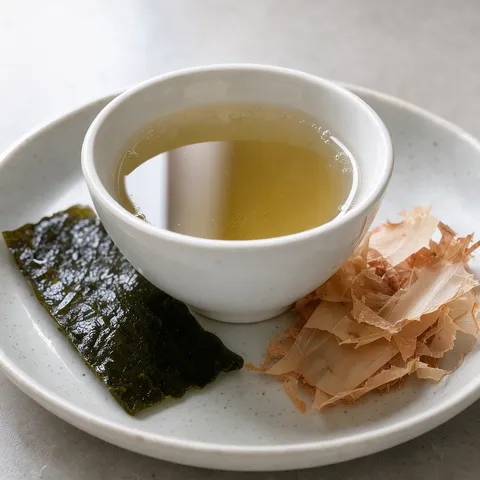 Ichiban Dashi1 hr 45 min · Basic recipe
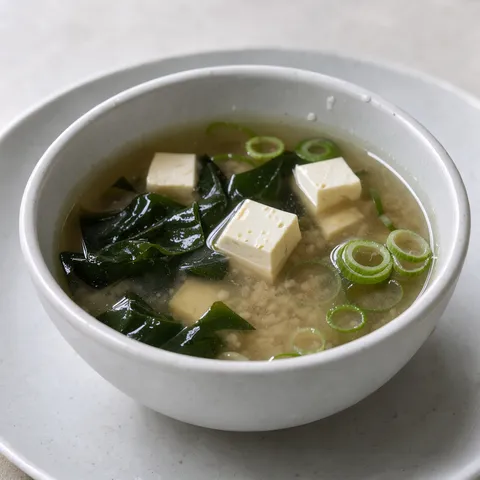 Miso Soup15 min · Soup
 Sushi Rice1 hr 15 min · Basic recipe
 Nigiri45 min · Main course