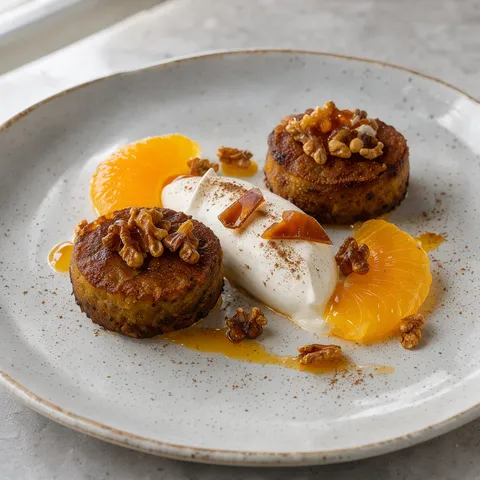
Karidopita 2.0
A Greek dessert. Takes 1 hr 10 min, 4 servings (8 small cake). Difficulty: challenging.
At a glance
- Total time
- 1 hr 10 min
- Serves
- 4 servings (8 small cake)
- Difficulty
- Challenging
- Cuisine
- Greek cuisine
- Dish type
- Dessert
- Allergens
- Gluten, Milk, Eggs, Tree nuts
Ingredients
Cakes (8 small cakes - 2 per plate)
- 2 eggs (at room temperature)
- 80 g caster sugar
- 50 ml sunflower oil
- 40 ml milk
- 100 g walnuts (finely chopped)
- 50 g dried breadcrumbs (Basics)
- 40 g plain flour
- 1 tsp baking powder
- 1 tsp ground cinnamon
- a pinch of ground cloves
- a pinch of salt
- 5 g butter (for the mould)
Oranges
- 3 oranges (zest of 1 for the cakes and its juice for the syrup, segments of 2 for the plate, juice squeezed from their membranes for the syrup)
Orange and honey syrup
- 150 ml orange juice (from the oranges, topped up with water if short)
- 50 ml water
- 120 g caster sugar
- 2 tbsp honey
- 1 cinnamon stick
Honey yoghurt cream
- 200 g strained (Greek-style) yoghurt
- 100 ml whipping cream (35% fat)
- 1 tbsp honey
Caramelised walnuts
- 60 g walnuts (large pieces)
- 50 g caster sugar
- a pinch of salt
To finish
- 1/4 tsp ground cinnamon
Equipment
- Silicone mould
- Pastry brush
- Oven
- Baking tray
- Fine grater
- Chef's knife
- Chopping board
- Fine sieve / chinois
- Saucepan
- Mixing bowls
- Hand mixer
- Silicone spatula
- Frying pan
- Wooden spoon / spatula
- Baking paper
- Balloon whisk
Method
- Prepare the oven and mould: Preheat the oven to 180°C (conventional). Brush the cups of an 8-hole silicone muffin mould (about 80 ml each) thinly with soft butter using a pastry brush. The silicone mould lets the small cakes take heat evenly on all sides and stay moist, and they form a thin crust that holds the syrup
- Prepare the oranges: Finely grate the zest of the first orange with a microplane and set it aside for the cakes, then squeeze the orange. Cut away all the peel and white pith of the other two oranges with a chef's knife, cut out the segments between the membranes (suprême) and put them in a bowl. Squeeze the leftover membranes in your hand over a fine sieve to collect their juice too. Measure the total juice and top up to 150 ml with water
- Cook the syrup: In a small saucepan (ring 1), bring the orange juice, 50 ml water, sugar, honey and cinnamon stick to the boil and boil for 6-8 min, until slightly thickened and reduced to about 200 ml. Take off the heat and remove the cinnamon. Set the pan in a bowl of cold water and leave to cool to room temperature. The plain syrup of classic karidopita becomes fruity and slightly tart here with orange juice
- Whisk the cake batter: In a bowl, whisk the eggs and sugar with an electric hand mixer on high speed for 4 min, until pale and falling in a ribbon. On low speed, add the oil, milk and orange zest. In a separate bowl, mix the finely chopped walnuts, breadcrumbs, flour, baking powder, cinnamon, cloves and salt, then fold this into the whisked mixture with a spatula, using movements from the bottom up, until no streaks of flour remain
- Bake the cakes: Divide the batter equally between the 8 cups (about 55 g each, filling the cups three-quarters full). Put the mould on a baking tray and bake on the middle shelf for 18-20 min, until the cakes have risen, the tops are deep golden and the tip of a thin knife inserted in the centre comes out dry
- Make the caramelised walnuts: While the cakes bake, melt the sugar in a 20 cm frying pan (ring 2) over medium heat for 4-5 min without stirring, swirling the pan now and then, until it becomes a deep amber caramel. Add the walnuts and salt, stir with a wooden spoon for 30 sec to coat every piece and immediately spread them out on baking paper, separating them one by one. In 10 min they set as hard as glass, then break them up roughly with a chef's knife. The caramel is very hot, so do not let it touch your hands
- Whip the cream: Whisk the cold cream in a bowl for 2-3 min, until soft peaks form. In another bowl, mix the strained yoghurt and honey until smooth, then fold in the cream in two goes with a spatula. Keep in the fridge. The tangy strained yoghurt cuts through the sweetness of the syrup-soaked cakes
- Soak the cakes in syrup: Take the cakes out of the oven, leave for 3 min, then unmould them and arrange side by side in a deep dish. Set aside 4 tbsp of the syrup for the plate. Spoon the remaining syrup slowly over each cake as it soaks in, about 1 tbsp per cake. Leave to rest for 10 min. Warm cakes and room-temperature syrup, as in the classic, let the syrup soak in without the cakes turning doughy
- Plate: Put two warm cakes on each plate, with space between them. Place a quenelle of honey yoghurt cream, shaped with two spoons, alongside. Arrange 4-5 orange segments around the cakes
- Finish: Scatter the caramelised walnut pieces over the cakes and cream. Drizzle the reserved syrup in drops over the empty spaces on the plate and over the cakes. Dust the 1/4 tsp cinnamon lightly over the plates through a fine sieve and serve at once
Chef's note
This plate turns the tray cake of the site's Karidopita into a single-serving, warm and fresh dessert: small cakes soak up the syrup quickly, orange juice lightens the syrup, the strained yoghurt cream and fresh orange segments balance the sweetness, and caramelised walnuts add crunch. To make breadcrumbs at home, use the site's Breadcrumbs, Panko and Toasted Crumbs (Basics) recipe. Without a silicone mould, a greased and floured metal muffin tin also works. The cakes can be baked and soaked in syrup a day ahead: warm them in the oven for 5 min before serving.
Frequently asked questions
- Why use a silicone mould for the small cakes?
- A silicone mould lets the small cakes heat evenly on all sides and stay moist, and helps them form a thin crust that holds the syrup.
- How do the small cakes take up the syrup?
- While the cakes are warm, spoon over room-temperature syrup slowly as the cake absorbs it, about 1 tbsp per cake. Then rest for 10 minutes so the syrup is absorbed without making them stodgy.
- How do the caramelised walnuts harden?
- Add the walnuts to the caramel and turn for 30 seconds, then spread them out one by one on baking paper straight away. In 10 minutes they harden to a glass-like brittle and can be broken into large pieces. Don't touch the caramel, as it is very hot.
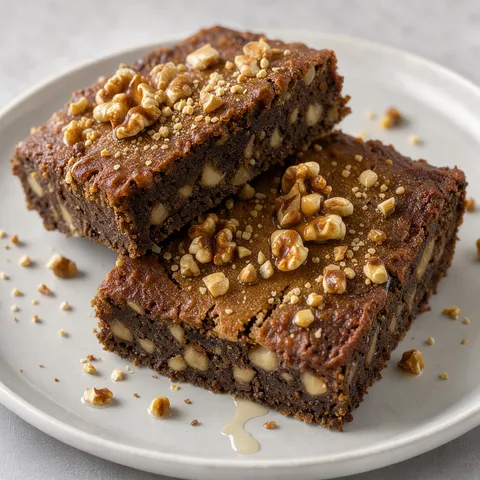 Greek Walnut Cake with Orange Syrup1 hr 20 min · Dessert
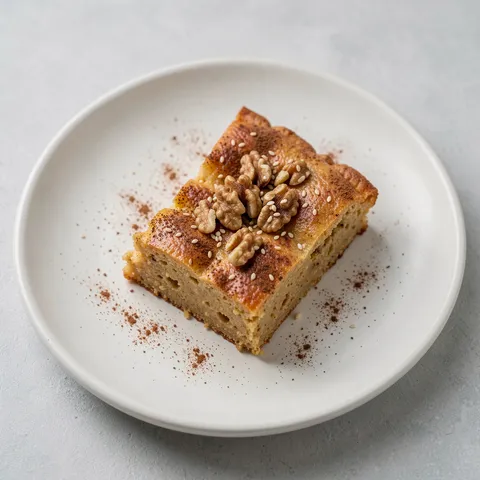 Greek Tahini Cake1 hr 2 min · Patisserie
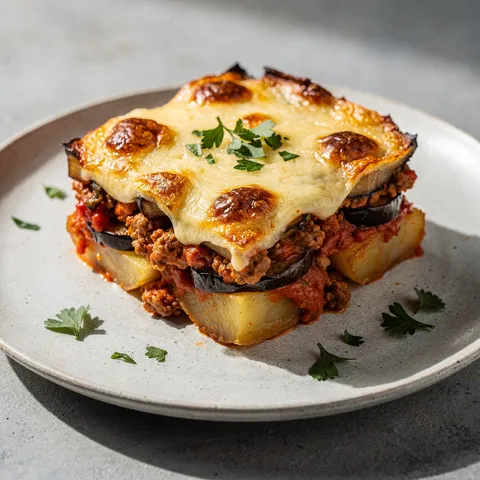 Moussaka2 hr 15 min · Main course
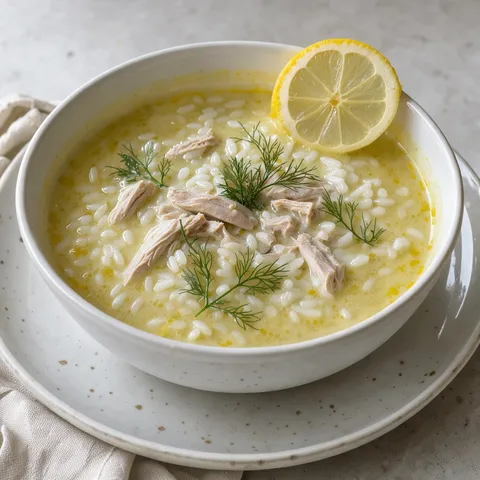 Greek Egg and Lemon Chicken Soup1 hr 05 min · Soup
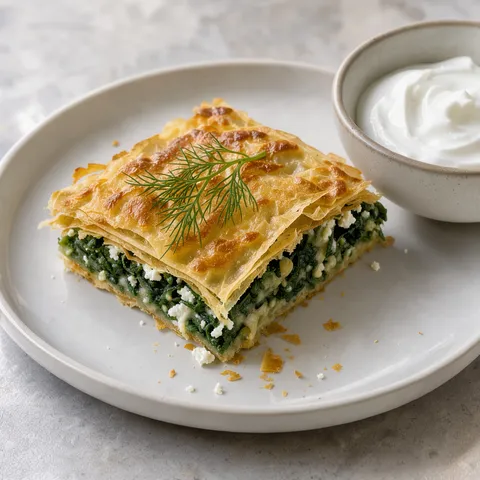 Greek Spinach and Feta Pie2 hr 10 min · Bread & pastry
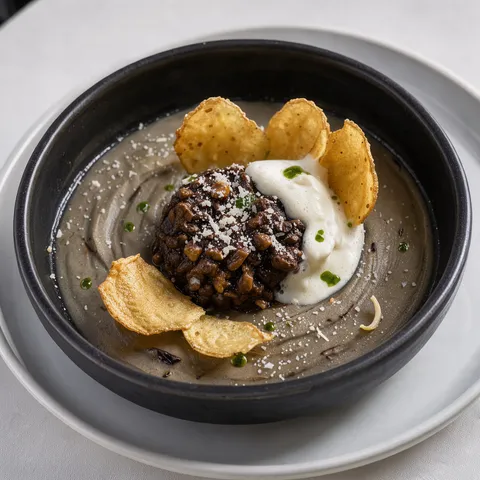 Moussaka 2.01 hr 25 min · Main course
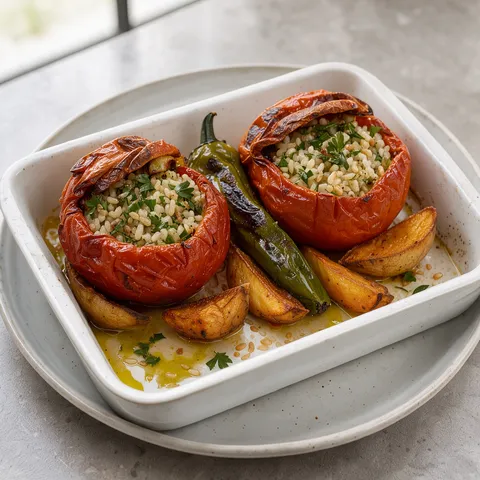 Greek Stuffed Tomatoes and Peppers1 hr 50 min · Main course