
Carinthian Pasta Parcels with Fresh Curd Cheese Kärntner Kasnudeln
An Austrian main course. Takes 1 hr 50 min, Serves 4. Difficulty: medium.
At a glance
- Total time
- 1 hr 50 min
- Serves
- Serves 4
- Difficulty
- Medium
- Cuisine
- Austrian cuisine
- Dish type
- Main course
- Allergens
- Gluten, Milk, Eggs
Ingredients
Dough
- 250 g plain flour
- 1 egg
- 90 ml lukewarm water
- 1 tbsp sunflower oil (15 ml)
- 1/2 tsp salt
For rolling
- 3 tbsp plain flour
Filling
- 400 g floury potatoes
- 200 g fresh unsalted fresh curd cheese
- 1 onion (about 80 g)
- 15 g butter
- 2 tbsp finely chopped fresh mint
- 1 tsp dried mint
- 1 tbsp finely chopped flat-leaf parsley
- 1 tsp salt
- 1/4 tsp black pepper
Cooking water
- 4 litres water
- 1 tbsp salt
To serve
- 80 g butter
- 1 tbsp finely chopped chives
Equipment
- Mixing bowls
- Cling film
- Saucepan
- Frying pan
- Potato ricer
- Rolling pin / oklava
- Baking tray
- Colander
- Chef's knife
- Chopping board
Method
- Knead the dough: Put the flour and salt in a bowl and make a well in the centre. Add the egg, lukewarm water and oil, mix first with a fork, then bring together by hand. Knead on the work surface for 8 min until smooth and elastic. Wrap in cling film and rest at room temperature for 30 min: relaxed dough rolls out very thinly
- Boil the potatoes: While the dough rests, put the potatoes in their skins in cold water, bring to the boil and cook for 20-25 min until a knife slides in easily. Potatoes boiled in their skins don't absorb water, so the filling doesn't turn watery
- Soften the onion: Very finely chop the onion and cook it in 15 g butter in a small frying pan over medium-low heat for 5 min until it starts to turn golden
- Make the filling: Peel the potatoes while hot and pass them through a potato ricer into a bowl. Add the fresh curd cheese, onion, fresh and dried mint, parsley, salt and pepper and mix. Cool the filling completely and divide it into 30 equal pieces (each about 22 g), rolling them into walnut-sized balls. A cold filling doesn't make the dough wet and is easier to seal
- Roll out and cut: Divide the dough into four, keeping the pieces you aren't working with covered. Roll out on a floured surface with a rolling pin to 1.5 mm thick and cut out circles with a 10 cm glass or cutter. Gather up the trimmings, rest them for 10 min and roll out again. You'll get about 30 circles in total
- Fill and crimp: Put a ball of filling in the centre of each circle, lightly wet the edge with your finger and fold into a half-moon. Press the edges together, pushing out the air inside. Then crimp the edge inwards in small folds between your thumb and forefinger to make a braid-like edge (Krendeln). This edge stops them opening during cooking and is the signature of Kasnudeln. Arrange the finished parcels on a floured tray
- Cook: Bring 4 litres water to the boil with the salt in a large pan, then reduce the heat to a gentle bubble. Drop the Kasnudeln into the water in batches of 15 and cook each batch of 15 for about 8-10 min in total, giving them another 3 min once they float. A vigorous boil opens the edges
- Brown butter: While the last batch cooks, cook 80 g butter in a frying pan over medium heat for 3-4 min until the solids under the foam turn hazelnut brown, then take it off the heat immediately
- Serve: Lift the Kasnudeln out with a slotted spoon, drain and divide between warmed plates, seven or eight per plate. Drizzle with the brown butter, scatter with chives and serve immediately
Chef's note
Kärntner Kasnudeln are known as the signature dish of Carinthia, the state in southern Austria. The original filling uses Topfen, local varieties of mint and chervil: here it is made with fresh unsalted fresh curd cheese and mint. Strained labneh also works instead of fresh curd cheese, making the filling a little creamier. If the braided edge is too fiddly, you can seal the edge by pressing it with a fork. Uncooked Kasnudeln can be frozen on a floured tray and cooked from frozen: add 3 min to the time.
Frequently asked questions
- How do you stop the Kasnudel edges coming open as they boil?
- Pinch the edge into small folds with your fingers (the Krendeln), which stops it opening as it cooks. The water should also only bubble gently, since a rolling boil opens the edges.
- Why is the filling cooled?
- A cold filling does not make the dough wet and makes sealing easier. So cool the filling completely and divide it into balls.
- Why is the dough rested?
- A relaxed dough rolls out paper-thin. Leave it wrapped in cling film at room temperature for 30 minutes.
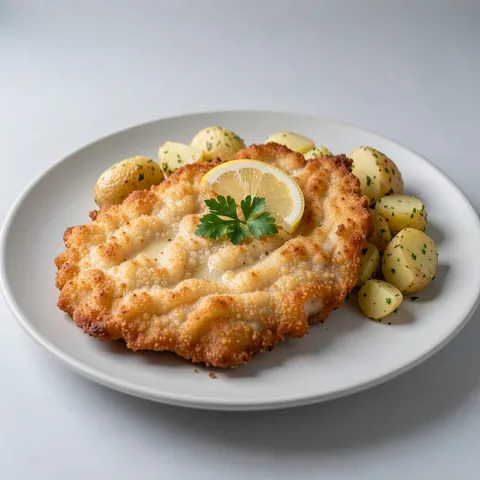 Wiener Schnitzel45 min · Main course
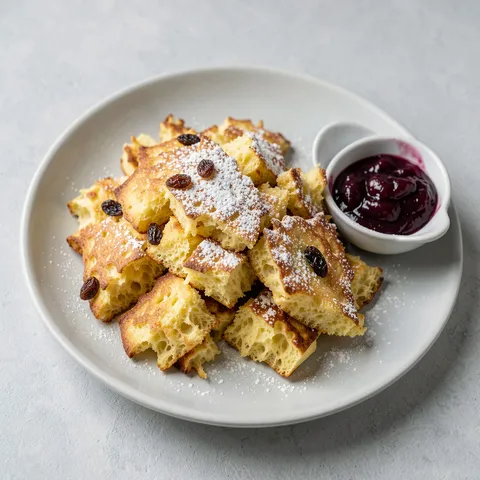 Austrian Torn Pancake40 min · Dessert
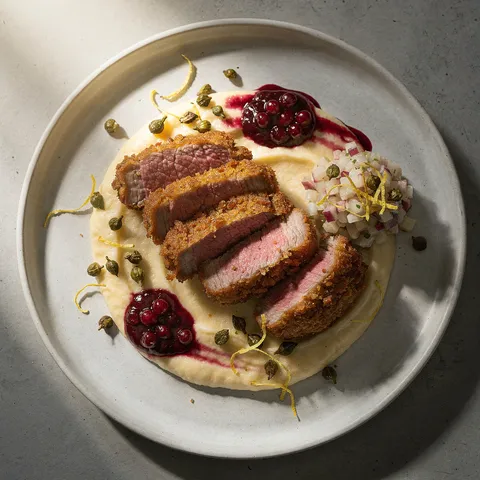 Wiener Schnitzel 2.01 hr 25 min · Main course
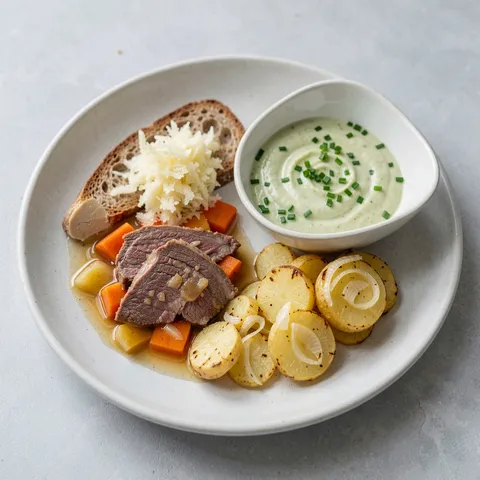 Viennese Boiled Beef and Apple Horseradish3 hr 20 min · Main course
 Viennese Apple Strudel1 hr 45 min · Patisserie
 Alpine Cheese and Bread Dumplings55 min · Main course