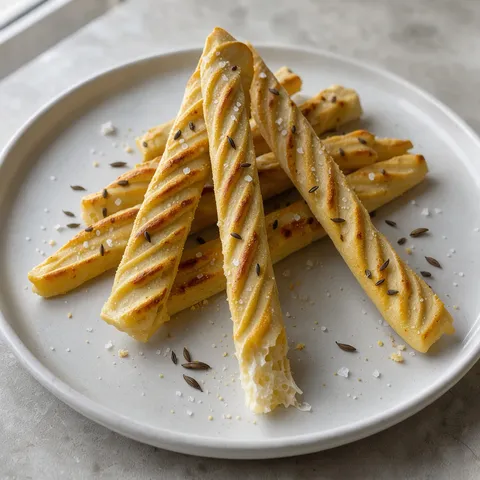
Twisted Puff Pastry Cheese Sticks Käsestangen
A German meze. Takes 45 min · +15 min resting, Makes 24. Difficulty: medium.
At a glance
- Total time
- 45 min · +15 min resting
- Serves
- Makes 24
- Difficulty
- Medium
- Cuisine
- German cuisine
- Dish type
- Meze
- Diet
- Vegetarian
- Allergens
- Gluten, Milk, Eggs, Mustard, Sulphites
Ingredients
- Dough (24 sticks, about 6 g dough each): 150 g Puff Pastry (Basics)
- 1 tbsp plain flour (for rolling out)
Filling and topping (about 4 g each)
- 60 g Gruyère or Emmental (grated)
- 20 g Parmesan (grated)
- 1 tbsp wholegrain mustard
- 1 egg yolk
- 1 tbsp milk
- 1/2 tsp cumin
- 1/4 tsp ground black pepper
To finish
- 1 tsp coarse sea salt
Equipment
- Rolling pin / oklava
- Chef's knife
- Baking tray
- Baking paper
- Oven
- Pastry brush
- Box grater
Method
- Roll out the dough: Roll out the rested Puff Pastry (Basics) on a floured worktop to 15×24 cm, about 4 mm thick. Keep the dough cold, because warm pastry fuses its layers and will not rise. If it warms up, rest it in the fridge for 10 min. Trim the edges neatly
- Add the mustard and cheese: Spread the wholegrain mustard thinly over the surface of the dough, grate 60 g Gruyère and 20 g Parmesan evenly over the top, and add the cumin and black pepper. Press the cheese lightly into the dough with a rolling pin so that it does not fall off when twisted. The mustard cuts the richness of the cheese
- Cut the strips: Cut the dough at right angles to the long edge into 24 strips, 1 cm wide and 15 cm long. Use a sharp knife, as a blunt one crushes the edges of the pastry and stops it rising. Cover the strips with a damp cloth while they wait on the worktop
- Twist: Hold both ends of each strip, one in each hand, and twist in opposite directions for 3 full turns, then press the ends onto the tray to stick them. The twisted sticks come out 12 cm long. If twisted too tightly they break as they bake, and if twisted loosely the stick unravels. Arrange them on a tray lined with baking paper, 2 cm apart
- Chill: Rest the tray in the fridge for 15 min. Cold pastry gives off steam quickly in the oven, rises and keeps its layers. Meanwhile preheat the oven to 200°C
- Brush and bake: Whisk the egg yolk with the milk, brush over the sticks and sprinkle with the coarse salt. Bake the tray on the middle shelf of the oven at 200°C for 14 min. Test for doneness: golden-copper colour with cheese bubbles at the edges. The sticks should snap with a crunch. If the heat is too low the sticks turn stale and greasy, and if too high the cheese burns and turns bitter
- Cool and serve: Rest on the tray for 3 min, because hot cheese is sticky. Stand the sticks tip-up in a glass or arrange them on a flat plate. Serve warm or at room temperature. They stay crisp for 6 hr
Chef's note
Serve warm or at room temperature. Allow 3 per person, 100 people × 3 = 300 pieces. As the recipe makes 24, the multiplier is 300/24 = 12.5 (1.88 kg puff pastry, 750 g Gruyère or Emmental, 250 g Parmesan). Käsestangen are the classic cheese sticks of German and Austrian party buffets. Twisted sticks can be frozen raw for 1 week and baked from frozen at 200°C for 17 min. Baked sticks keep in a closed box for 2 days and are refreshed in a 180°C oven for 4 min. 300 sticks need 1.9 kg puff pastry and oven capacity for about 10 trays.
Frequently asked questions
- Why don't my Käsestangen puff up?
- If the pastry warms up, the layers fuse and won't rise. Chill warm pastry in the fridge. A blunt knife also squashes the edges and stops the rise.
- Why are the sticks rested in the fridge before baking?
- Cold pastry makes steam quickly in the oven, so it puffs up and keeps its layers. Chill the tray for 15 minutes.
- How long do Käsestangen stay crisp?
- Serve them warm or at room temperature. They stay crisp for up to 6 hours.
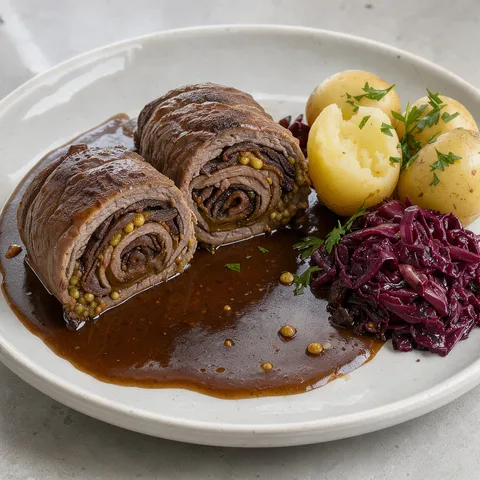 German Beef Roulades2 hr 30 min · Main course
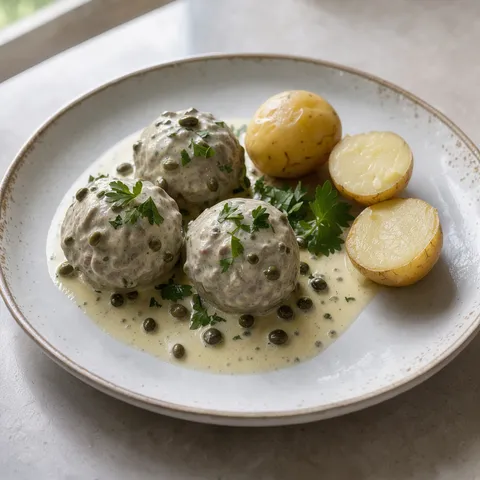 Meatballs in Caper Sauce1 hr 05 min · Main course
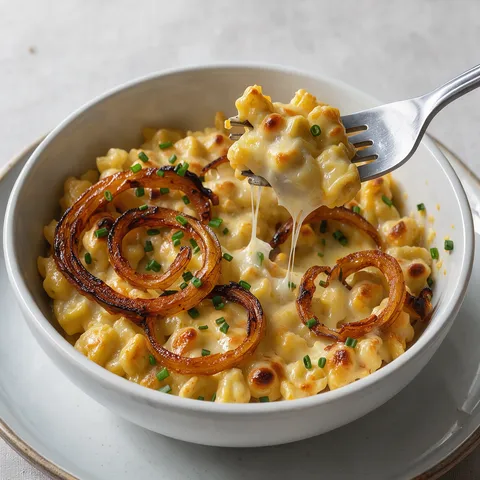 Swabian Cheese Noodles55 min · Main course
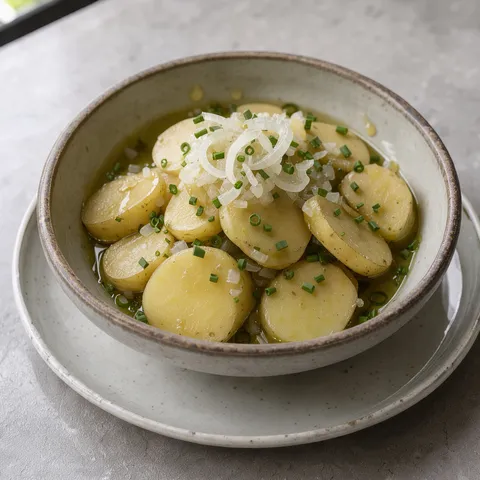 Swabian Potato Salad1 hr · Side dish
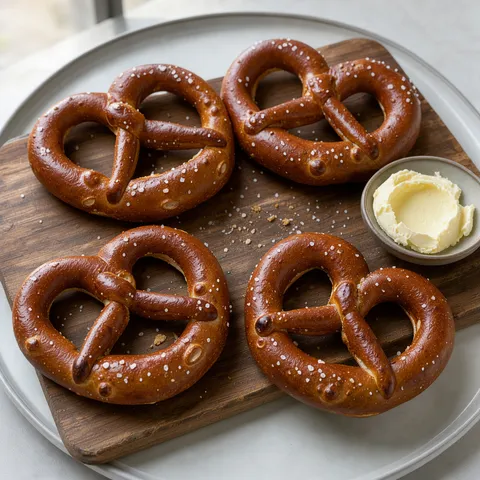 Bavarian Pretzels1 hr 55 min · Bread & pastry
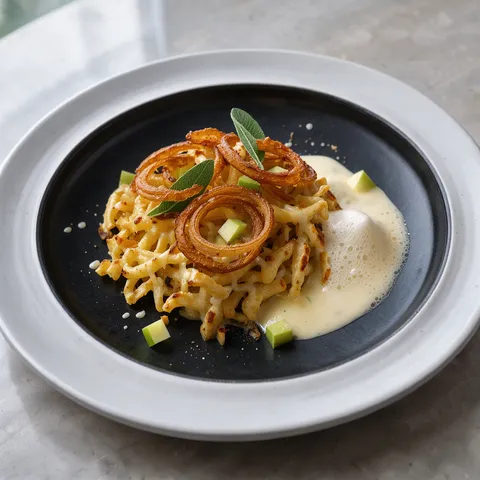 Käsespätzle 2.01 hr 20 min · Main course