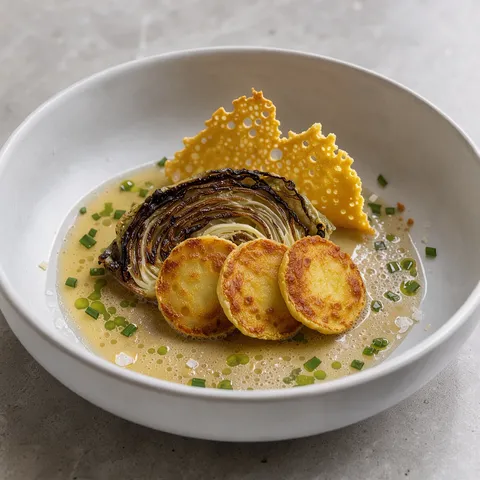
Kaspressknödel 2.0
An Austrian main course. Takes 1 hr 10 min, Serves 4. Difficulty: professional.
At a glance
- Total time
- 1 hr 10 min
- Serves
- Serves 4
- Difficulty
- Professional
- Cuisine
- Austrian cuisine
- Dish type
- Main course
- Allergens
- Gluten, Milk, Eggs, Celery, Sulphites
Ingredients
Cheese Knödel
- 150 g stale white bread (crusts removed, 5 mm cubes)
- 100 ml milk
- 1 egg
- 1 shallot (about 30 g)
- 10 g butter
- 60 g aged semi-hard cheese (grated)
- 40 g Kars gravyer (grated)
- 1 tbsp finely chopped chives
- 1/4 tsp salt
- a pinch of black pepper
- 1 tbsp plain flour
For frying
- 3 tbsp sunflower oil
- 15 g butter
Charred cabbage
- 1/2 small white cabbage (about 500 g)
- 20 g butter
- a pinch of salt
Caraway butter broth
- 600 ml Chicken Stock (Basics)
- 1 onion (about 100 g, halved with the skin on)
- 1 tsp caraway seeds
- 1 bay leaf
- 30 g cold butter
- 1 tsp white wine vinegar
- a pinch of salt
Cheese tuiles
- 60 g Kars gravyer (finely grated)
Chive oil
- 25 g chives
- 70 ml sunflower oil
To finish
- chive tips
- flaky salt
Equipment
- Oven
- Baking tray
- Baking paper
- Box grater
- Palette knife
- Saucepan
- Pestle and mortar
- Fine sieve / chinois
- Frying pan
- Mixing bowls
- Blender
- Muslin
- Squeezy bottle
- Cast-iron frying pan
- Stick blender
- Chef's knife
- Chopping board
Method
- Set up the oven and workflow: Preheat the oven to 180°C (conventional). This dish uses no more than three hob rings at once. The first ring is for the broth, the second for the cabbage and the third for the Knödel pan. Line a tray with baking paper and, for the tuiles, sprinkle the finely grated gravyer into 8 thin circles 7 cm across, leaving 3 cm between them
- Cheese tuiles: Bake the tray at 180°C for 6-8 min until the cheese melts into lacy, pale golden discs. Leave on the tray for 2 min, lift off with a palette knife and cool on a flat surface: they harden like glass as they cool. The tuile is a crisp take on the cheese in the classic Kaspressknödel, which melts and forms a crust in the pan
- Infuse the broth: Press the cut sides of the onion, dry, onto the bottom of a medium saucepan on the first ring and char over high heat for 5 min until coal-black. Lightly crush the caraway in a pestle and mortar. Add the chicken stock, caraway and bay leaf to the onion, bring to the boil and infuse over low heat for 25 min. Strain through a fine sieve into a clean pan: about 450 ml should remain. Set aside 50 ml of it for the cabbage. The charred onion gives the stock a smoky depth, and the caraway the familiar aroma of Alpine cabbage cooking
- Knödel mixture: Soften the shallot in 10 g butter in a small frying pan on the third ring for 2 min. Put the bread cubes in a bowl and add both cheeses, the shallot and the chives. Whisk the milk with the egg, salt and pepper, pour over the bread and mix by hand, squeezing. Rest for 10 min, then add the flour. Small bread cubes give the mixture a fine, firm texture
- Shape: With wet hands, divide the mixture into 12 equal pieces (each about 37 g), roll into balls and press into small discs 4.5 cm across and 2 cm thick. Smooth the edges, arrange on a tray and rest in the fridge for 10 min, as chilled discs keep their shape in the pan
- Chive oil: Blend the chives and sunflower oil in a blender on the highest speed for 2 min and strain through a fine sieve lined with muslin. Pour the bright green oil into a squeeze bottle
- Char the cabbage: Cut the cabbage into 4 equal wedges, keeping the core, which holds the leaves together. Heat a dry cast-iron pan on the second ring over high heat for 3 min. Lay the wedges cut side down in the pan and char each cut side for 4-5 min without moving them, until dark brown and blackened in places. Add the butter, salt and the 50 ml stock you set aside, cover and steam over low heat for 6-8 min until a knife slides easily into the core of the wedges. Uncover and spoon the buttery liquid over them
- Fry the Knödel: Heat the sunflower oil and 15 g butter in a large frying pan on the third ring over medium heat until foaming. Add the discs, spaced apart, and fry for 3 min on each side until a deep golden crust forms and the cheese melts inside. Roll the edges in the pan for 30 sec to crisp them too. Drain on kitchen paper
- Finish the broth: Heat the strained broth on the first ring to just below the boil and take off the heat. Add the cold butter and vinegar and blend with a stick blender for 20 sec: a fine foam forms on the surface and the butter lightly binds the broth. Adjust the salt. Pour into a jug
- Plate: Lay a cabbage wedge in the centre of a warmed shallow bowl. Arrange three Knödel alongside, leaning against each other, and stand two cheese tuiles upright between them. Scatter with chive tips and a pinch of flaky salt
- Serve at the table: Take the bowls to the table and pour about 100 ml foamy broth from the jug around the cabbage in each bowl. Dot a few drops of chive oil onto the broth. The Knödel keep part of their crust while the undersides soak up the broth, so salad-style and soup-style Kaspressknödel come together in one dish
Chef's note
The two classic ways of serving Kaspressknödel, with cabbage and in broth, are combined in the same bowl. The charred cabbage wedge is a cooked, smoky take on the warm caraway cabbage salad. Aged semi-hard cheese and Kars gravyer are used in place of the local Alpine cheeses. Caraway (Kümmel) is different from the cumin we know and can be found at spice shops. If you use Brown Beef Stock (Basics) instead of chicken stock, you'll get a darker, richer broth.
Frequently asked questions
- How is the cheese tuile made?
- Scatter finely grated Gruyère in thin circles on a tray lined with baking paper and bake at 180°C until the cheese melts and turns lacy, full of holes and pale golden. It hardens to a glassy crisp as it cools.
- Why are the bread cubes cut small?
- Small cubes of bread give the mixture a fine, tight texture.
- How do you give the broth a smoky flavour?
- Char the cut sides of the onion in a dry pan until coal black. The charred onion gives the stock a smoky depth, while caraway brings the familiar scent of Alpine cabbage cooking.
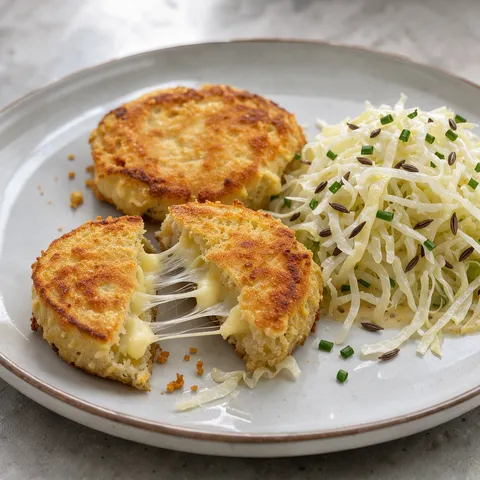 Alpine Cheese and Bread Dumplings55 min · Main course
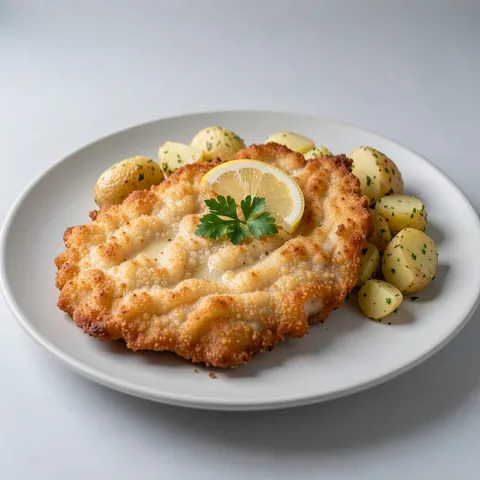 Wiener Schnitzel45 min · Main course
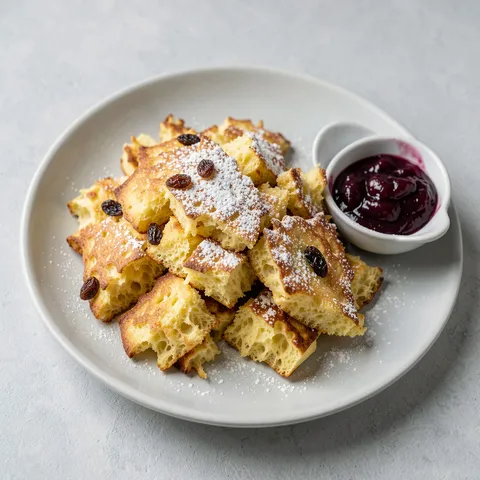 Austrian Torn Pancake40 min · Dessert
 Wiener Schnitzel 2.01 hr 25 min · Main course
 Viennese Boiled Beef and Apple Horseradish3 hr 20 min · Main course
 Viennese Apple Strudel1 hr 45 min · Patisserie
 Tyrolean Bread Dumplings in Broth1 hr 30 min · Soup