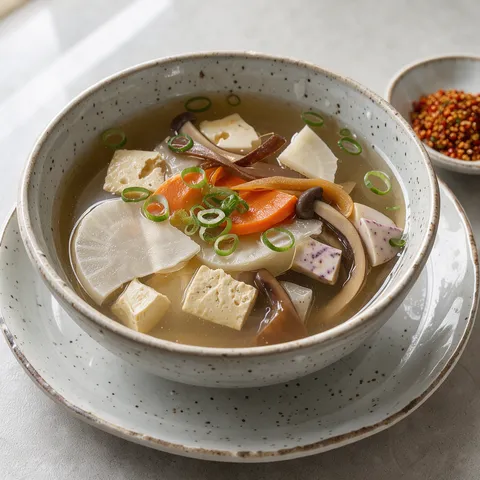
Kamakura-Style Vegetable and Tofu Soup Kenchinjiru
A Japanese soup. Takes 1 hr 10 min, Serves 4. Difficulty: medium.
At a glance
- Total time
- 1 hr 10 min
- Serves
- Serves 4
- Difficulty
- Medium
- Cuisine
- Japanese cuisine
- Dish type
- Soup
- Allergens
- Gluten, Fish, Sesame, Soya
Ingredients
Vegetable dashi
- 1.2 litres cold water
- 10 g kombu
- 4 dried shiitake mushrooms
Vegetables
- 250 g firm tofu (momen)
- 150 g daikon
- 80 g carrot
- 1 stick of gobo (burdock root, about 80 g) or 80 g Jerusalem artichokes
- 200 g satoimo (taro) or 200 g waxy potatoes
- 120 g konnyaku
For cooking
- 1 tbsp sesame oil
- 2 tbsp sake
- 2 tbsp usukuchi (light) soy sauce
- 1 tsp salt
To finish
- 2 spring onions
- 1/2 tsp shichimi togarashi (optional)
Equipment
- Heavy-based saucepan
- Saucepan
- Chef's knife
- Chopping board
- Mixing bowls
- Colander
- Ladle
Method
- Make the vegetable dashi: Put the kombu and dried shiitake in the cold water and leave for 30 min. Then heat over low heat to 60-65°C and remove the kombu when bubbles appear at the edges. Strain out the shiitake, discard the stalks and thinly slice the caps. Together, the mushroom liquor and kombu give a meat-free umami base: no fish is used in Zen temple cooking
- Drain the tofu: Wrap the tofu in kitchen paper, put a flat plate and a light weight on top and leave for 15 min. With the excess water gone, the tofu does not spit in the oil and takes on flavour as it fries
- Prepare the root vegetables: Scrape the skin off the gobo with the back of a knife, then shave it into thin slivers (sasagaki) straight into a bowl of water, turning it as if sharpening a pencil: it darkens on contact with air. Drain after 10 min. Cut the daikon and carrot into quarter slices 3 mm thick. Peel the satoimo, cut into 2 cm pieces, rub with a pinch of salt and rinse: the slimy surface would cloud the soup
- Prepare the konnyaku: Tear the konnyaku into rough 2 cm pieces with the tip of a spoon rather than a knife: the rough surface holds more soup. Blanch in boiling water for 2 min and drain to remove its chalky smell
- Sauté: Heat the sesame oil in a heavy-based saucepan over medium heat. Add the gobo, carrot and daikon and stir for 3 min, until the vegetables are glossy and slightly softened at the edges. Crumble the tofu into the pan in large pieces with your hands, add the konnyaku and shiitake and fry for another 2 min. The name kenchin is said to come from Kenchō-ji temple, and in keeping with this tradition the tofu is crumbled by hand, not cut with a knife
- Bring to the boil and simmer: Pour in the dashi, bring to the boil over medium heat and skim off the foam with a ladle. Add the satoimo, lower the heat and simmer gently with the lid ajar for 15-18 min. It is ready when the satoimo and daikon are easily pierced with a knife and the carrot still has a little bite
- Season: Add the sake, soy sauce and salt and cook for another 2 min. Usukuchi soy sauce seasons without darkening the colour, so the vegetables stay bright. Taste: the saltiness should be gentle and rounded
- Plate: Slice the spring onions into thin rings. Divide the soup between deep, warm bowls, ladling from the bottom so each bowl gets some of every vegetable. Scatter with the spring onion and serve the shichimi togarashi alongside in a small dish for those who want it
Chef's note
This is the soup of the Zen temple of Kenchō-ji in Kamakura, and its name is said to come from there. It is entirely plant-based. Konnyaku and shichimi are traditionally bought ready-made. It is a winter soup: reheated the next day, the root vegetables taste sweeter.
Frequently asked questions
- Is kenchinjiru meat-free and fish-free?
- Yes, the base is a vegetable dashi made with kombu and dried shiitake. Fish isn't used in Zen temple cooking.
- Why is the tofu crumbled by hand rather than cut with a knife?
- The name kenchin is said to come from the Kencho-ji temple, and tradition calls for the tofu to be crumbled by hand. Drain off the excess water from the tofu beforehand so that it doesn't break up in the oil.
- What can I use if I can't find satoimo?
- Waxy potatoes can stand in for the satoimo (taro). Jerusalem artichokes are suggested in place of gobo.
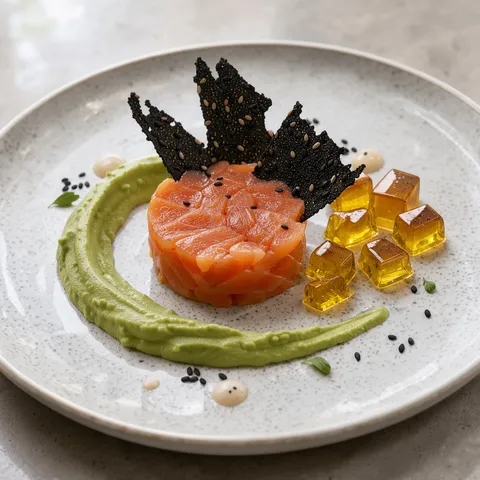 Salmon Tartare, Black Sesame Crisp, Wasabi Avocado45 min · Starter
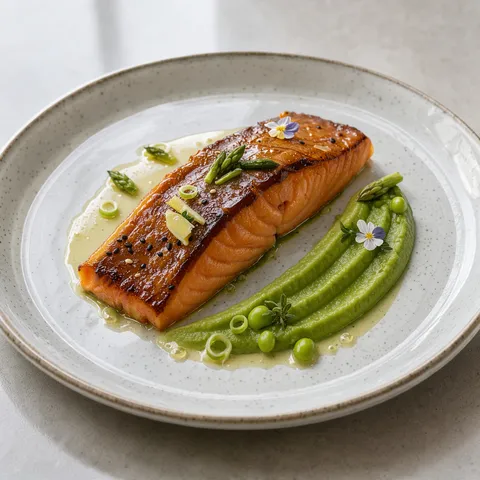 Salmon, Miso Glaze, Dashi Beurre Blanc, Edamame Purée50 min · Main course
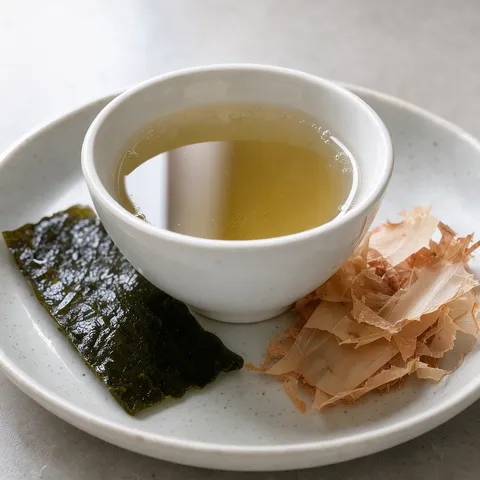 Ichiban Dashi1 hr 45 min · Basic recipe
 Miso Soup15 min · Soup
 Sushi Rice1 hr 15 min · Basic recipe
 Nigiri45 min · Main course