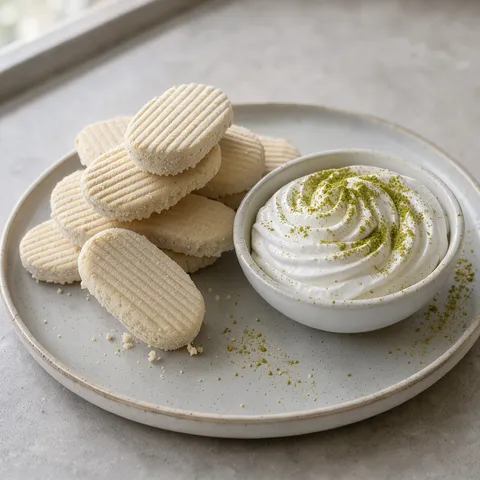
Pistachio Semolina Cookies Kerebic
A Turkish dessert. Takes 1 hr 35 min, Makes 24. Difficulty: challenging.
At a glance
- Total time
- 1 hr 35 min
- Serves
- Makes 24
- Difficulty
- Challenging
- Cuisine
- Turkish cuisine
- Dish type
- Dessert
- Diet
- Vegetarian
- Allergens
- Gluten, Milk
Ingredients
Dough (makes 24)
- 250 g fine semolina
- 150 g plain flour
- 150 g butter (melted and cooled slightly)
- 90 ml milk
- 2 tbsp icing sugar
- 1/2 tsp ground mahlab
- 1/2 tsp baking powder
- a pinch of salt
Filling
- 150 g pistachios (coarsely crushed)
- 60 g caster sugar
- 1/4 tsp cinnamon
Soapwort cream (natef)
- 20 g soapwort root (from a herbalist, chopped)
- 400 ml water
- 250 g caster sugar
- 80 ml water
- 1 tsp lemon juice
To serve
- 1 tbsp ground pistachios
Equipment
- Saucepan
- Fine sieve / chinois
- Muslin
- Mixing bowls
- Oven
- Baking tray
- Baking paper
- Stand mixer
- Sugar thermometer (optional)
- Hand mixer (optional)
- Pestle and mortar (optional)
Method
- Boil the soapwort: Put the soapwort root in a saucepan with the 400 ml water and, once it boils, simmer over low heat for 30 min, until the liquid is brown and reduced by half. Strain through a muslin-lined fine sieve and leave to cool: about 150 ml soapwort liquid remains. Thanks to the saponins it contains, soapwort liquid whips into a stable white foam
- Start the dough: While the soapwort boils, mix the semolina with the melted butter in a large bowl and leave to rest for 30 min. The semolina absorbs the butter and softens, so the baked dough has a sandy, crumbly texture. If you skip this, the kerebic will be hard and gritty
- Knead the dough: Add the flour, icing sugar, mahlab, baking powder and salt to the rested semolina. Gradually add the milk and knead for 3-4 min into a soft dough that doesn't stick to your hands and is easy to shape. Don't overwork it: if the flour develops gluten, the cookies turn hard
- Make the filling: Mix the pistachios, caster sugar and cinnamon. The pistachios should be lentil-sized, not ground, so you can feel them when you bite. Preheat the oven to 160°C and line a baking tray with baking paper
- Shape: Divide the dough into 24 equal pieces (about 25 g each). Roll each piece in your palm and press a deep hollow into the centre with your thumb, thinning the walls into a small cup. Put 1 dessertspoon of pistachio filling inside, close the opening and roll in your palm into an oval with slightly pointed ends. If you have a kerebic mould, press the dough into it and tap gently to release. Without a mould, mark lengthways lines on top with a fork
- Bake: Arrange the kerebic spaced apart on the tray and bake on the middle shelf of the oven for 22-25 min. Kerebic shouldn't colour: take them out when the tops are still ivory white and the bottoms have turned pale golden. Browned kerebic dries out and no longer suits the soapwort cream. Cool on the tray for 10 min: they are very fragile while hot
- Cook the syrup: While the kerebic bake, heat the 250 g sugar and 80 ml water in a small saucepan without stirring. Cook to 118°C on a sugar thermometer, about 8 min. Without a thermometer, drop a little into cold water: if it forms a soft ball between your fingers, it's ready
- Whip the foam: Put the cooled soapwort liquid in the bowl of a stand mixer and whisk at high speed for 4-5 min, to a brilliant white foam that holds soft peaks. With the mixer running, add the 118°C syrup in a thin stream down the side of the bowl. Add the lemon juice and whisk for another 6-8 min, until the foam is glossy, holds stiff peaks and has cooled to warm. The hot syrup cooks and stabilises the foam, so it holds for hours
- Plate: Spoon the soapwort cream into a wide bowl, swirl the surface with a spoon and sprinkle with the ground pistachios. Pile the kerebic in a pyramid on a plate alongside. Each kerebic is dipped into the cream, coating it, as you eat
Chef's note
Kerebic is a festive sweet known in Mersin and Tarsus, and also in the Southeast (Antep, Hatay), and it is related to karabij in the cooking of Damascus and Aleppo. Dried soapwort root is a traditional product bought from herbalists. If you can't find it, you can make the foam with 2 egg whites using the same syrup method, though the colour and taste will be slightly different (the foam is less dense and should be eaten within 1 hr). The kerebic keep for 1 week in an airtight box, but the cream should be eaten the same day.
Frequently asked questions
- Why should the kerebic not take on colour?
- Take the kerebic out when it is still ivory and the base has turned pale golden. Browned kerebic dries out and no longer suits the soapwort foam.
- How do I make the soapwort foam last?
- Whisked soapwort root water gives a white foam thanks to its saponin. If syrup cooked to 118°C is added in a thin stream, the foam cooks and sets and does not collapse for hours.
- Why is the semolina rested with the butter?
- The semolina absorbs the butter and softens, so the baked kerebic has a sandy, crumbly texture. If you skip this 30-minute rest, the kerebic turns hard and gritty.
 Chilled Wheat Yoghurt Soup1 hr · Soup
 Noodle and Yoghurt Soup1 hr 10 min · Soup
 Lamb, Chickpea and Potato Stew1 hr 15 min · Soup
 Marinated Sea Bass30 min · Meze
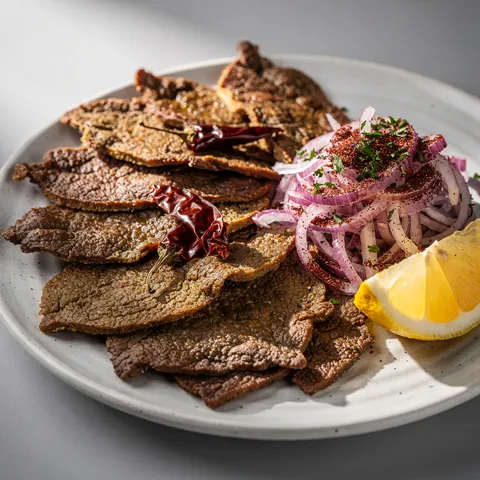 Crispy Fried Liver Slices25 min · Meze
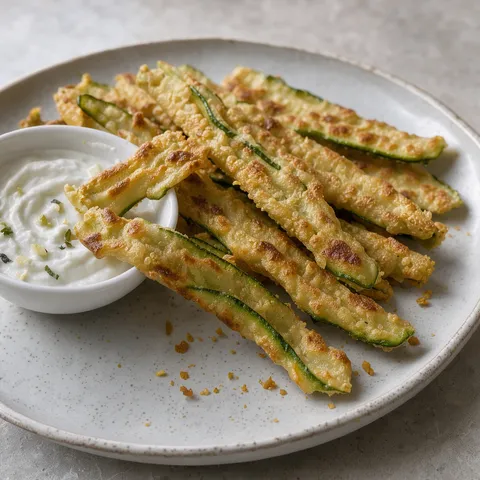 Courgette Crisps30 min · Meze