
Emirati Saffron Rice-Flour Cakes Khanfaroosh
An Emirati and Gulf dessert. Takes 56 min · +1 hr rising, Serves 4. Difficulty: medium.
At a glance
- Total time
- 56 min · +1 hr rising
- Serves
- Serves 4
- Difficulty
- Medium
- Cuisine
- Emirati and Gulf cuisine
- Dish type
- Dessert
- Allergens
- Gluten, Milk, Eggs
Ingredients
Batter
- 150 g rice flour
- 100 g plain flour
- 3 eggs (at room temperature)
- 120 g caster sugar
- 1 tsp fast-action dried yeast
- 120 ml lukewarm milk
- 1 tsp freshly ground cardamom
- a pinch of saffron (about 0.2 g)
- 2 tbsp rosewater
- 1/4 tsp salt
For frying
- 500 ml sunflower oil
To serve
- 2 tbsp date molasses or honey (optional). Makes about 25
Equipment
- Pestle and mortar
- Hand mixer
- Silicone spatula
- Cling film
- Sauté pan
- Probe thermometer
- Colander
- Mixing bowls
- Baking tray
- Fine sieve / chinois (optional)
Method
- Steep the saffron: Pound the saffron with a pinch of sugar in a pestle and mortar, add to the lukewarm rosewater and leave to steep for 10 min. Meanwhile, do the next two steps
- Activate the yeast: Stir the yeast and 1 tsp of the sugar into the lukewarm milk and leave to foam for 10 min. Takes 2 min active in total
- Whisk the eggs: Whisk the eggs and remaining sugar with a hand mixer for 4-5 min, until pale and slightly fluffy. This air is the basis of the risen centres of the cakes
- Fold in the flours: Sift the rice flour, plain flour, cardamom and salt through a fine sieve. Add the yeasted milk and saffron rosewater to the egg mixture, then fold in the flours in two additions with a spatula until you have a smooth, thick batter that drops slowly from a spoon. Rice flour makes khanfaroosh crisp outside and light inside. Takes 3 min in total
- Prove: Cover with cling film and leave in a warm place for 1 hr. The batter should rise and the surface fill with bubbles
- Heat the oil: Pour the 500 ml oil (about 1.5 cm deep) into a 20 cm heavy-based sauté pan and bring to 170°C on a thermometer. If the oil is hotter, the outside darkens at once while the inside stays doughy. If it is cooler, the batter absorbs oil. Takes 6 min in total
- Fry: Take 1 tbsp of batter with a wet tablespoon and drop it into the oil, sliding it off without letting the spoon touch the oil. Fry 4-5 at a time. After 1.5-2 min, when the underside is deep golden and the edges are turning brown, turn and cook the other side for 1.5 min. The centre should puff up into a rounded dome. Let the oil return to 170°C after each batch. 5-6 batches, about 26 min in total
- Drain: Lift out with a slotted spoon and arrange on a tray lined with kitchen paper to drain for 2 min
- Serve: Serve hot or warm, drizzled with date molasses or honey for those who want it, with Arabic coffee and karak tea. Khanfaroosh is best eaten the same day, while the outside is still crisp
Chef's note
Khanfaroosh is described as an Emirati sweet made for weddings and on Eid mornings. It is counted among the common sweets of the Gulf and also appears on Qatari lists. Some recipes use boiled, mashed rice instead of rice flour. How it differs from the Legaimat on this site and from Turkish lokma: it contains egg and rice flour, it is a flat, cake-like batter, and it is not dipped in syrup.
Frequently asked questions
- What temperature should the oil be for khanfaroosh?
- Heat the oil to 170°C on a thermometer. If hotter, the outside darkens at once and the middle stays raw, and if cooler, the batter soaks up oil.
- Why use rice flour in the batter?
- Rice flour makes the outside of the khanfaroosh crisp and the inside light. Sift it with the plain flour and add to the egg mixture.
- When should khanfaroosh be eaten?
- According to the recipe, they are best the same day, while the outside is still crisp. Serve hot or warm.
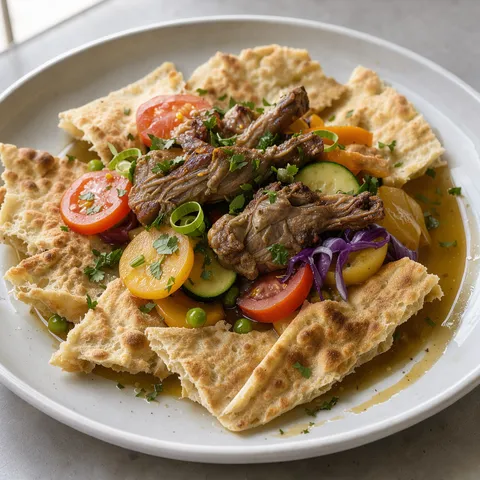 Emirati Lamb and Vegetable Stew with Regag Bread1 hr 55 min · Main course
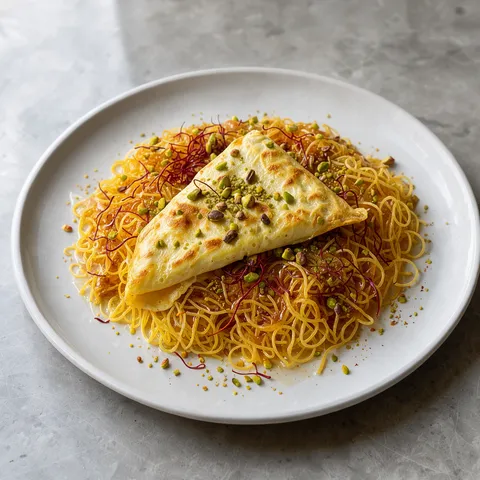 Sweet Saffron Vermicelli with Omelette45 min · Dessert
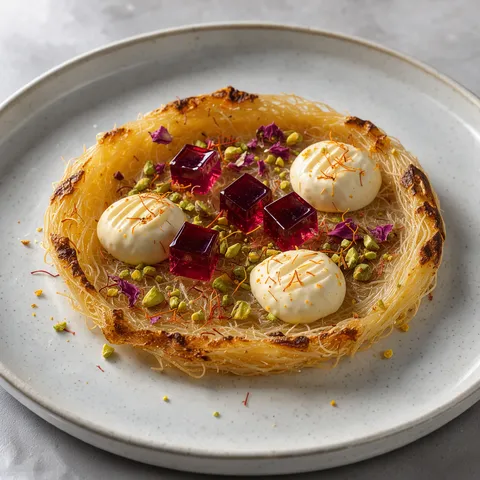 Balaleet 2.01 hr 15 min · Dessert
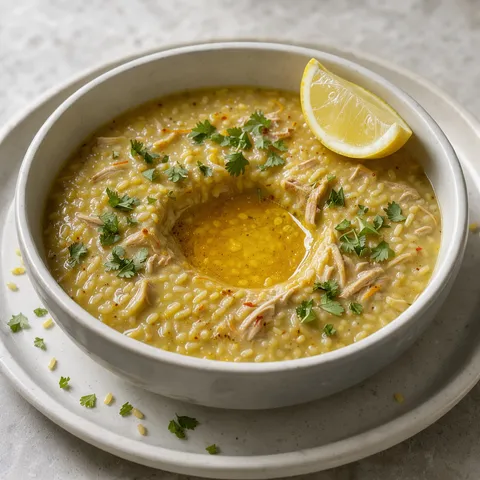 Emirati Spiced Chicken and Mashed Rice1 hr 30 min · Main course
 Emirati Sweet Bread with Dates and Cardamom2 hr 40 min · Bread & pastry
 Emirati Saffron Cardamom Pancakes55 min · Bread & pastry