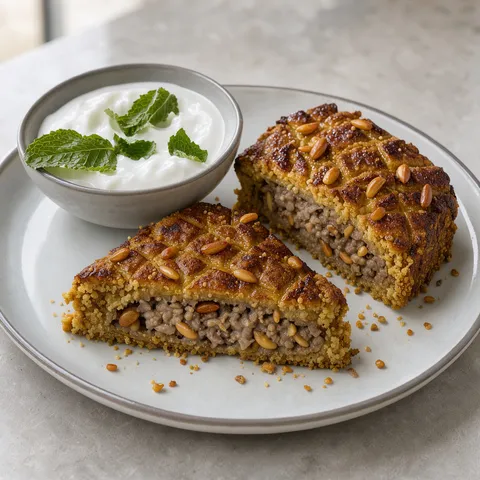
Lebanese Baked Layered Kibbeh Kibbeh bil Sanieh
A Lebanese main course. Takes 1 hr 25 min, 4 servings (26 cm tin, 8 slices). Difficulty: medium.
At a glance
- Total time
- 1 hr 25 min
- Serves
- 4 servings (26 cm tin, 8 slices)
- Difficulty
- Medium
- Cuisine
- Lebanese cuisine
- Dish type
- Main course
- Allergens
- Gluten, Milk
Ingredients
Shell
- 250 g fine bulgur
- 400 g lean lamb or beef mince (about 10% fat, minced twice)
- 1 small onion (about 80 g)
- 1 tsp salt
- 1 tsp cumin
- 1 tsp allspice
- 1/2 tsp cinnamon
- 1/2 tsp black pepper
- 1 tsp dried marjoram
- 80-100 ml iced water
Filling
- 300 g lamb mince (about 20% fat)
- 2 medium onions (about 250 g)
- 60 g pine nuts
- 1 tbsp clarified butter (ghee)
- 1 tsp allspice
- 1/2 tsp cinnamon
- 1/2 tsp black pepper
- 3/4 tsp salt
- 1 tsp sumac
For baking
- 1 tbsp olive oil (for the tin)
- 60 g ghee (melted)
To serve
- 400 g plain yoghurt
- 1/2 bunch fresh mint
Equipment
- Fine sieve / chinois
- Frying pan
- Food processor
- Baking tray
- Oven
- Chef's knife
- Chopping board
- Silicone spatula
- Mixing bowls
- Probe thermometer (optional)
Method
- Hydrate the bulgur: Rinse the bulgur once in a fine sieve under cold water and leave it in the sieve for 10 min. The grains absorb only the moisture on their surface, so the bulgur softens without turning soggy. It is ready when it forms a single ball that releases no water when squeezed in your fist
- Fry the filling: While the bulgur rests, finely chop the onions for the filling. Heat the ghee in a wide frying pan over low heat, toss the pine nuts for 3-4 min until pale golden and transfer them to a plate. Do not leave the pan, as the nuts can burn in seconds. Add the mince to the same pan and brown it over medium-high heat for 6-7 min, breaking it up with a spoon, until the liquid has evaporated and no trace of pink remains. Add the onion and cook for 7-8 min, until soft and lightly coloured at the edges. Stir in the allspice, cinnamon, black pepper, salt, sumac and pine nuts. Spread the filling out on a large plate to cool slightly, as a hot filling softens the shell and makes it tear. This step takes 15 min in total
- Make the shell paste: Roughly chop the onion for the shell and purée it in a food processor. Add the mince, salt, cumin, allspice, cinnamon, black pepper and marjoram and process for 30 sec. Add the squeezed bulgur and pulse, adding the iced water a spoonful at a time, for 1-2 min in total. The blade warms the paste, and the iced water stops the fat melting and the paste turning sticky. The consistency is right when a piece pressed flat with wet hands spreads without cracking at the edges. Meanwhile, preheat the oven to 200°C. This step takes 5 min
- Lay the base: Grease a 26 cm round tin with the olive oil. Divide the shell paste in half. Arrange one half in the tin in palm-sized pieces, then join them with hands dipped in cold water and spread into an even 7-8 mm base that reaches the edges with no gaps. If the thickness is uneven, the thin patches dry out and the thick ones stay raw. This step takes 5 min
- Spread the filling and cover: Spread the cooled filling evenly over the base and press it down lightly with the back of a spoon. Flatten the remaining shell paste in your palm into pieces 1 cm thick and lay them over the filling like roof tiles. Seal the joins with wet fingers and smooth the surface. The top layer should also be 7-8 mm thick. This step takes about 10 min
- Cut and drizzle: With a wet, sharp knife, cut into 8 wedges from the centre to the edge, taking the knife right down to the base. Score a diamond pattern on each wedge with the tip of the knife and press a small hollow into the middle with your finger. Drizzle the melted ghee into the cuts and over the surface. The fat runs down through the cuts and crisps the bottom layer too. This step takes 5 min
- Bake: Bake on the middle shelf of the 200°C oven for 30-35 min. It is ready when the surface is a deep honey colour and the edges come away from the tin and sizzle. Because the mince in the shell goes into the oven raw, the internal temperature at the thickest point must reach at least 71°C. Without a thermometer, lift out a wedge and check that no pink remains in the middle of the shell
- Rest and plate: Leave to rest for 10 min, as kibbeh lifted out while hot falls apart. Lift the wedges out with a spatula and place them on plates with the pointed end facing outwards, so that the 3 layers (shell, filling, shell) show in the cut. Put the yoghurt in a bowl, scatter over hand-torn mint leaves and serve alongside the wedges
Chef's note
Kibbeh is one of Lebanon's national dishes, and the tray version is the most common in home kitchens. A 26 cm tin gives 8 wedges, two each for 4 people. Choose the leanest meat for the shell, as fatty mince makes the shell crack in the oven. If you cannot find marjoram, use dried mint. Refrigerate leftover wedges within 2 hr. They keep for 2 days and reheat in a 180°C oven in 10 min.
Frequently asked questions
- How do I moisten the bulgur for the kibbeh shell?
- Rinse the bulgur once in a fine sieve with cold water and leave it for 10 minutes. This takes up only the surface moisture, so the bulgur softens without becoming wet. It is ready when it holds together in one clump in your fist without releasing water.
- What happens if the filling is spread while hot?
- Hot filling softens the shell and makes it tear. Spread the cooked filling on a wide plate to cool until warm, then place it over the bottom layer.
- How can I tell when the kibbeh tray is cooked through?
- The surface turns a deep honey colour and the edges pull away from the tin and sizzle. The shell contains raw mince when it goes into the oven, so the thickest part should reach at least 71°C. Without a thermometer, lift out a slice and check that the middle isn't pink.
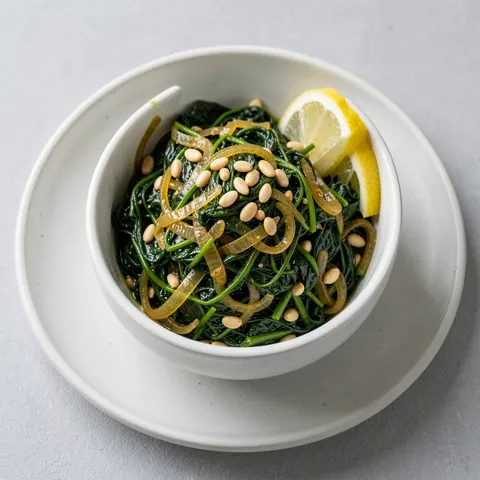 Lebanese Olive Oil Spinach25 min · Main course
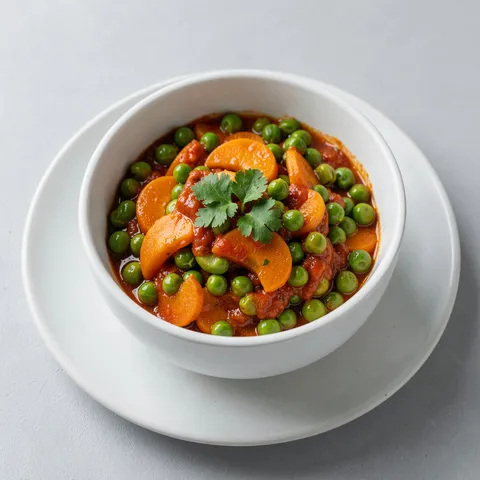 Lebanese Pea and Carrot Stew30 min · Main course
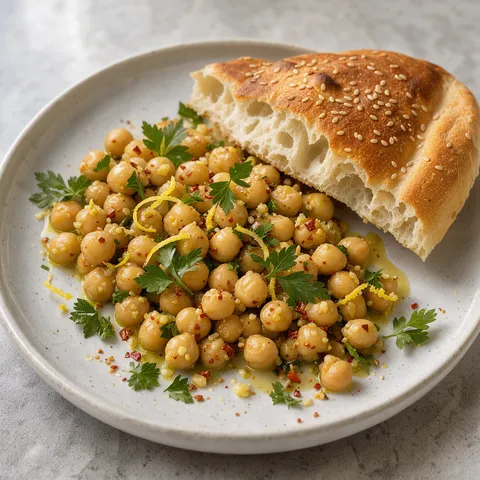 Warm Lebanese Chickpea Salad21 min · Meze
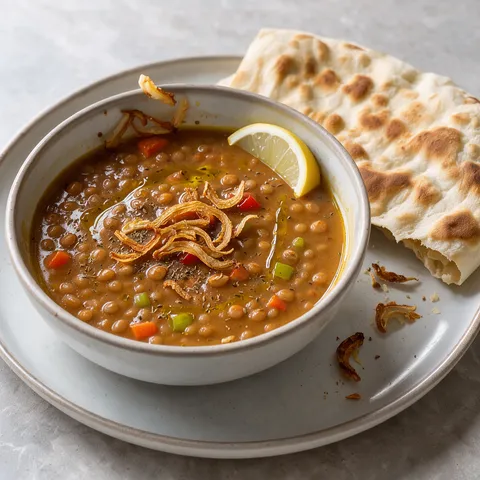 Lebanese Red Lentil Soup30 min · Soup
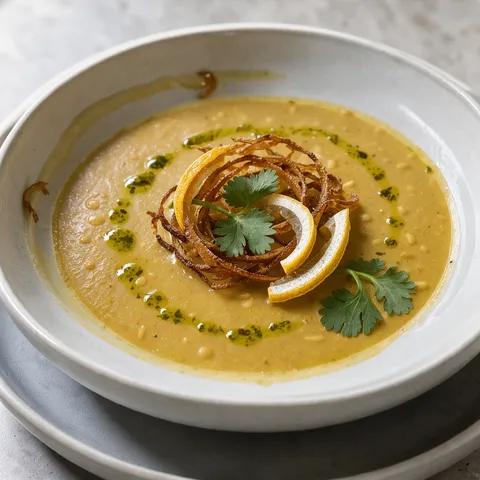 Shorbat Adas 2.041 min · Soup
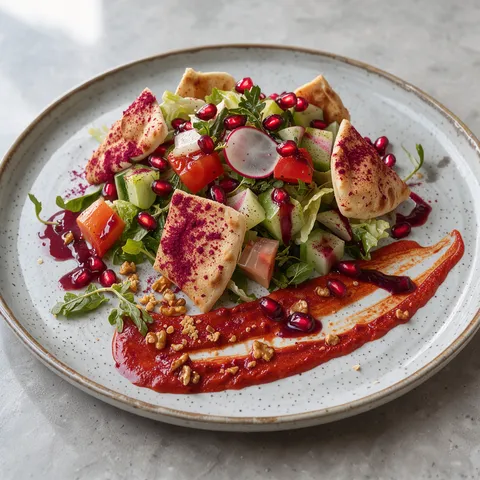 Fattoush 2.050 min · Salad