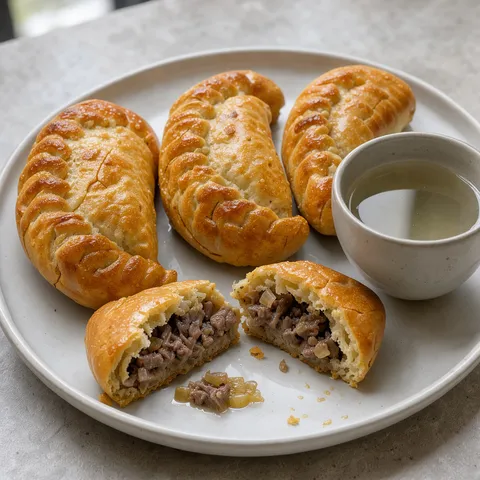
Karaim Lamb Pasties from Trakai Kibinai
A Lithuanian bread & pastry. Takes 1 hr 45 min · +30 min dough resting, Makes 12. Difficulty: medium.
At a glance
- Total time
- 1 hr 45 min · +30 min dough resting
- Serves
- Makes 12
- Difficulty
- Medium
- Cuisine
- Lithuanian cuisine
- Dish type
- Bread & pastry
- Allergens
- Gluten, Milk, Eggs, Celery
Ingredients
Dough (makes 12)
- 400 g plain flour (+ 30 g for rolling)
- 150 g cold butter (cubed)
- 1 egg
- 120 ml cold kefir
- 1 tsp salt
Filling
- 500 g boneless lamb leg or shoulder
- 1 large onion (about 180 g)
- 30 g butter (cold, small cubes)
- 1 tsp salt
- 1/2 tsp black pepper
- 3 tbsp cold water
Topping
- 1 egg yolk
- 1 tbsp milk
Equipment
- Mixing bowls
- Dough scraper
- Cling film
- Chef's knife
- Chopping board
- Oven
- Baking tray
- Baking paper
- Precision scales
- Rolling pin / oklava
- Pastry brush
- Probe thermometer
Method
- Make the dough: Mix the flour and salt in a bowl, add the cold butter cubes and rub them in with your fingertips (or cut them in with a pastry cutter) until pea-sized pieces remain. Whisk the egg with the kefir, add it and bring the dough together quickly without kneading. The pieces of butter make steam in the oven and give the kibinai crust a layered, crisp texture
- Rest: Shape the dough into a flat disc, wrap in cling film and rest in the fridge for 30 min. The cold butter firms up and does not melt into the dough as you roll
- Chop the meat by hand: Meanwhile, pat the lamb dry with kitchen paper and trim the sinew and thick fat with a chef's knife. On a chopping board, cut first into 5 mm strips and then into 5 mm cubes. In the Karaim style, the meat is not put through a mincer but chopped by hand: the cubed meat keeps its juices as it cooks and the pasty is juicy
- Mix the filling: Finely chop the onion and put it in a bowl with the lamb. Add the salt, pepper and cold water and mix for 1 min. Add the cold butter cubes last. The filling goes in raw and cooks in its own steam in the pasty
- Preheat the oven and divide into balls: Preheat the oven to 190°C and line both baking trays with baking paper. Weigh the dough and divide it into 12 equal pieces (about 60 g each)
- Roll out and fill: On a floured surface, roll each piece with a rolling pin into a round 14 cm in diameter and 3 mm thick. Put about 60 g of filling on one half, leaving a 1.5 cm border. Fold the other half over and press the edges
- Crimp the edge: Lift the straight edge of the crescent and sit the pasty on the tray so that it stands, 6 crescents per tray. Seal the edge by folding it in small pleats with your thumb and forefinger to make a twisted rope pattern. This upright, rope-like ridge is the identity of kibinai and traps the juices inside
- Brush and bake: Whisk the egg yolk with the milk and brush over the pasties. Bake on both shelves of the 190°C oven for 30-35 min, swapping the trays halfway, until the crust is deep golden. Insert a thermometer into a pasty: the internal temperature should be at least 71°C
- Rest and serve: Rest the kibinai for 10 min so that the stock inside spreads into the crust and does not burn the mouth. Serve warm with a cup of hot stock, as in Trakai
Chef's note
Kibinai is the dish of the Karaim community of Turkic origin who settled in Lithuania centuries ago, and is associated especially with the town of Trakai. The traditional filling is lamb. Today in Lithuania it is also made with chicken, beef, mushrooms or curd cheese. The dough is yeasted in some households and made in this butter-and-kefir way in others. Baked kibinai can be frozen and reheated in a 180°C oven for 15 min.
Frequently asked questions
- Why isn't the meat for kibinai put through a mincer?
- In the Karaim style the meat is chopped by hand. Diced meat holds its juices when cooked and the pasty stays juicy.
- Why is the dough made with cold butter?
- The butter pieces turn to steam in the oven, making the crust layered and crisp. The dough is also rested for 30 minutes so the butter doesn't blend into the dough when rolling.
- Why are kibinai rested after baking?
- Rest them for 10 minutes so the juices in the filling spread into the crust and don't burn the mouth. The internal temperature should be at least 71°C.
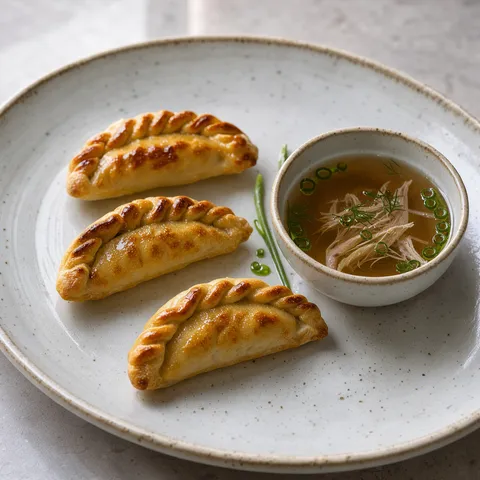 Kibinai 2.01 hr 25 min · Starter
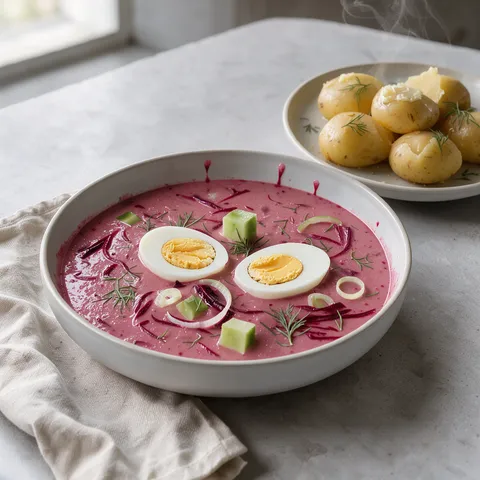 Lithuanian Cold Pink Beetroot Soup1 hr 45 min · Soup
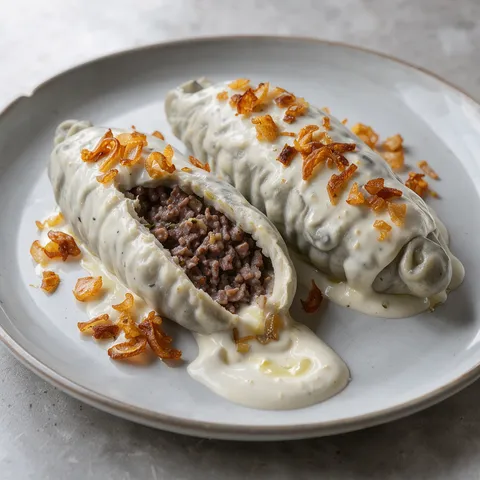 Lithuanian Meat-Filled Potato Dumplings1 hr 45 min · Main course
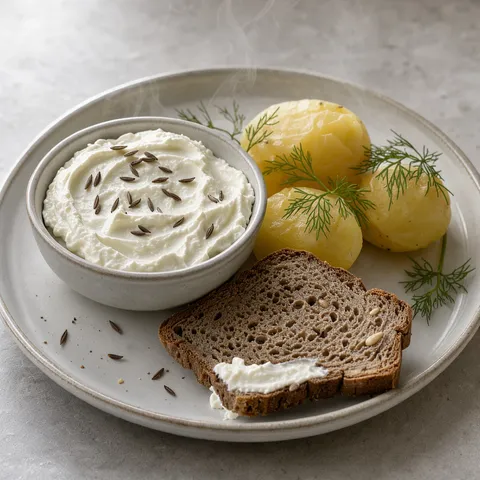 Samogitian Caraway Butter Spread45 min · Meze
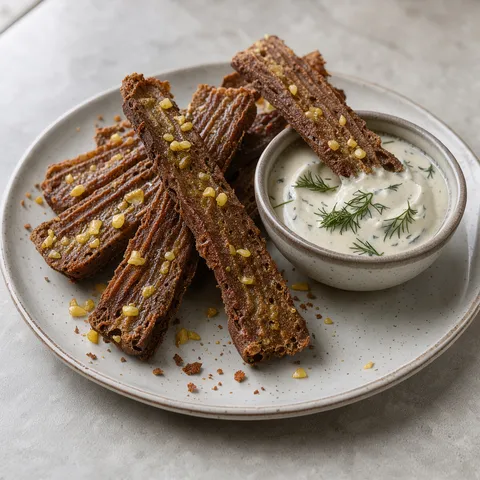 Lithuanian Fried Garlic Rye Bread35 min · Meze
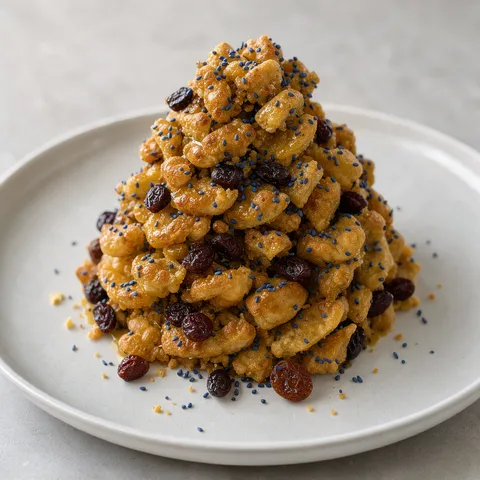 Lithuanian Fried Honey Dough Tower1 hr 35 min · Dessert
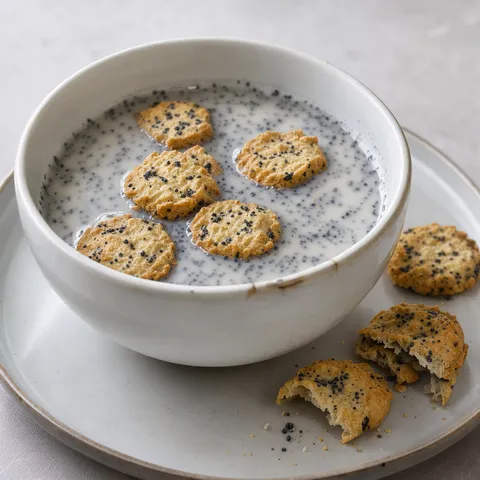 Lithuanian Poppy Biscuits1 hr 15 min · Dessert