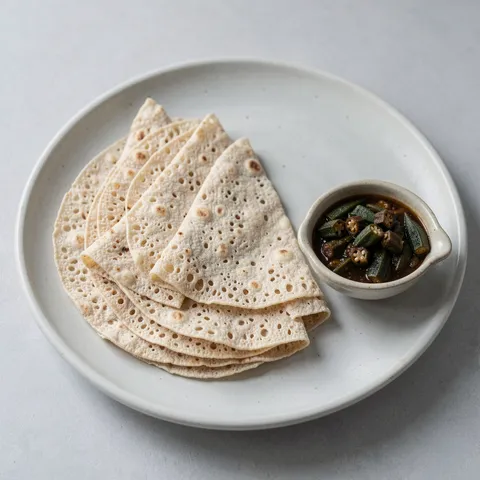
Sudanese Fermented Sorghum Flatbread Kisra
A Sudanese bread & pastry. Takes 45 min · +14 hr fermenting, 16 leaves (4 servings). Difficulty: medium.
At a glance
- Total time
- 45 min · +14 hr fermenting
- Serves
- 16 leaves (4 servings)
- Difficulty
- Medium
- Cuisine
- Sudanese cuisine
- Dish type
- Bread & pastry
- Allergens
- Gluten, Milk, Eggs
Ingredients
Batter
- 400 g sorghum flour
- 50 g plain flour
- 650 ml lukewarm water (about 30°C)
- 2 tbsp batter from a previous kisra or 1/4 tsp fast-action dried yeast
Before cooking
- 200-250 ml lukewarm water
- 1 tsp salt
For the griddle
- 2 tbsp sunflower oil
- a folded piece of clean cloth
Equipment
- Mixing bowls
- Wooden spoon / spatula
- Saj
- Ladle
- Dough scraper
- Balloon whisk (optional)
- Cast-iron frying pan (optional)
Method
- Make the batter: Mix the sorghum flour and plain flour in a large container. Gradually whisk in the lukewarm water to make a thick, lump-free batter like a runny porridge. Add the previous batter or the yeast and whisk for another 1 min. The wheat flour gives the gluten-free sorghum batter a little elasticity, so the sheet lifts off the griddle without tearing
- Ferment: Cover the container with a cloth rather than a lid so the gas can escape. Leave somewhere at around 24-27°C for 12-16 hr. It is ready when small bubbles and fine cracks appear on the surface and the batter smells slightly sour, a little like yoghurt. This sourness is what defines kisra. Cut it short and the sheets will be bland and thick
- Loosen the batter: Knock back the fermented batter with a wooden spoon and add the salt. Gradually add the lukewarm water until the batter is slightly runnier than crêpe batter and coats the back of a spoon in a thin layer. Rest for 10 min, heating the griddle meanwhile
- Heat the griddle: Heat the griddle or a large cast-iron pan over a medium-high heat for 6-8 min. If a few drops of water sizzle instantly and roll around like beads, the surface is at about 200°C. On a cold surface the batter sticks. On one that is too hot it sets before you have a chance to spread it
- Oil the griddle: Dip the cloth in the oil and wipe the griddle to leave a thin film. There should be no visible drops of oil, as too much makes the sheet slick and stops holes forming. Repeat every 3-4 sheets
- Pour and spread: Pour about 60 ml batter onto one edge of the griddle with a ladle. Holding a dough scraper at a 30-40 degree angle, sweep the batter to the other side in one decisive movement, leaving a paper-thin layer. According to some sources, in Sudan this is traditionally done with a flat wooden or palm-leaf scraper. Return the excess left on the scraper to the container
- Cook: Cook the sheet for 30-45 sec without turning. It is ready when the surface turns matt and completely dry and the edges start to lift by themselves. The underside should stay pale beige, not browned. Lift it off in one movement, holding the edge between two fingers
- Fold and keep: While it is still hot, fold the sheet in half and in half again to make a quarter circle, and stack under a cloth. Under the cloth it stays soft in its own steam. Kisra left uncovered dries out and cracks within minutes. You should get about 16 sheets by the time the batter is used up
- Serve: Fan the folded sheets out on a plate and bring hot mullah alongside in a separate bowl. At the table kisra is torn by hand and dipped into the mullah, or torn into the bottom of the bowl with the mullah poured over
Chef's note
Kisra is the everyday bread of the Sudanese table and comes with almost every mullah (stew). For next time, keep 2-3 tbsp of the batter in a sealed jar in the fridge; if you start a new batch with it within a week, you won't need yeast. If you can't find sorghum flour, millet flour can be used, though the flavour will be a little sweeter. Don't confuse kisra with gurasa, which is made thick and soft; kisra is paper-thin.
Frequently asked questions
- How long should kisra batter ferment?
- Leave the batter covered with a cloth for 12 to 16 hours at around 24 to 27°C. It is ready when small bubbles, fine cracks and a mild sour smell like yoghurt appear on the surface.
- Why is wheat flour added to kisra batter?
- Wheat flour gives the gluten-free sorghum batter a little elasticity. This lets the sheet lift off the griddle without tearing.
- How do you keep kisra sheets soft?
- Fold the sheets while hot and stack them under the cloth, where they stay soft in their own steam. Kisra left uncovered dries and cracks within minutes.
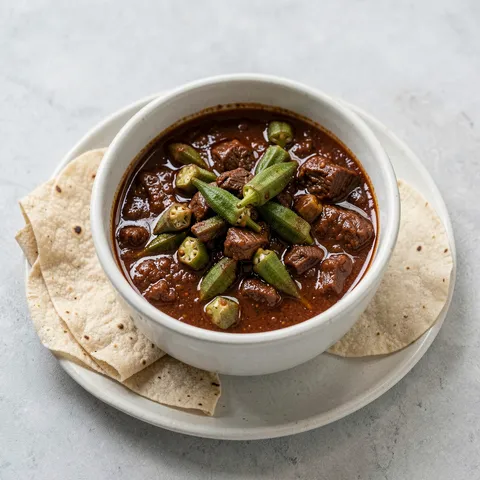 Sudanese Lamb and Okra Stew1 hr 55 min · Main course
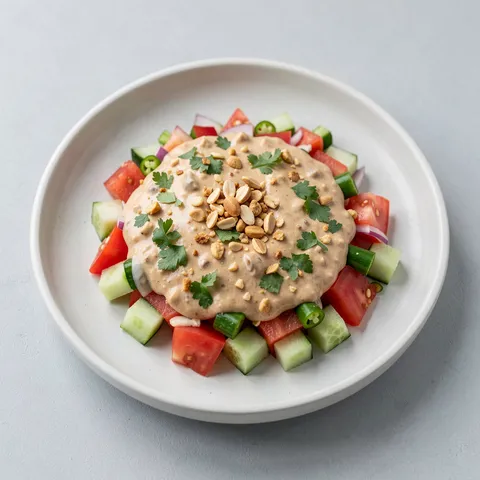 Sudanese Salad with Peanut Dressing50 min · Meze
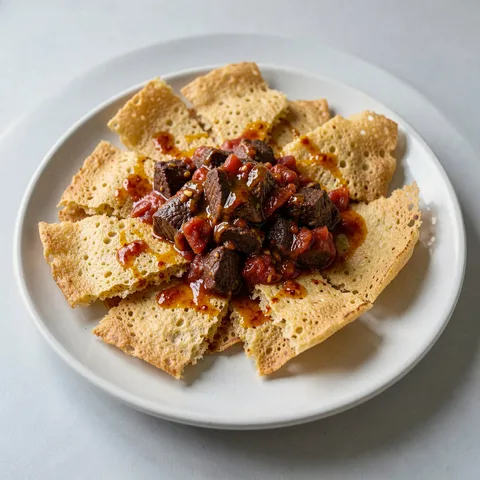 Sudanese Pancakes with Beef Stew1 hr 55 min · Main course
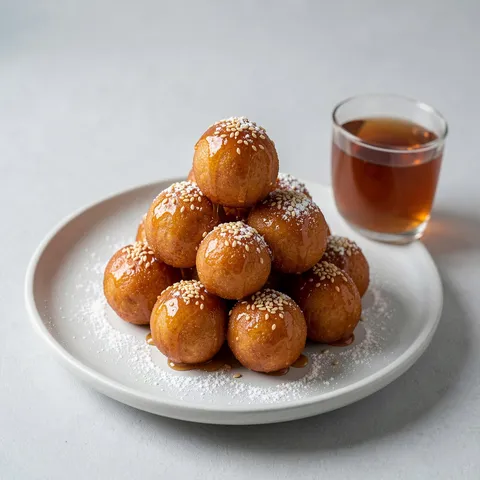 Sudanese Cardamom Doughnut Balls1 hr 45 min · Dessert
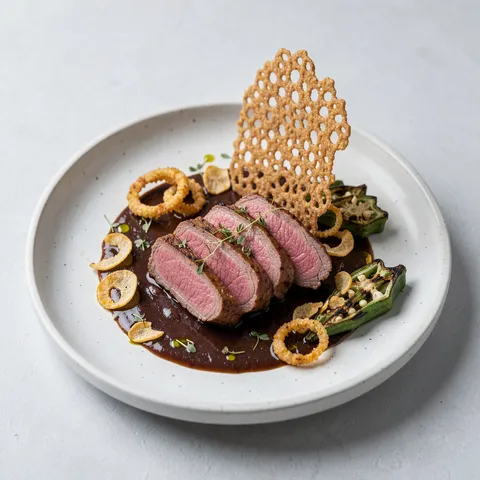 Mullah Bamia 2.01 hr 20 min · Main course
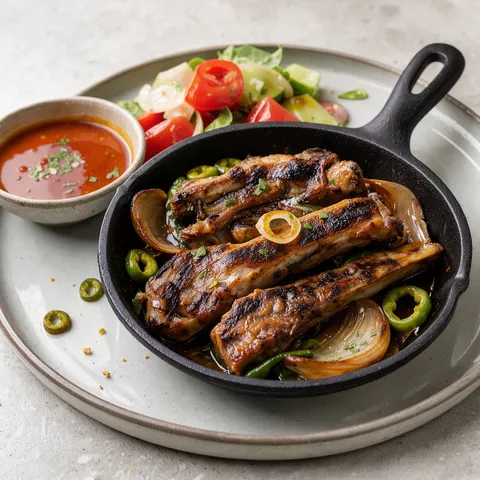 Sudanese Pan-Fried Lamb with Peppers35 min · Main course