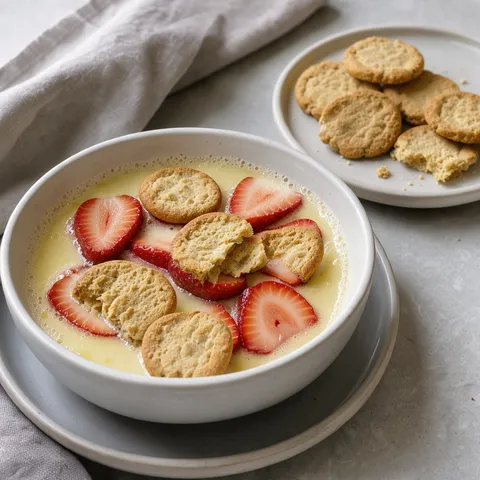
Danish Dessert Soup Koldskål med Kammerjunkere
A Danish dessert. Takes 1 hr 25 min, Serves 4. Difficulty: medium.
At a glance
- Total time
- 1 hr 25 min
- Serves
- Serves 4
- Difficulty
- Medium
- Cuisine
- Danish cuisine
- Dish type
- Dessert
- Diet
- Vegetarian
- Allergens
- Gluten, Milk, Eggs
Ingredients
Kammerjunkere
- 200 g plain flour
- 1/2 tsp baking powder
- 1/4 tsp bicarbonate of soda
- a pinch of salt
- 75 g cold butter (diced)
- 60 g caster sugar
- 1 egg
- 2 tbsp milk
- finely grated zest of 1/2 lemon
- 1/2 tsp freshly pounded cardamom
Koldskål
- 2 egg yolks
- 60 g caster sugar
- 1 tsp Vanilla Sugar and Vanilla Extract (Basics)
- 100 ml milk
- 800 ml buttermilk (or kefir)
- 200 g plain yoghurt
- finely grated zest and 2 tbsp juice of 1/2 lemon
To serve
- 200 g strawberries (sliced)
Equipment
- Mixing bowls
- Cling film
- Bain-marie bowl
- Balloon whisk
- Probe thermometer
- Oven
- Baking tray
- Baking paper
- Pestle and mortar
- Fine grater (optional)
Method
- Make the biscuit dough: Mix the flour, baking powder, bicarbonate of soda, salt, sugar, lemon zest and the cardamom pounded in a mortar in a bowl. Rub the cold butter into the flour with your fingertips until it resembles breadcrumbs. Add the egg and milk and bring the dough together quickly without overworking it. Wrap in cling film and chill in the fridge for 15 min. Cold fat makes the biscuits crisp and flaky. 8 min prep
- Cook the koldskål base (in parallel): While the dough rests, whisk the egg yolks with the sugar and vanilla. Add the milk and cook the mixture in a heatproof bowl set over boiling water, whisking constantly, for 6-8 min until it reaches 72°C on a thermometer and thickens slightly. The traditional recipe uses raw eggs, and this heating makes the yolks safe. Set the bowl in iced water and cool for 5 min. Takes 13 min
- Combine with the buttermilk: Whisk the cold buttermilk, yoghurt, lemon zest and juice in a large bowl until smooth. Add the cooled egg base and whisk for 1 min. The koldskål should be lightly frothy, pale yellow and creamy but pourable. It should taste sweet-sour and refreshing: add 1 tbsp sugar if needed. Cover and chill in the fridge for 1 hr. Takes 4 min
- Shape the biscuits: Preheat the oven to 200°C and line a baking tray with baking paper. Divide the dough into 30 pieces, roll each into a 2.5 cm ball between your palms and space them out on the tray. Takes 8 min
- First bake: Bake at 200°C for 10 min until the balls have risen slightly and are pale golden underneath. Take off the tray and let cool slightly for 5 min
- Split: Lay each biscuit on its side and split it horizontally in half with two forks or a small knife. The cut faces should be rough and open-textured: this surface crisps up in the second bake. Put them back on the tray cut side up. Takes 8 min
- Second bake: Lower the oven to 150°C and bake the biscuits for 15 min until thoroughly dried out and pale golden. This double baking gives kammerjunkere their dry texture, which stays crisp even in cold soup. Cool on a wire rack for 10 min. Takes 25 min
- Plate: Whisk the cold koldskål once more before serving and ladle 250 ml into chilled deep bowls. Top with 5-6 strawberry slices and scatter 4-5 kammerjunkere over the surface, breaking some of them, then put the rest on a small plate alongside. The biscuits should float on the surface without sinking and soften slightly within a few minutes. Serve immediately. Takes 3 min
Chef's note
Koldskål is Denmark's summer dessert: on the first warm days, packets of kammerjunkere line the supermarket shelves next to the bottles of buttermilk. It is eaten both as an afternoon snack and as a dessert after dinner. The classic raising agent for kammerjunkere is hornsalt (ammonium bicarbonate). Here the easier-to-find baking powder and bicarbonate of soda are used together. The biscuits keep in an airtight jar for 2 weeks.
Frequently asked questions
- Is raw egg used in Koldskål?
- The traditional recipe uses raw egg. Here the yolks are heated with the milk and sugar over a bain-marie to 72°C to make them safe, then cooled over iced water and combined with the buttermilk.
- Why are Kammerjunkere baked twice?
- The biscuits are baked at 200°C first, then split in half and dried again at 150°C. This double bake gives a dry texture that stays crisp even in cold soup.
- What can I use if I can't find buttermilk?
- The recipe says you can use kefir instead of buttermilk. Whisk the buttermilk with yoghurt, lemon zest and juice, then stir it into the chilled egg base.
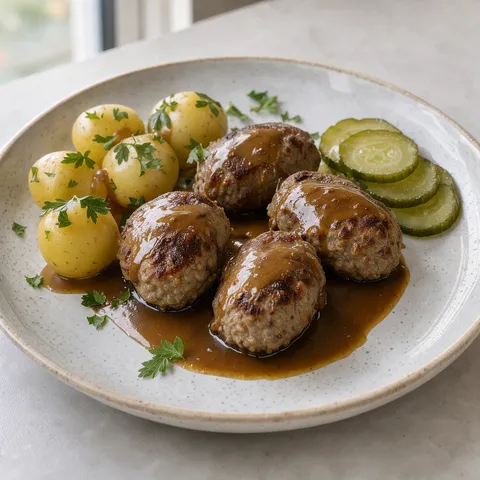 Danish Meatballs1 hr 15 min · Main course
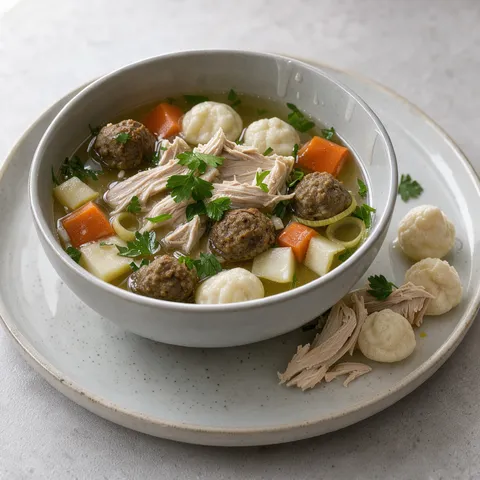 Danish Chicken Soup1 hr 25 min · Soup
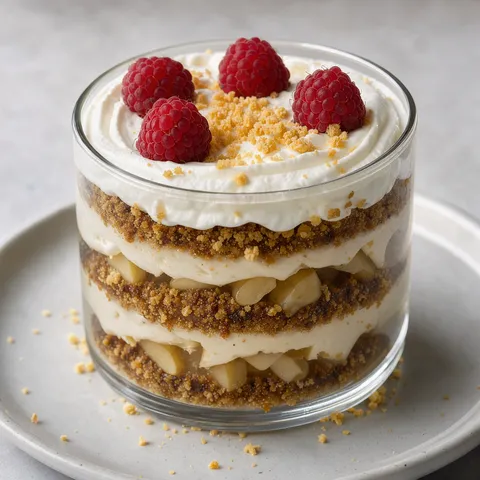 Danish Apple Dessert1 hr 25 min · Dessert
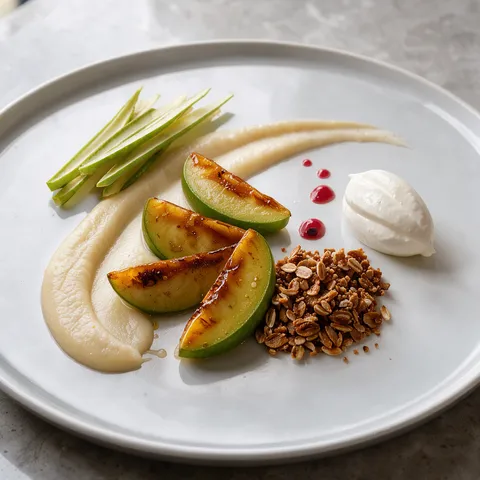 Gammeldags Æblekage 2.01 hr 20 min · Dessert
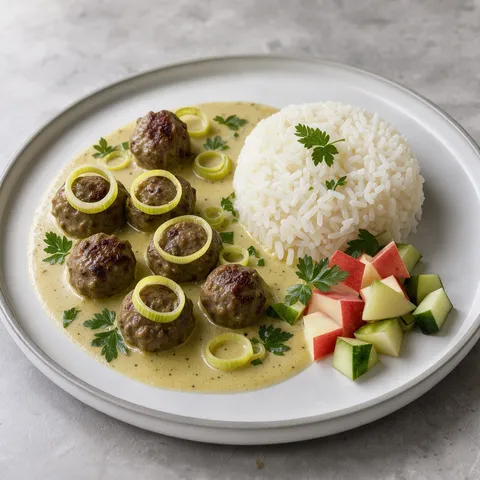 Danish Meatballs in Curry Sauce1 hr 10 min · Main course
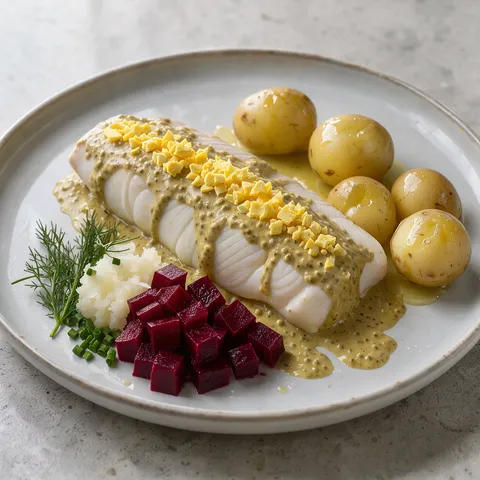 Danish Poached Cod1 hr 5 min · Main course