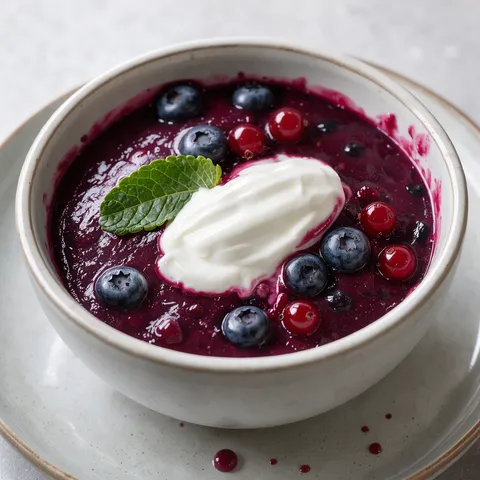
Belarusian Rye and Berry Jelly Kulaga
A Belarusian dessert. Takes 1 hr 15 min · +2 hr chilling, Serves 4. Difficulty: medium.
At a glance
- Total time
- 1 hr 15 min · +2 hr chilling
- Serves
- Serves 4
- Difficulty
- Medium
- Cuisine
- Belarusian cuisine
- Dish type
- Dessert
- Diet
- Vegetarian
- Allergens
- Gluten, Milk
Ingredients
Fruit
- 800 g mixed forest berries (blueberries, raspberries, redcurrants, fresh or frozen)
- 500 ml water
- a pinch of salt
To bind
- 90 g rye flour
- 100 ml cold water
To sweeten
- 80 g flower honey
- 40 g caster sugar
To serve
- 200 g soured cream or strained (Greek-style) yoghurt
- a few fresh mint leaves
Equipment
- Colander
- Cast-iron casserole
- Oven
- Mixing bowls
- Balloon whisk
- Wooden spoon / spatula
Method
- Preheat the oven: Preheat the oven to 160°C. Kulaga is said to have once been cooked slowly for hours in a village oven left to cool after the bread was baked. Here a low heat gives the same softening in less time
- Prepare the fruit: Pick over fresh berries, remove the stalks and rinse gently in a colander. Use frozen berries without thawing. Strip the currants from their stalks with the tines of a fork
- Start in the casserole: Put the berries in a 24 cm cast-iron casserole and add the 500 ml water and the salt. Bring to the boil on the hob over a medium heat, about 6-8 min. As it starts to boil, the first berries burst and the water turns a deep purple-red
- Bake: Cover and put the casserole in the 160°C oven for 30 min. In this time the berries break down completely and release their own pectin into the liquid. The surrounding heat of the oven softens the fruit evenly without catching on the bottom
- Slake the flour: While the berries cook, whisk the rye flour with the 100 ml cold water in a bowl to a smooth, runny slurry. Flour added straight to the hot fruit turns lumpy
- Thicken: Take the casserole out of the oven and put it on the hob over a medium-low heat. Pour in the slurry in a thin stream, stirring constantly with a wooden spoon. Add the sugar. Cook for 4-5 min, until the mixture thickens, coats the back of a spoon in a thick layer and loses its raw flour taste. Take off the heat and stir in the honey, as honey loses its aroma if it boils
- Firm up in the oven: Return the casserole to the oven, uncovered, for another 10 min, until the surface turns slightly matt and the mixture settles into a thick porridge. Taste, and if the berries are sharp, add 1-2 tbsp honey
- Chill and serve: Divide the kulaga between 4 bowls and, once it reaches room temperature, chill in the fridge for at least 2 hr. Once cold, it sets into a thick jelly that holds on a spoon. Serve cold, topped with a spoonful of soured cream and a mint leaf
Chef's note
Kulaga is an old Belarusian fruit dessert associated with the midsummer festival of Kupala. Russian kulaga is fermented with malt, while the Belarusian version is unfermented and thickened with rye flour. Wild strawberries, blueberries and raspberries are among the most common fruits, and it is also made with plums or sour cherries. In Belarus it is eaten cold, with bliny or on its own.
Frequently asked questions
- Why isn't the rye flour added straight to the fruit?
- If flour goes straight into hot fruit, it clumps. First make a lump-free slurry with 100 ml cold water and stir it in in a thin stream.
- Why is the honey added last?
- If honey is added while boiling, its aroma is lost. So stir it in after the pan is taken off the heat.
- When does the kulaga reach a jelly consistency?
- Once the bowls reach room temperature, chill them in the fridge for at least 2 hours. When cold it sets to a thick jelly that can be taken with a spoon.
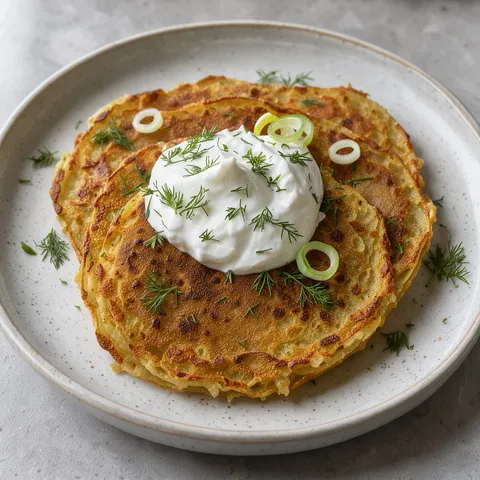 Belarusian Potato Pancakes1 hr 10 min · Main course
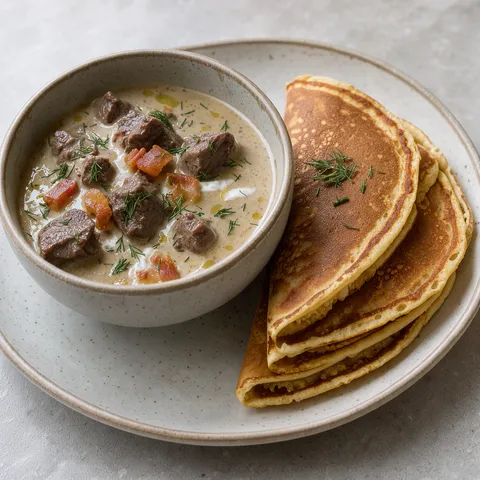 Belarusian Soured Cream Beef Stew1 hr 55 min · Main course
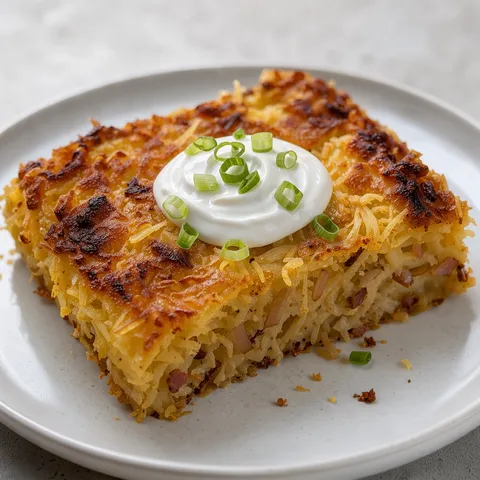 Belarusian Baked Potato Cake1 hr 55 min · Main course
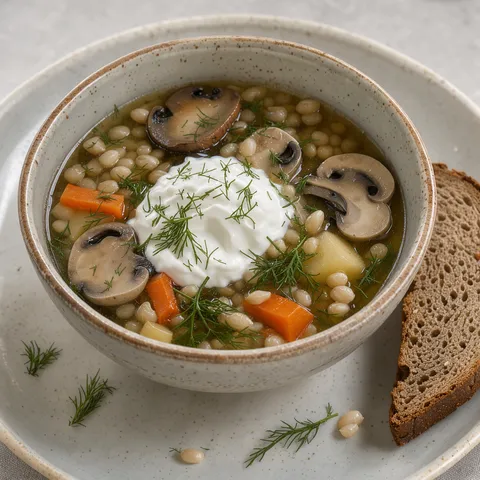 Belarusian Mushroom and Barley Soup1 hr 10 min · Soup
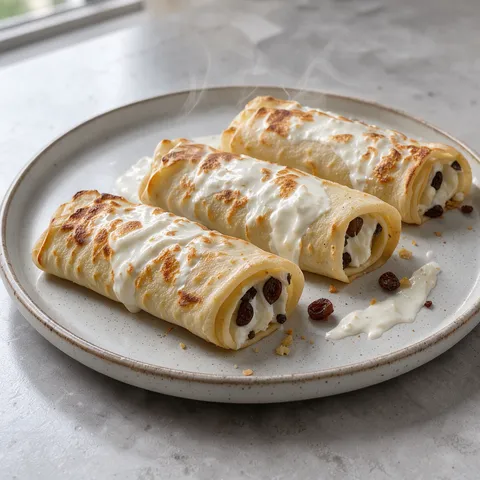 Belarusian Baked Curd Cheese Crêpes1 hr 15 min · Dessert
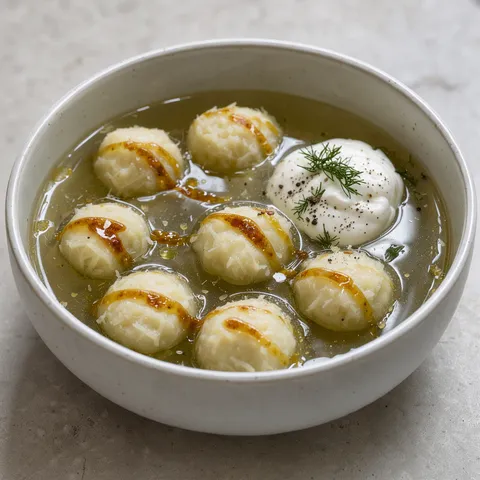 Belarusian Potato Dumplings1 hr 30 min · Main course