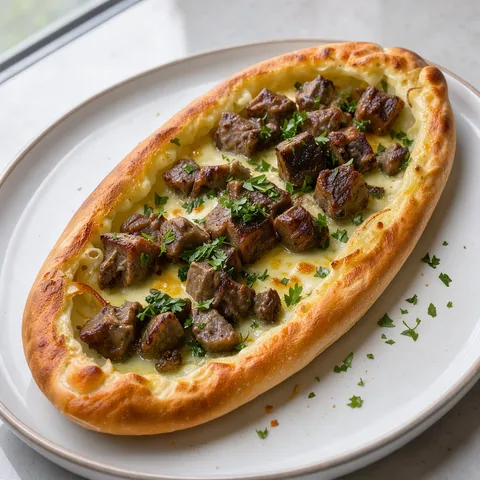
Diced Lamb and Semi-Hard Cheese Pide Kusbasili Kasarli Pide
A Turkish bread & pastry. Takes 1 hr 25 min, 4 pieces pide (4 servings). Difficulty: medium.
At a glance
- Total time
- 1 hr 25 min
- Serves
- 4 pieces pide (4 servings)
- Difficulty
- Medium
- Cuisine
- Turkish cuisine
- Dish type
- Bread & pastry
- Allergens
- Gluten, Milk, Eggs
Ingredients
Dough
- 500 g plain flour
- 7 g fast-action dried yeast
- 1 tsp sugar
- 1.5 tsp salt
- 300 ml lukewarm water
- 2 tbsp olive oil
Filling
- 400 g lamb leg (1 cm dice)
- 1 onion (finely chopped)
- 2 green peppers (finely chopped)
- 1 tomato (grated)
- 2 tbsp butter
- 1 tsp Aleppo pepper
- 1/2 tsp cumin
- 1 tsp salt
Topping
- 200 g mild semi-hard cheese (grated)
- 1 egg yolk
- 1 tbsp milk
- 1 tbsp butter
To serve
- 2 tbsp chopped flat-leaf parsley
Equipment
- Mixing bowls
- Rolling pin / oklava
- Frying pan
- Baking tray
- Baking paper
- Oven
- Box grater
- Pastry brush
- Chef's knife
Method
- Knead the dough: Mix the yeast, sugar and lukewarm water and leave for 5 min to foam, because yeast that does not foam is dead. Mix with the flour and salt and add the olive oil. Knead for 10 min, until the dough is an elastic ball that no longer sticks to your hands.
- Prove: Put the dough in an oiled bowl and cover with a damp cloth. Prove in a warm place for 45 min, until doubled in size. If the dough proves in a place that is too cold, the pide turns out hard.
- Prepare the filling: While the dough proves, melt the butter in a pan over medium heat, add the meat and cook over high heat for 4 min, turning, until the liquid has been absorbed and the edges are browned. Add the onion and peppers and cook for 3 more min. Add the tomato, Aleppo pepper, cumin and salt and stir for 3 min, until the liquid has completely cooked off. A dry filling does not make the pide soggy.
- Cool the filling: Transfer the filling to a plate and cool for 10 min. Hot filling partly cooks the dough early and melts the semi-hard cheese.
- Shape the dough: Divide the dough into 4 equal balls. On a floured worktop roll each with a rolling pin into an oval of about 30 cm long and 15 cm wide and fold the edges over by 1 cm to form a boat. This step takes 8 min.
- Fill: Divide the filling equally between the dough ovals. Grate the semi-hard cheese on a box grater and sprinkle over the filling. Pinch in from the sides to give a pointed boat shape at the ends. Brush the edges with the egg yolk and milk, to colour them golden.
- Bake: Preheat the oven to its highest setting, 240°C. Arrange the pides on a tray lined with baking paper and bake for 12 min, until the edges are golden and the semi-hard cheese is puffed and browned. At a high temperature the dough rises quickly and the inside stays soft.
- Serve: Brush the edges of the pides with the butter as they come out of the oven, so that they stay glossy and soft. Sprinkle with parsley, rest for 2 min and slice. Serve hot.
Chef's note
Varieties with diced meat and semi-hard cheese are common in the pide houses of Ankara, and this recipe is a pide made with diced meat instead of mince. When lamb is chopped into fine dice it cooks quickly, otherwise the oven time is not enough. The thinner the dough is rolled, the crisper the pide. Pide always needs a preheated oven. The buttered edge gives the pide its classic look.
Frequently asked questions
- Why should the pide filling be dry?
- A dry filling does not soak the pide. Cook the meat, onion, peppers and tomato until all the liquid has been absorbed.
- How do I know the yeast is alive?
- Mix the yeast with sugar and lukewarm water and leave for 5 minutes. If it doesn't foam, the yeast is dead. If it foams, mix it with the flour and salt and knead.
- Why is pide baked at such a high temperature?
- Heat the oven to 240°C. At a high heat the dough rises quickly and stays soft inside. The pide bakes in about 12 minutes, until the edges are golden and the cheese is browned.
 Chilled Wheat Yoghurt Soup1 hr · Soup
 Noodle and Yoghurt Soup1 hr 10 min · Soup
 Lamb, Chickpea and Potato Stew1 hr 15 min · Soup
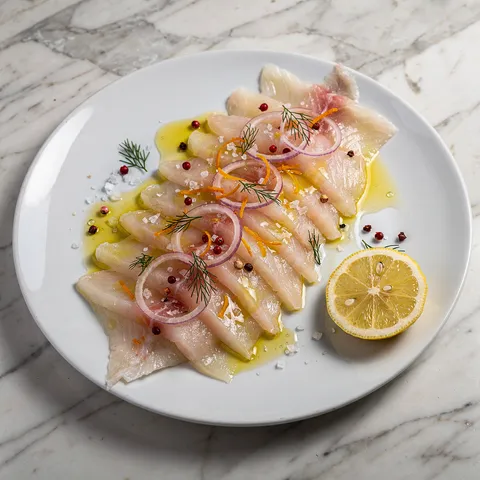 Marinated Sea Bass30 min · Meze
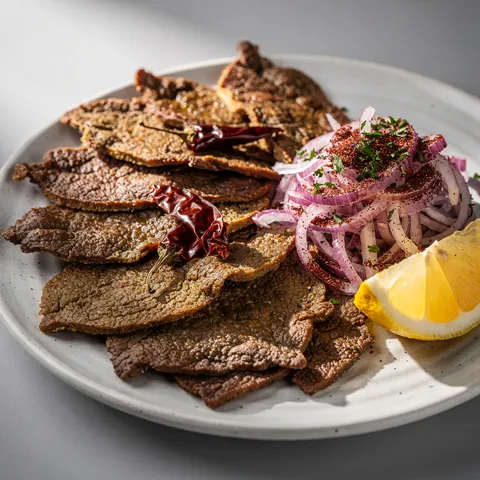 Crispy Fried Liver Slices25 min · Meze
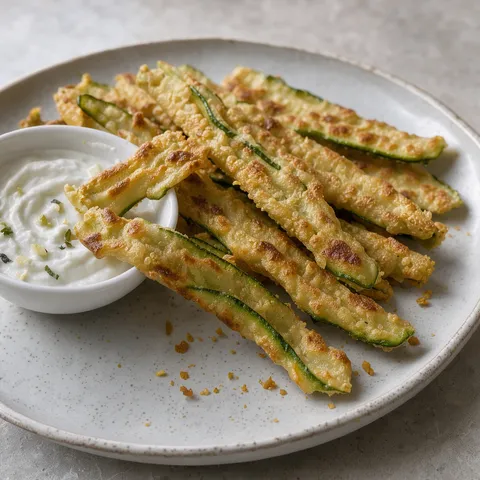 Courgette Crisps30 min · Meze