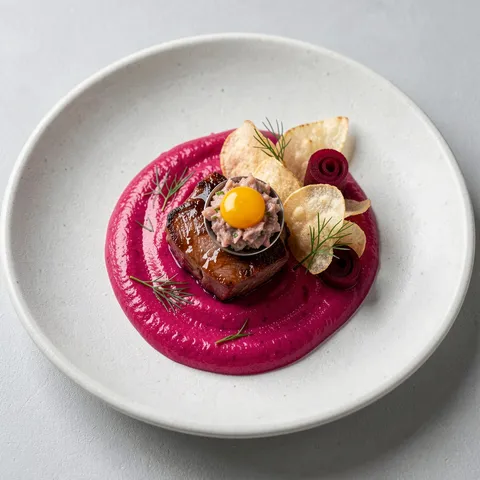
Labskaus 2.0
A German main course. Takes 1 hr 22 min, Serves 4. Difficulty: challenging.
At a glance
- Total time
- 1 hr 22 min
- Serves
- Serves 4
- Difficulty
- Challenging
- Cuisine
- German cuisine
- Dish type
- Main course
- Diet
- Gluten-free
- Allergens
- Milk, Eggs, Celery, Mustard, Sulphites
Ingredients
Beef cheek
- 800 g beef cheek (trimmed, 4 pieces)
- 1 tsp salt
- 1/2 tsp black pepper
- 1 tbsp neutral oil
- 1 onion (quartered)
- 1 carrot (thick slices)
- 2 bay leaves
- 400 ml Brown Beef Stock (Basics)
- 1 tbsp pickled beetroot juice or cider vinegar
- 1 tsp honey
Beetroot and potato cream
- 400 g potatoes (3 cm cubes)
- 250 g beetroot (peeled, 1 cm cubes)
- 60 g cold butter
- 100 ml milk
- 1 tsp freshly grated horseradish (if unavailable, 1/2 tsp mustard)
- salt
Egg yolk
- 4 egg yolks
- 1 tbsp neutral oil
- a pinch of salt
Herring tartare
- 4 matjes (salted herring) fillets (about 150 g, finely diced)
- 1 cornichon (finely diced)
- 1 tbsp capers
- 1 tbsp red onion (finely diced)
- 1 tbsp thick plain yoghurt
- 1 tbsp dill
Pickled beetroot
- 1 small beetroot (boiled, 1 mm slices on a mandoline)
- 60 ml cider vinegar
- 60 ml water
- 1 tbsp sugar
Crisp potato
- 1 large potato (1 mm slices on a mandoline)
- 500 ml neutral oil
- salt
Garnish
- 2 tbsp dill tips
- flaky salt
Equipment
- Pressure cooker
- Saucepan
- Probe thermometer
- Blender
- Potato ricer
- Fine sieve / chinois
- Frying pan
- Mixing bowls
- Colander
- Mandoline
Method
- Sear the meat: Pat the cheeks dry with kitchen paper and season with salt and pepper. Heat the oil in the pressure cooker over high heat and sear the meat for 2 min on each side, until deep brown. Add the onion, carrot and bay leaves and turn for 2 min. Searing traps the juices of the meat and gives deep flavour to the sauce. Add the stock and pickle juice and close the lid. (~12 min)
- Pressure-cook: Once the cooker reaches pressure, lower the heat and cook for 35 min. Because cheek is full of collagen, it reaches a fork-tender consistency in this time, while an ordinary pan needs 2 hr 30 min. Let the pressure release naturally for 5 min, then release the steam. (~40 min)
- Cook the egg yolks: While the cooker is under pressure, bring water in a small saucepan to 65°C and hold it steady with a thermometer. Put the separated yolks into a small resealable bag or a small sealed container with the neutral oil and salt and cook in the 65°C water for 25 min. At this temperature the yolk becomes like jam, a thick cream rather than runny. (in parallel, ~25 min)
- Boil the beetroot and potatoes: In another saucepan, start the beetroot and potato cubes in cold salted water and simmer over low heat for 20 min, until easily pierced with a fork. Leave to steam in a colander for 2 min. (in parallel, ~22 min)
- Mix the tartare: Mix the matjes, cornichon, capers, onion, yoghurt and dill and chill in the fridge. Boil the vinegar, water and sugar and pour over the beetroot slices, then leave for 10 min. The acid cuts the heaviness of the salty herring and the rich cream. (in parallel, ~10 min)
- Blend the cream: Mash the hot, drained beetroot and potato through a potato ricer, then blend with the milk and cold butter in a blender for 1 min, until completely smooth and glossy purple-pink. Add the horseradish and salt. The consistency should be like a cream that falls slowly from a spoon, and if it is thick, add 2 tbsp milk. Pass through a fine sieve and keep warm. (~6 min)
- Glaze the cheeks: Take the cheeks out of the cooker and strain the stock. Reduce the strained stock with the honey in a wide pan over high heat for 8 min, until it becomes a dark, glossy glaze that coats a spoon. Turn the cheeks in the glaze for 2 min to coat them. The glaze should taste salty-sweet, and if it is salty, add 1 tsp water. (~10 min)
- Fry the crisp potatoes: Heat the oil in a saucepan to 170°C and check with a thermometer. Soak the potato slices in cold water for 1 min to remove the starch and pat dry. Fry in batches for 2 min, until the bubbles subside and they are golden. Lift onto kitchen paper and season with salt. Slices whose starch has not been removed do not fry and stick together. (~6 min)
- Plate: In the middle of a warm plate pour 2 spoonfuls of the beetroot and potato cream into a wide pool. Place a piece of cheek on top and pour over the glaze. Put a spoonful of herring tartare beside it and gently place a yolk on top. Roll up the pickled beetroot slices and arrange them on the plate. (~6 min)
- Garnish and serve: Stand the crisp potatoes upright against the cheek and scatter over the dill tips and flaky salt. Serve at once. (~2 min)
Chef's note
Here the mash of the classic Labskaus is split into separate textures: the beetroot and potato mash becomes a silky cream, the beef cheek is glazed, the herring is a cold tartare and the egg is a velvety yolk cooked at 65°C. The original recipe uses salted beef (corned beef) and fried egg, while here, instead of salted beef, cheek cooked in a pressure cooker is preferred. Matjes is traditionally bought ready-salted. Do not take the yolks above 65°C, or they cook hard. If you cannot find matjes, use dried salted herring or lakerda (cured bonito), soaked in milk for 2 hr to remove the salt.
Frequently asked questions
- How long does beef cheek take in a pressure cooker?
- After pressure is reached, the cheek is ready in 35 minutes and tender enough to pull apart with a fork, because it is full of collagen. In an ordinary pan it needs 2 hours 30 minutes.
- How do I cook an egg yolk in 65°C water?
- Put the yolks in a small bag or container with a little neutral oil and salt, and cook them for 25 minutes in water held at 65°C with a thermometer. This heat turns the yolk into a jammy, spoonable cream that does not run.
- Why are the crisp potato slices soaked in water?
- Slices that are not rinsed of starch will not fry properly and stick together. Slice the potato 1 mm thick on a mandoline, soak it in cold water for 1 minute, dry it and fry in oil at 170°C.
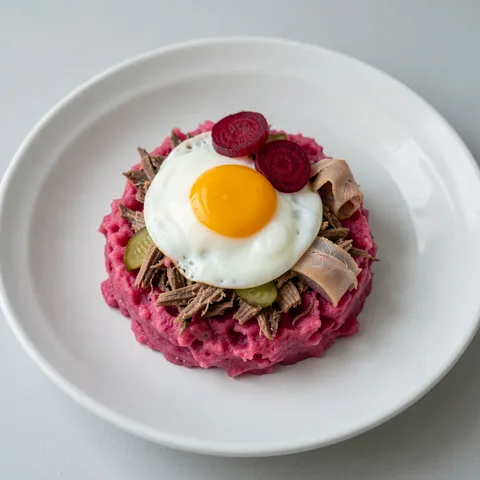 Beef and Beetroot Mash1 hr 7 min · Main course
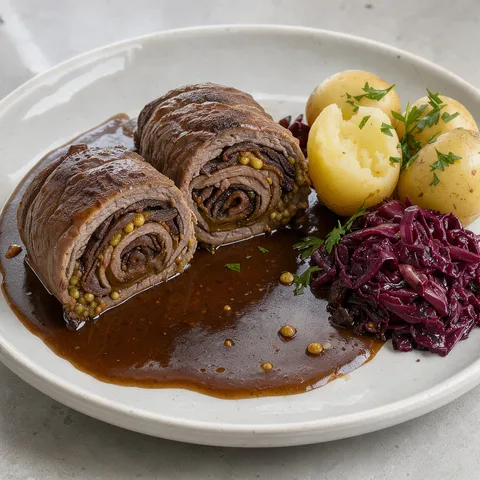 German Beef Roulades2 hr 30 min · Main course
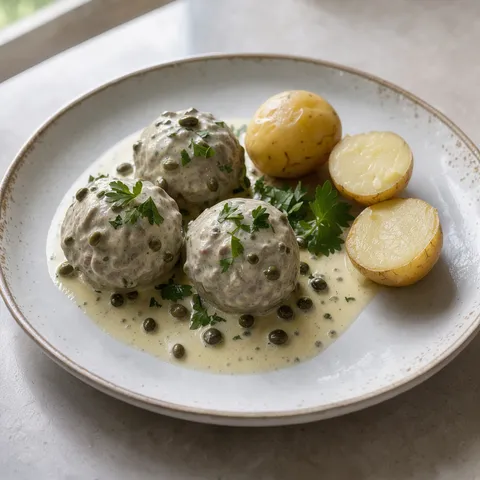 Meatballs in Caper Sauce1 hr 05 min · Main course
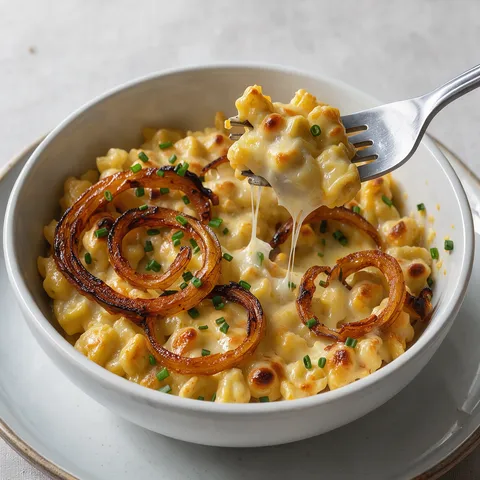 Swabian Cheese Noodles55 min · Main course
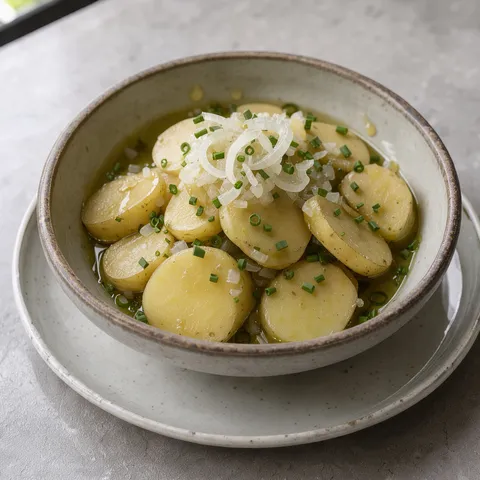 Swabian Potato Salad1 hr · Side dish
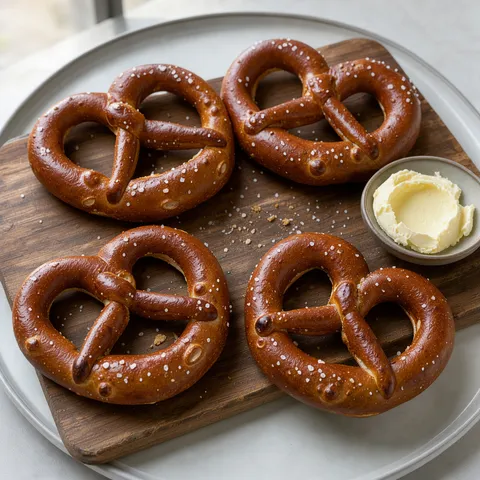 Bavarian Pretzels1 hr 55 min · Bread & pastry
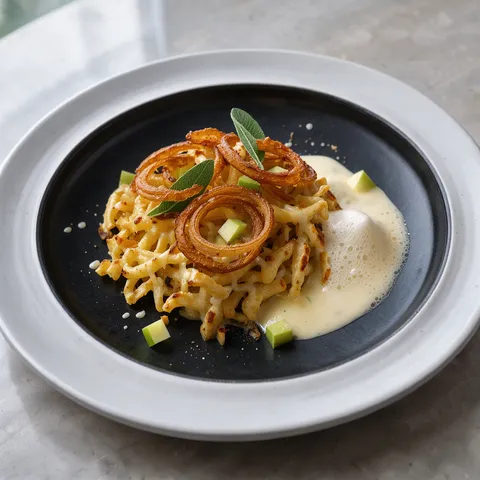 Käsespätzle 2.01 hr 20 min · Main course