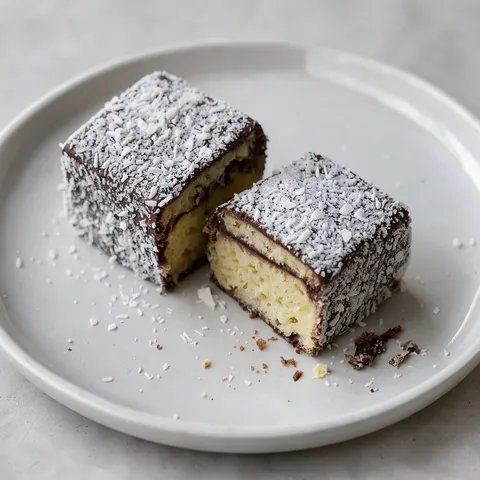
Chocolate and Coconut Sponge Cubes Lamington
An Australian dessert. Takes 1 hr 50 min · +1 hr 30 min cooling, Serves 4. Difficulty: challenging.
At a glance
- Total time
- 1 hr 50 min · +1 hr 30 min cooling
- Serves
- Serves 4
- Difficulty
- Challenging
- Cuisine
- Australian cuisine
- Dish type
- Dessert
- Allergens
- Gluten, Milk, Eggs, Tree nuts
Ingredients
- Cake (20×30 cm tin, 15 pieces): 4 eggs (at room temperature)
- 150 g caster sugar
- 1 tsp vanilla extract
- 150 g plain flour
- 30 g cornflour
- 2 tsp baking powder
- 1/4 tsp salt
- 80 g butter
- 100 ml milk
- a little butter for the tin
Chocolate icing
- 400 g icing sugar
- 40 g cocoa powder
- 30 g butter
- 160 ml milk
Coating
- 250 g fine desiccated coconut (unsweetened)
Equipment
- Oven
- Cake tin
- Baking paper
- Fine sieve / chinois
- Mixing bowls
- Stand mixer
- Saucepan
- Silicone spatula
- Baking tray
- Cling film
- Balloon whisk
- Bain-marie bowl
- Bread knife
Method
- Prepare the tin: Set the oven to 180°C (conventional). Grease a 20×30 cm cake tin with butter and line the base and the two long sides with baking paper, with the paper overhanging. The overhanging paper lets you lift the cake out without breaking it. Sift the flour, cornflour, baking powder and salt into a bowl through a fine sieve
- Whisk the eggs: Put the eggs, sugar and vanilla in the bowl of a stand mixer and whisk on high speed for 8-10 min. The mixture should have tripled in volume and turned pale cream, and when you lift the whisk the ribbon that falls should sit on the surface for 3-4 sec without disappearing. This ribbon stage traps the air that is the cake's only raising help
- Warm the liquid: While the eggs are whisking, heat the butter and milk in a small pan over low heat until the butter melts, to about 50°C, without boiling. The warm liquid mixes into the batter without knocking out the foam
- Fold in the flour: Sprinkle a third of the sifted flour over the foam and fold from the bottom up with a spatula, adding the remaining flour in the same way in two batches. Mix two spoonfuls of the batter into the warm milk mixture, then pour this mixture back into the main batter and fold in gently. If the heavy liquid is poured in directly, it sinks to the bottom and forms a rubbery layer at the base of the cake. Folding in total should take 2-3 min. Stop when no flour streaks remain
- Bake: Pour the batter into the tin, spread into the corners with a spatula and tap the tin once lightly on the worktop to burst large air bubbles. Bake at 180°C for 22-25 min. It is ready when the top is golden and springs back when touched, the edges have pulled away from the tin and a skewer pushed into the centre comes out dry
- Cool and firm up: Rest the cake in the tin for 10 min, then lift onto a tray by the paper and leave for 1 hr until completely cool. Wrap the cooled cake in cling film and put in the freezer for 30 min. Fresh, warm cake falls apart when dipped in the icing, while firmed-up cake coats without shedding crumbs. In Australia lamingtons are traditionally made from cake kept for a day
- Make the chocolate icing: While the cake is in the freezer, sift the icing sugar and cocoa through a fine sieve into a bowl. Melt the butter in the milk and pour the hot milk over the sugar, whisking until a lump-free, glossy icing forms. Set the bowl as a bain-marie over a pan of gently simmering water on low heat. The icing should coat the back of a spoon in a thin, translucent layer. If it thickens, add a spoonful of hot water. Hot icing works a thin coat onto the outside of the cake, while cooling icing leaves a thick, sugary crust
- Cut: Trim the edges of the cake by 3-4 mm with a bread knife and divide the cake into 15 equal cubes, each about 6×6 cm. A serrated knife cuts through the sponge without crushing it
- Coat: Put the coconut in a large bowl. Hold a cube between two forks, dip it in the icing and turn it so every side is coated within 2-3 sec, lift out and let the excess icing drain for 5 sec. Drop it at once into the coconut and sprinkle coconut over the top with a spoon to coat all sides. Arrange the coated cubes on a tray lined with baking paper. If you keep one hand dry and one wet, the coconut will not clump in the icing
- Set and serve: Leave the cubes for 30 min at room temperature, so the icing sets under the coconut and binds the cake and coating. To serve, put two cubes on a serving plate, slightly crossed, and cut one in half to show the pale yellow sponge inside and the thin line of chocolate
Chef's note
Lamington is named after Lord Lamington, the governor of Queensland in the 1890s, and is considered a national symbol in Australia. In a common variant the cake is cut in half and spread with raspberry jam and cream, while in New Zealand pink lamingtons dipped in raspberry jelly are popular. It is important that the coconut is finely desiccated, as coarse strands do not cling to the surface.
Frequently asked questions
- Why freeze the cake for Lamingtons?
- Fresh, warm cake falls apart when dipped in the icing. If you cool the cake, wrap it and firm it up in the freezer for 30 minutes, it coats without shedding crumbs.
- What if the chocolate icing leaves a thick crust?
- Keep the icing warm over a bain-marie, because cooling icing leaves a thick, sugary crust. If it thickens, add a spoonful of hot water.
- How do you stop the coconut clumping in the icing?
- Keep one hand for dry work and the other for wet. Dip a cube in the icing using two forks, let the excess drip off and drop it straight into the coconut.
 Corn Fritters46 min · Meze
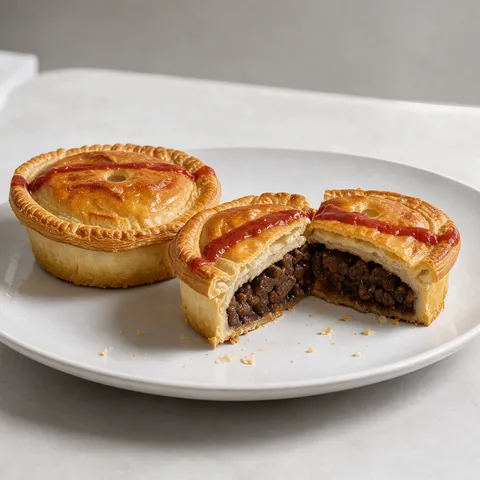 Aussie Meat Pie2 hr 20 min · Bread & pastry
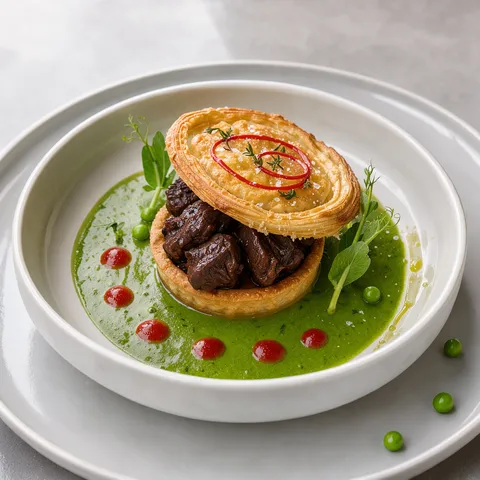 Aussie Meat Pie 2.01 hr 30 min · Main course
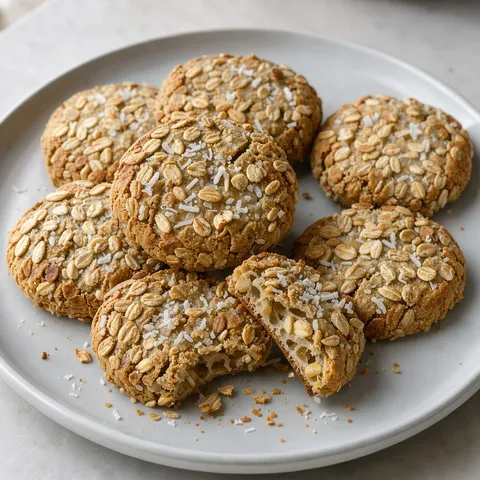 Anzac Biscuits50 min · Patisserie
 Australian Campfire Loaf55 min · Bread & pastry
 Creamy Garlic Prawns with Rice50 min · Main course