
Hungarian Fried Flatbread Lángos
A Hungarian bread & pastry. Takes 1 hr 15 min · +1 hr rising, 8 pieces (4 servings). Difficulty: challenging.
At a glance
- Total time
- 1 hr 15 min · +1 hr rising
- Serves
- 8 pieces (4 servings)
- Difficulty
- Challenging
- Cuisine
- Hungarian cuisine
- Dish type
- Bread & pastry
- Allergens
- Gluten, Milk
Ingredients
Dough
- 500 g plain flour
- 1 medium floury potato (about 150 g, boiled and mashed)
- 10 g fast-action dried yeast (or 25 g fresh yeast)
- 1 tsp sugar
- 300 ml lukewarm milk (about 37°C)
- 1.5 tsp salt
- 2 tbsp sunflower oil
Frying
- 1 litre sunflower oil
Garlic oil
- 4 garlic cloves
- 4 tbsp sunflower oil
- 2 tbsp water
- a pinch of salt
Topping
- 250 g soured cream (tejföl)
- 150 g grated mild semi-hard cheese or Trappista-type semi-hard cheese
- 2 tbsp chopped dill (optional)
Equipment
- Saucepan
- Potato masher
- Mixing bowls
- Cling film
- Pestle and mortar
- Heavy-based saucepan
- Probe thermometer
- Colander
- Pastry brush
Method
- Prepare the potato: Boil the potato in its skin for 20 min, peel and mash thoroughly while warm. Potato starch gives lángos a soft, moist interior and a crust that turns crisp when fried. Leave to cool to room temperature
- Activate the yeast: Stir the yeast and sugar into half the lukewarm milk and leave for 10 min. Foam should form on the surface: if it doesn't, the yeast is dead and the dough won't rise. The milk must not go above 40°C
- Knead the dough: Put the flour and salt in a large bowl. Add the mashed potato, the yeast mixture, the remaining milk and the oil. Knead, first with a spoon and then by hand, for 8-10 min, until the dough is soft, elastic and slightly sticky. It should stay sticky: too much flour makes a tough lángos
- Prove: Put the dough in an oiled bowl and cover with cling film and a cloth. Leave somewhere warm for 1 hr, until doubled in size. A dent made with a finger should fill slowly
- Make the garlic oil: Crush the garlic with the salt to a paste with a pestle and mortar. Add the oil and water, stir and leave to infuse for at least 15 min. The water carries the sharpness of the garlic through the oil and makes it easy to brush onto the lángos
- Shape: Divide the dough into 8 equal pieces, roll each into a ball and rest on an oiled tray for 10 min. Oil your hands and stretch each ball by hand into a disc 15-18 cm across, 4-5 mm thin in the centre with thicker edges. Don't use a rolling pin: it kills the air bubbles
- Fry: Heat the oil to 180°C in a deep frying pan. Lower the discs into the oil one at a time, away from you. Fry for 1.5-2 min on each side, until puffed and deep golden: spooning oil over the top with a slotted spoon helps them puff up evenly. If the oil is too hot, the outside burns while the inside stays raw
- Drain: Lift out the lángos with a slotted spoon, hold it upright for a few seconds to let the oil run off and put it on a wire rack. Brush the top immediately with the garlic oil using a pastry brush: the hot dough soaks up the garlic
- Plate: Put the lángos on a flat plate. Spread two spoonfuls of soured cream over the centre with the back of a spoon, stopping 2 cm from the edge. Scatter plenty of grated cheese over the top, with dill for anyone who wants it. Eat hot, tearing it by hand
Chef's note
The name lángos comes from the word for flame: it used to be made from dough baked at the mouth of the bread oven, in front of the flame. Today in Hungary it is sold as street food on beaches, at markets and on the shores of Lake Balaton. The most classic version is topped with garlic, soured cream and cheese. If the dough needs to wait, it keeps in the fridge for 12 hr: bring it back to room temperature before frying.
Frequently asked questions
- Why add potato to lángos dough?
- Potato starch gives lángos a soft, moist inside and a crisp crust when fried. Boil the potato in its skin, peel it, mash it while warm and add it to the dough once at room temperature.
- Why should lángos dough stay sticky?
- Too much flour makes lángos tough. The dough should stay soft, elastic and slightly sticky. Oil your hands to shape it and don't use a rolling pin, as it knocks out the air bubbles.
- How do I make the garlic oil?
- Crush the garlic with salt in a mortar, mix with the oil and water and leave to infuse for at least 15 minutes. The water spreads the garlic's sharpness through the oil. Brush it over the hot lángos.
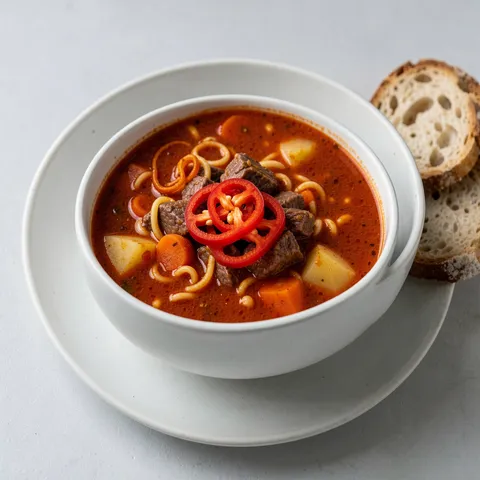 Hungarian Goulash Soup2 hr 5 min · Soup
 Csirkepaprikás with Nokedli1 hr 25 min · Main course
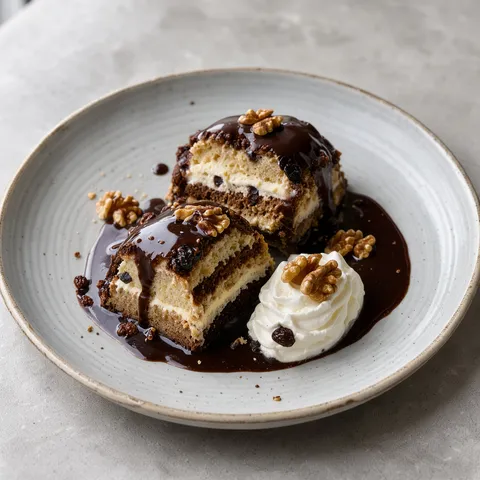 Hungarian Layered Sponge Trifle1 hr 30 min · Dessert
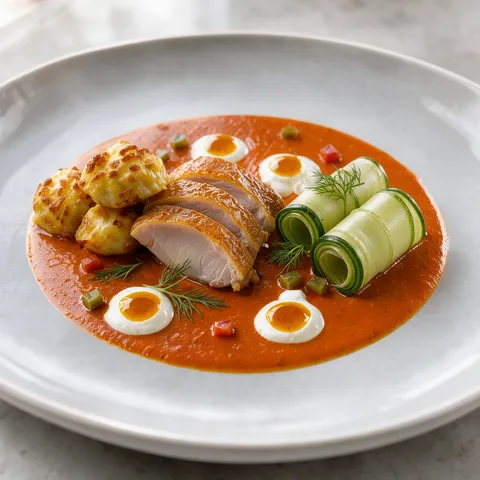 Csirkepaprikás 2.01 hr 25 min · Main course
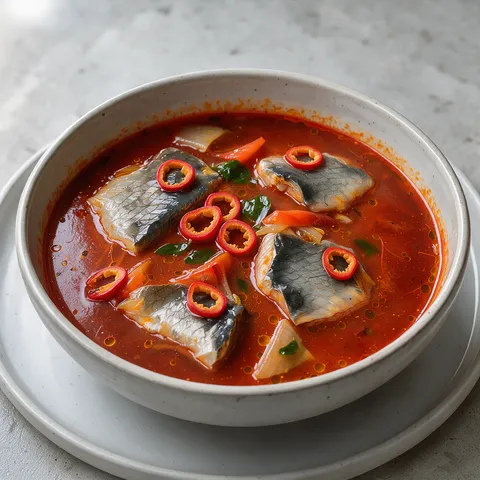 Hungarian Fisherman's Soup with Paprika1 hr 40 min · Soup
 Hungarian Pepper and Tomato Sauté with Eggs50 min · Starter