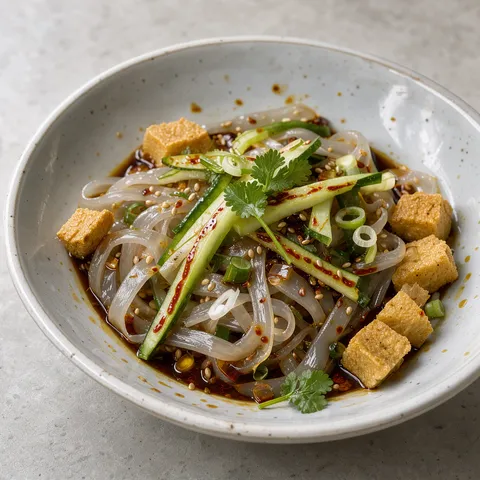
Shaanxi Cold Noodles from Starch Dough Liang Pi
A Chinese main course. Takes 1 hr 20 min · +1 hr 30 min resting, Serves 4. Difficulty: medium.
At a glance
- Total time
- 1 hr 20 min · +1 hr 30 min resting
- Serves
- Serves 4
- Difficulty
- Medium
- Cuisine
- Chinese cuisine
- Dish type
- Main course
- Diet
- Vegetarian
- Allergens
- Gluten, Milk, Sesame, Soya
Ingredients
Dough
- 300 g strong white bread flour (high-protein)
- 1/2 tsp salt
- 170 ml water
Washing and steaming
- 1.5 litres cold water (for washing)
- 1 tbsp sunflower oil (for greasing the plates)
- a large bowl of cold water (for cooling the plates)
Sauce
- 5 garlic cloves (crushed in a mortar)
- 80 ml cold water
- 4 tbsp Chinkiang black rice vinegar
- 3 tbsp light soy sauce
- 1 tsp sugar
- 1/2 tsp salt
- 1 tsp sesame oil
- 4 tsp Chilli Oil (Basics)
Topping
- 2 small cucumbers (5 cm matchsticks)
- 4 coriander sprigs (roughly chopped)
- 2 spring onions (in thin rings)
Equipment
- Mixing bowls
- Fine sieve / chinois
- Pestle and mortar
- Steamer basket
- Saucepan
- Chef's knife
- Chopping board
- Baking paper
Method
- Knead and rest the dough: Put the flour and salt in a bowl and bring together, adding the water a little at a time. Knead on the worktop for 8-10 min into a firm but smooth dough. Cover and rest for 30 min. Resting relaxes the gluten, so the dough does not tear during washing and the starch separates easily
- Wash the dough: Put the dough in a large bowl, add 500 ml cold water and wash it by squeezing and releasing it with your hands. The water will turn milky white. Pour the water through a fine sieve into another large container. Add another 500 ml water to the dough and repeat the washing, then wash once more with a third 500 ml. Keep going until the water stays almost clear. The elastic, stringy mass left in your hand is the gluten: set it aside. The starchy water comes to about 1.3 litres in total
- Settle the starch: Leave the starchy water in an uncovered container for 1 hr without disturbing it. The starch sinks to the bottom and clear, yellowish water collects on top. Tilt the container and pour off the clear water: about 450 ml of creamy starch should remain at the bottom. Make the sauce and the gluten during this 1 hr. If you disturb the starch, you will have to wait for it to settle again
- Make the sauce: Crush the garlic in a mortar, stir it into the 80 ml cold water and leave to infuse for 10 min. Strain the garlic water through a sieve and mix with the vinegar, soy sauce, sugar, salt and sesame oil. Garlic water is the signature of liang pi: crushing the garlic raw gives a sharp, clean bite. Keep in the fridge until serving
- Make mian jin from the gluten: Put 4 cm water in the pan of a 28 cm steamer and bring to the boil. Cut the gluten into 3 cm pieces, arrange on baking paper in the second tier and steam for 20 min. The pieces puff up into a spongy, rubbery, pale texture. Lift out, let cool and cut into 1 cm slices
- Steam the sheets: Lightly brush a 22 cm heatproof plate with a raised rim with oil. Stir the starch once, pour about 60 ml onto the plate and tilt to spread it in a thin, even layer (about 1.5 mm). Put the plate in the first tier of the steamer, cover and cook over high heat for 3-4 min, until small bubbles appear on the surface and the sheet turns translucent and elastic. Remove the plate and hold its base in the bowl of cold water for 30 sec, then peel off the sheet with an oiled hand and transfer to an oiled plate. Stir the starch again for each sheet, as it settles at the bottom. Makes about 7 sheets. Oil lightly between the sheets so they do not stick
- Cut and combine: Stack the sheets and cut into strips 1 cm wide. Put the strips, mian jin slices and cucumber in a large bowl. Stir the sauce once and pour it over, then toss gently with your hands or two spoons
- Serve: Divide between four bowls, scatter with coriander and spring onions and drizzle 1 tsp chilli oil over each bowl. Serve cold. The sheets harden if they wait, so eat them the same day
Chef's note
Liang pi is a noodle dish associated with Shaanxi and especially Xi'an cooking, eaten cold in summer: the name means "cold skin". Washing the dough separates the starch from the gluten: the starch becomes a translucent, pliable sheet in the steam, while the gluten gives a second, sponge-textured ingredient called mian jin. If the sheet is poured too thick it turns rubbery and dull, which is why a thin layer and even steam matter. If Chinkiang vinegar is unavailable, use a mix of 3 tbsp cider vinegar and 1 tbsp balsamic. Cooked sheets, oiled, keep for 1 day in the fridge. Anyone who does not like heat can leave the oil out of their bowl.
Frequently asked questions
- How do you separate the starch from the dough for Liang Pi?
- Wash and squeeze the dough 3 times in 500 ml cold water each time, until the water turns milky white. Pass the water through a sieve and leave it undisturbed for 1 hour. The starch settles at the bottom, and the stringy mass left in your hands is gluten.
- What happens to the leftover gluten?
- Cut the gluten into 3 cm pieces and steam for 20 minutes. The pieces puff up into a spongy texture. Once cool, slice into 1 cm pieces and serve with the noodles.
- When should Liang Pi be eaten?
- Eat it the same day. The sheets turn hard if left to wait. Brush them lightly with oil between layers so they don't stick.
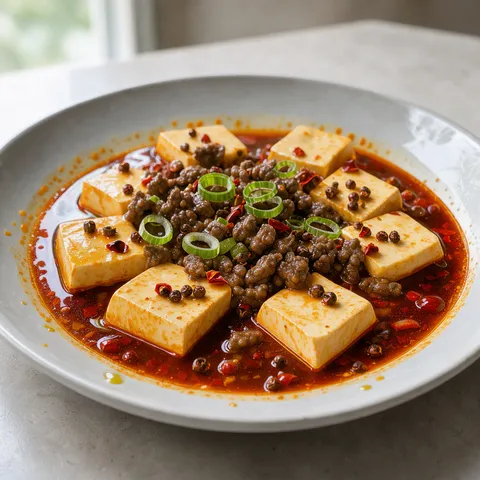 Mapo Tofu35 min · Main course
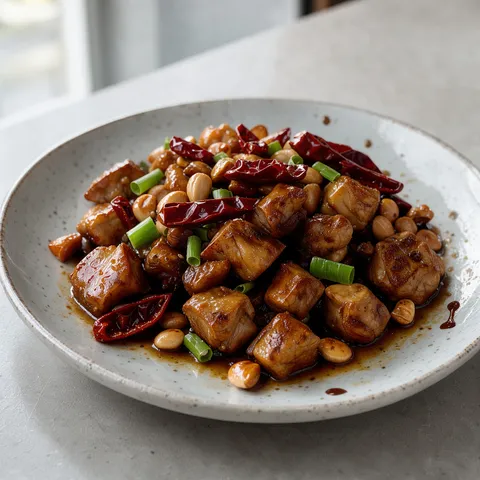 Kung Pao Chicken30 min · Main course
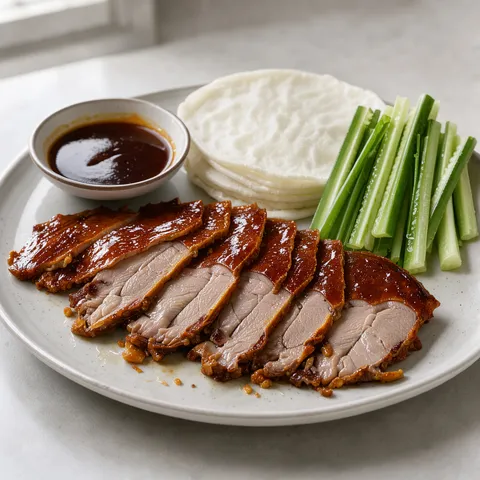 Peking Duck2 hr · Main course
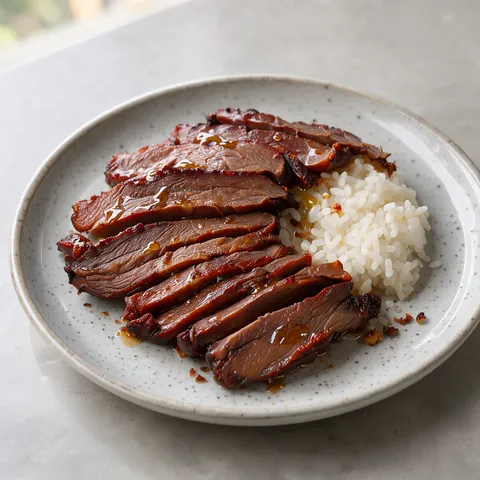 Char Siu1 hr · Main course
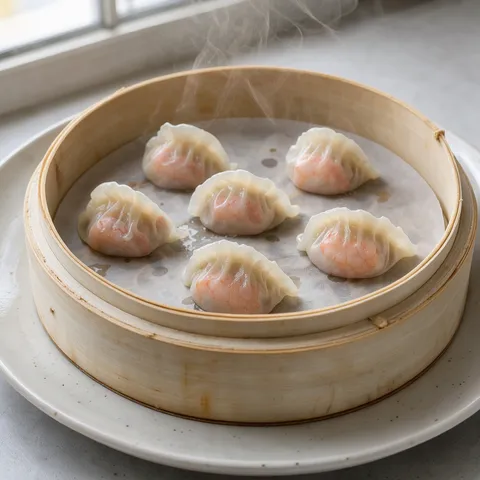 Crystal Prawn Dumplings1 hr 30 min · Starter
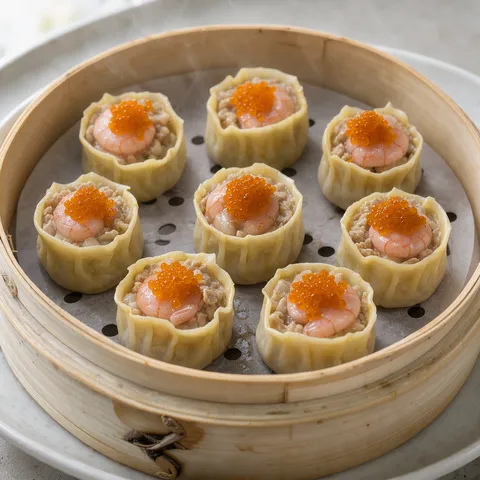 Open-Topped Dumplings50 min · Starter